
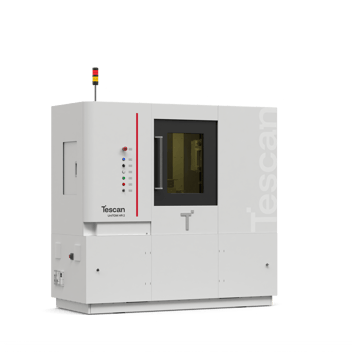
At iCT 2026 in Linz (10 to 13 February 2026), Tescan introduced the UniTOM® HR 2 ecosystem to bring Dynamic-to-Detail micro-CT and In-Situ Continuity into one connected workflow. The ecosystem combines the UniTOM® HR 2 platform, Panthera AI 4D denoising (3D plus time), and a high-resolution sCMOS detector so you can capture fast change clearly and move directly to high-resolution investigation without disturbing experimental conditions.
1000000197.jpg?width=1291&height=907&name=(Upload-from-mobile-1771233947)1000000197.jpg)
What We Shared at iCT 2026 in Linz
The scientific program included topics such as innovations in spectral CT, AI for image processing, and in situ material testing, while the industry day highlighted the many new products from micro-CT vendors as well as the latest innovations in X-ray source and detector technologies. On Wednesday, participants enjoyed a guided tour of the laboratories in Wels, followed by an engaging poster session highlighting emerging research. The conference concluded on Thursday evening with a dinner in the heart of Linz, an excellent setting for informal discussions, networking, and experiencing traditional Austrian music.
During Industry Day sponsor talks (Tuesday, 10 February), we presented:
Advancing In-Situ Micro-CT: High-Resolution Imaging Integrated Into Dynamic Workflows (Michiel Krols, Tescan)
The focus was practical: how to maintain experimental context while progressing from fast, time-resolved observation to high-resolution inspection in the same setup.
Highlights From the iCT Community
- A One Shot Multi-Material/Polymer Differentiation with Spectral CT – first insights from the perspective of materials science | Speaker: Christoph Queck
Takeaway: Spectral CT approaches can help separate atomic composition from density, supporting more reliable differentiation where conventional CT reaches its limits.
Related resource: [Application note download link: Identifying Multi-Polymer Composites Using Spectral CT] - GEO-ASTRA: a toolbox for non-conventional XCT scanning and reconstruction | Speaker: Joaquim Sanctorum
Takeaway: Open scanning and reconstruction concepts enable non-conventional trajectories and flexible experimentation, especially valuable for advanced research workflows.
Dynamic-to-Detail Micro-CT in One Continuous Workflow
Dynamic-to-Detail micro-CT brings three priorities into one experiment:
- Capture fast evolution so critical transitions are not missed
- Maintain experimental context so results remain correlated across time
- Investigate in detail without removing or remounting the sample
The UniTOM® HR 2 ecosystem supports this through Volume of Interest Scanning (VOIS™ ) for region selection and detector switching, enabling a direct transition from fast overview or dynamic imaging to high-resolution inspection within the same setup.
Three Building Blocks of the UniTOM® HR 2 Ecosystem
1000000195.jpg?width=1071&height=802&name=(Upload-from-mobile-1771234044)1000000195.jpg)
UniTOM® HR 2 platform: built for time-resolved imaging and in-situ work
UniTOM® HR 2 supports long, continuous experiments where the sample state must remain stable, including mechanical testing, environmental chambers, and other in-situ studies. The workflow is designed to keep you moving from overview to detail while maintaining temporal correlation.
Panthera™ AI: cleaner dynamic imaging for confident interpretation
High-speed scanning can introduce noise, especially as temporal resolution increases. Panthera™ AI applies 4D denoising (3D plus time) to improve signal-to-noise in dynamic datasets, supporting clearer segmentation and more reliable measurement when the priority is to capture change without slowing the experiment.
High-resolution sCMOS detector: sub-micron detail where working distance matters
In many in-situ configurations, stages and fixtures limit how close the sample can be positioned. The small-pixel, high-sensitivity sCMOS detector is designed to deliver sub-micron detail in demanding geometries while also preserving contrast in low-attenuation materials, where subtle differences can be difficult to preserve.
Automation for Real Lab Throughput
Multi-user labs and core facilities need consistent results across varied samples and scan recipes. The ecosystem supports unattended operation and mixed experimental queues with automation features such as an automated filter changer, reducing manual steps and helping teams use instrument time more efficiently.
Join the Webinar: See the Workflow End to End
To help you evaluate how Dynamic-to-Detail micro-CT fits your work, Tescan is hosting a live webinar with Q&A:
Dynamic-to-Detail Micro-CT in One Workflow: UniTOM® HR 2
We look forward to meeting you in Linz and continuing the conversation around high-resolution CT workflows.
Contact
To discuss your application or request a workflow consultation, contact your local Tescan representative or send us a note here.
Join the Webinar: See the Workflow End to End
Date: 17 March 2026
Session 1: 9:00 AM CET
Session 2: 4:00 PM CET
Live webinar with Q&A (two identical sessions)
