Maximum information from every scan and any sample at the nanoscale

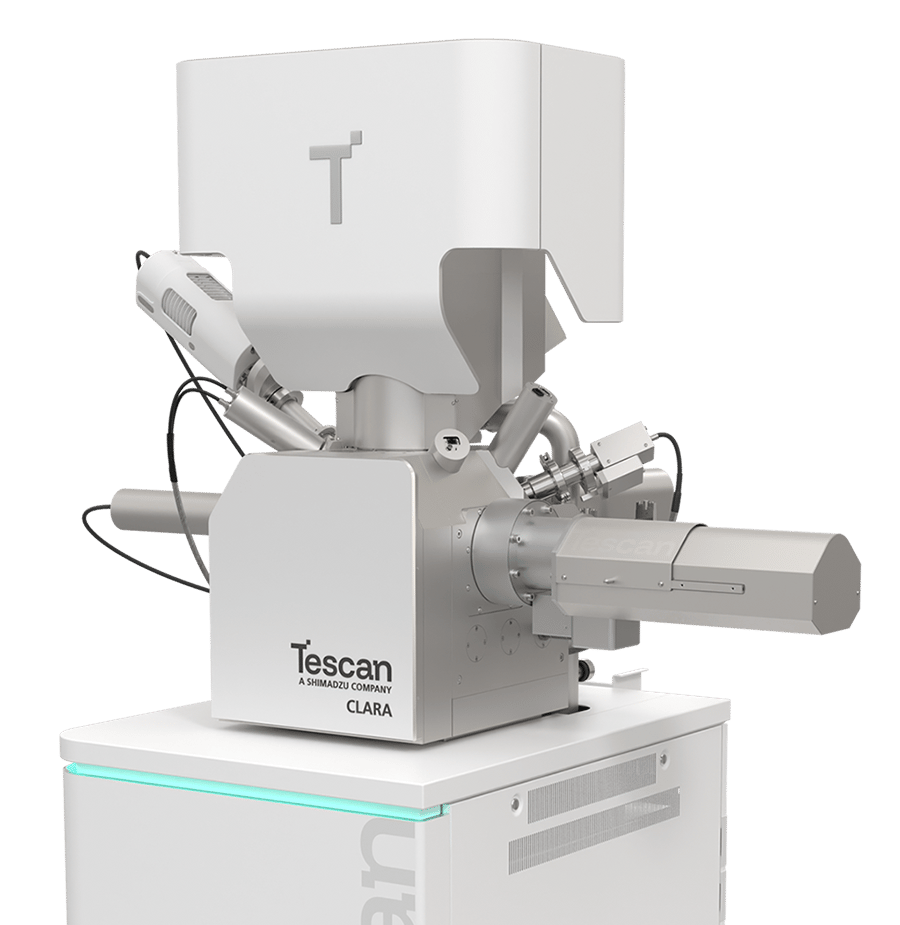
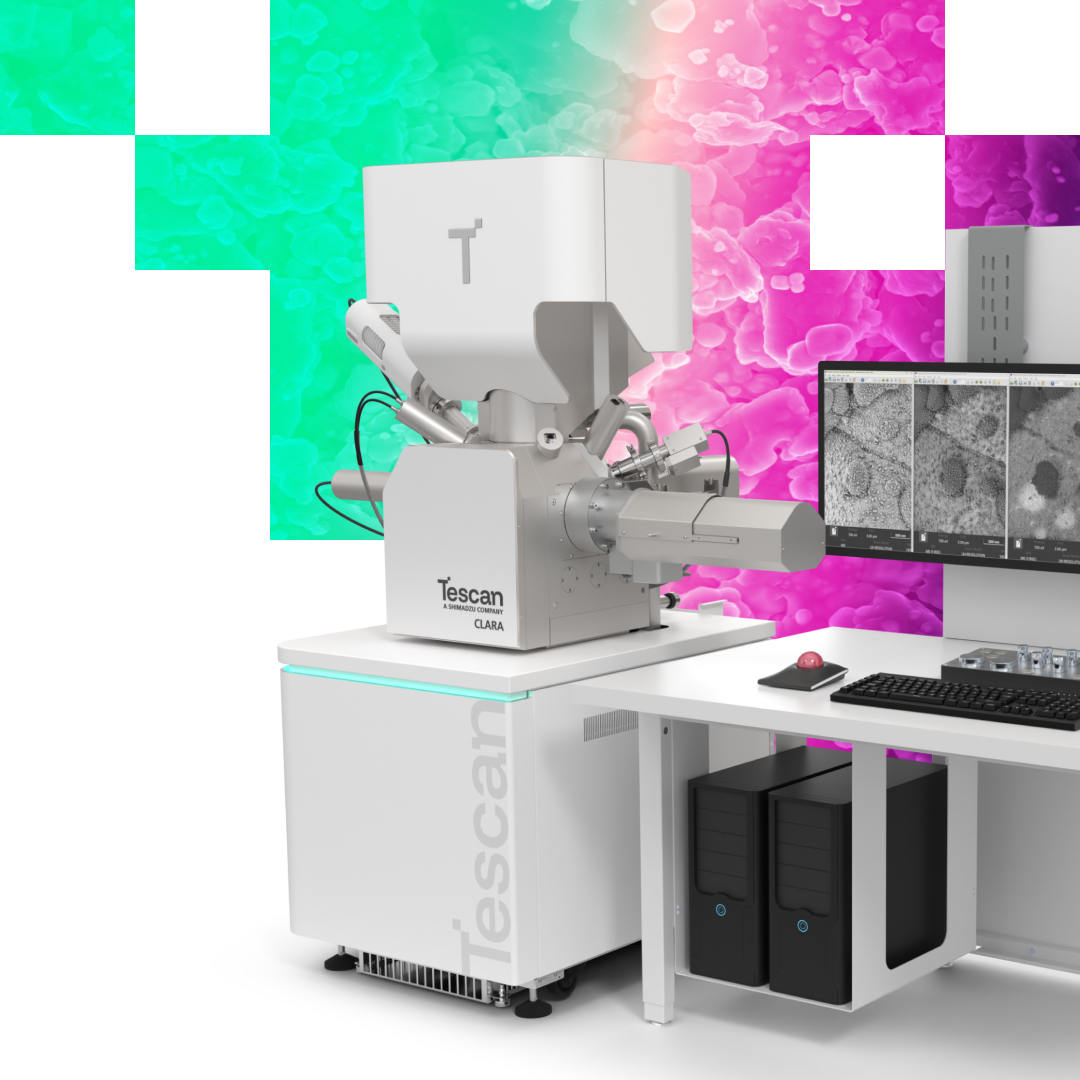
Tescan CLARA

CLARA-3-hero-desktop-1
CLARA-3-hero-mobile-1

Ultra-High-Resolution SEM That Reveals More Information from Every Scan

Extract more information from challenging materials at low landing energies. CLARA™ combines field‑free ultra‑high‑resolution SEM imaging, advanced secondary electron (SE) and backscattered electron (BSE) detection, and guided automation to help you move from sample navigation to confident insight faster. 

Designed for nanoscale characterization across diverse materials and workflows, CLARA™ enables you to reveal fine surface structures, material differences, and near-surface features from a single acquisition while maintaining the flexibility required for advanced analytical techniques. 

CLARA™ gives researchers the resolution, contrast control, and guided operation needed to explore surface detail, material differences, and near‑surface features with confidence. 

Built on Tescan's BrightBeam™ field-free SEM column technology and operated through Tescan's Essence™ software, CLARA™ supports efficient work across diverse samples, shared instruments, and mixed experience levels. It helps you capture meaningful information with less compromise, less setup, and fewer repeated measurements.

  • True ultra-high-resolution field-free imaging at low keV
    Delivers stable nanoscale detail across different samples, including charging, sensitive, and magnetic samples.

  • Simultaneous UHR SE and BSE imaging with advanced contrast control
    Combines parallel acquisition of SE and BSE signals with energy-filtered and angle-selective BSE contrast for deeper material insight in a single scan.

  • Effortless switching between imaging conditions and seamless navigation
    Powered by In-Flight Beam Tracing® automation for rapid beam optimization, combined with Wide Field Optics® for seamless navigation from macro to nano.

  • Advanced analytical workflows with open platform flexibility
    Supports integration of multiple analytical modalities (EDS, EBSD, Raman, etc.) and customizable workflows via custom automation and Python-based scripting.

  • MultiVac low-vacuum imaging with water vapor and easy switching
    Improves signal quality and enables stable imaging and analysis of charging and beam-sensitive samples with an uncompromised view field.

Where Tescan CLARA™Makes the Difference

Reveal More Information from Every Scan

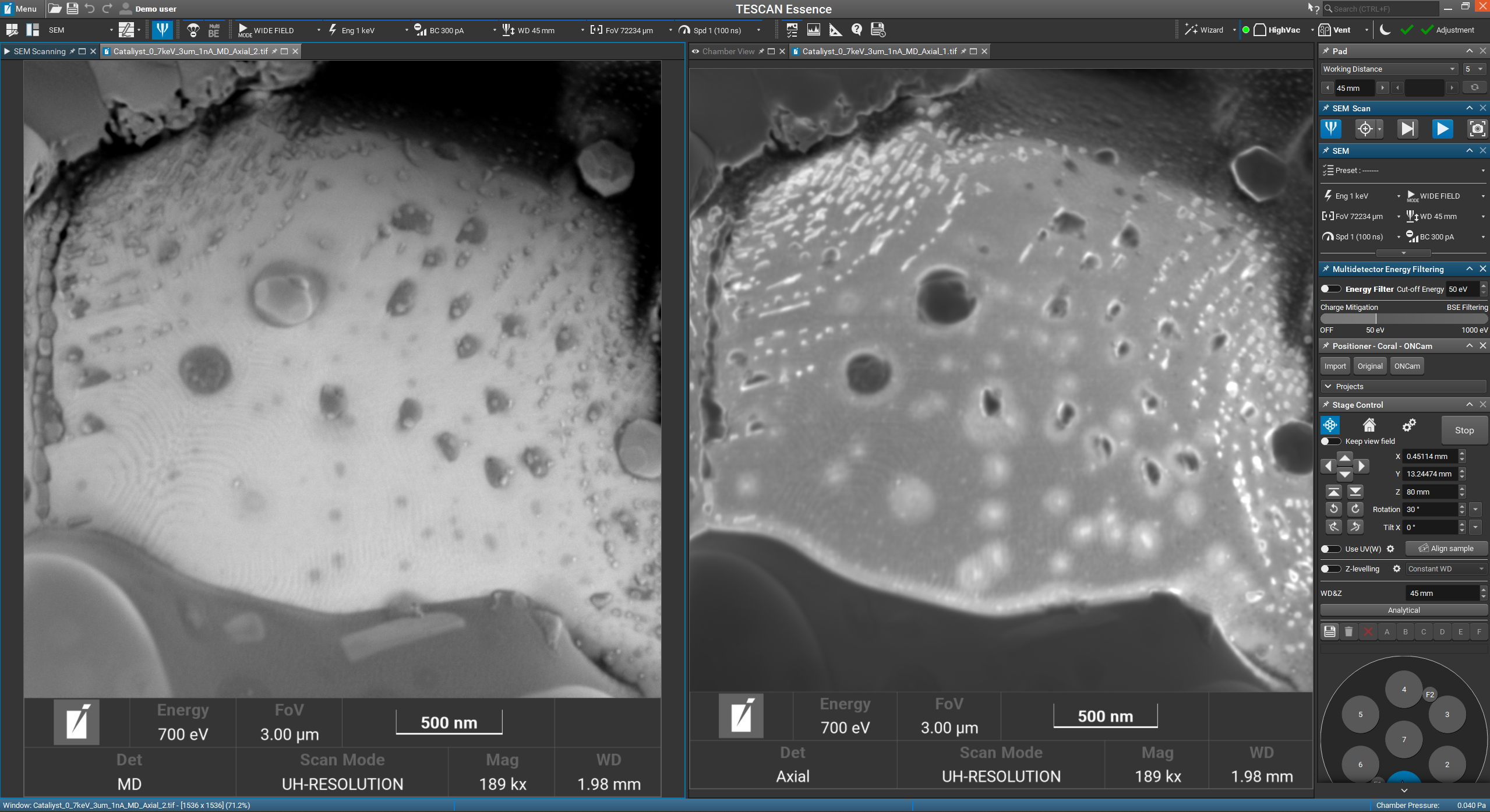
MD-filtering-01-cropped-scalebar

Modern nanoscale characterization requires more than resolution alone.

CLARA™ is designed to help researchers extract multiple complementary contrasts from the same region of interest, revealing information that conventional imaging workflows can miss.

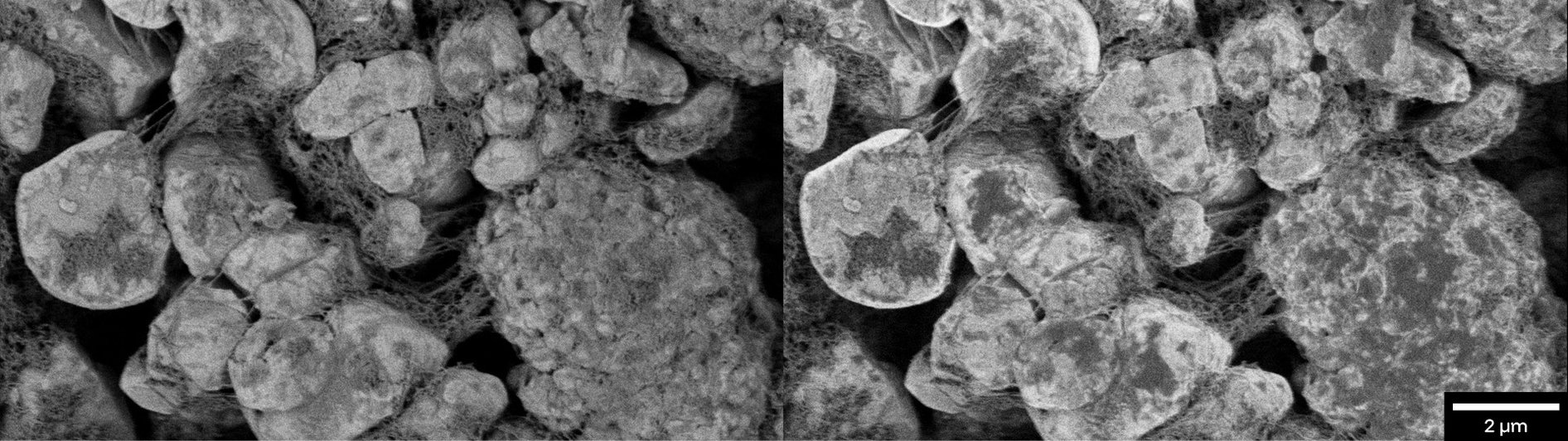
Through simultaneous ultra-high-resolution secondary electron (SE) and backscattered electron (BSE) imaging, combined with energy-filtered and angle-selective BSE detection, CLARA™ enables researchers to:

  • Reveal fine surface topography
  • Differentiate material phases and composition
  • Detect near-surface contamination and buried structures
  • Visualize orientation-sensitive features
  • Reduce rescans and repeated measurements
  • Move more quickly from imaging to interpretation

Unlike conventional UHR SEM workflows that require repeated acquisitions or detector switching, CLARA™ combines multiple complementary signals within a single platform and workflow.

True Multimodal Contrast at the Nanoscale

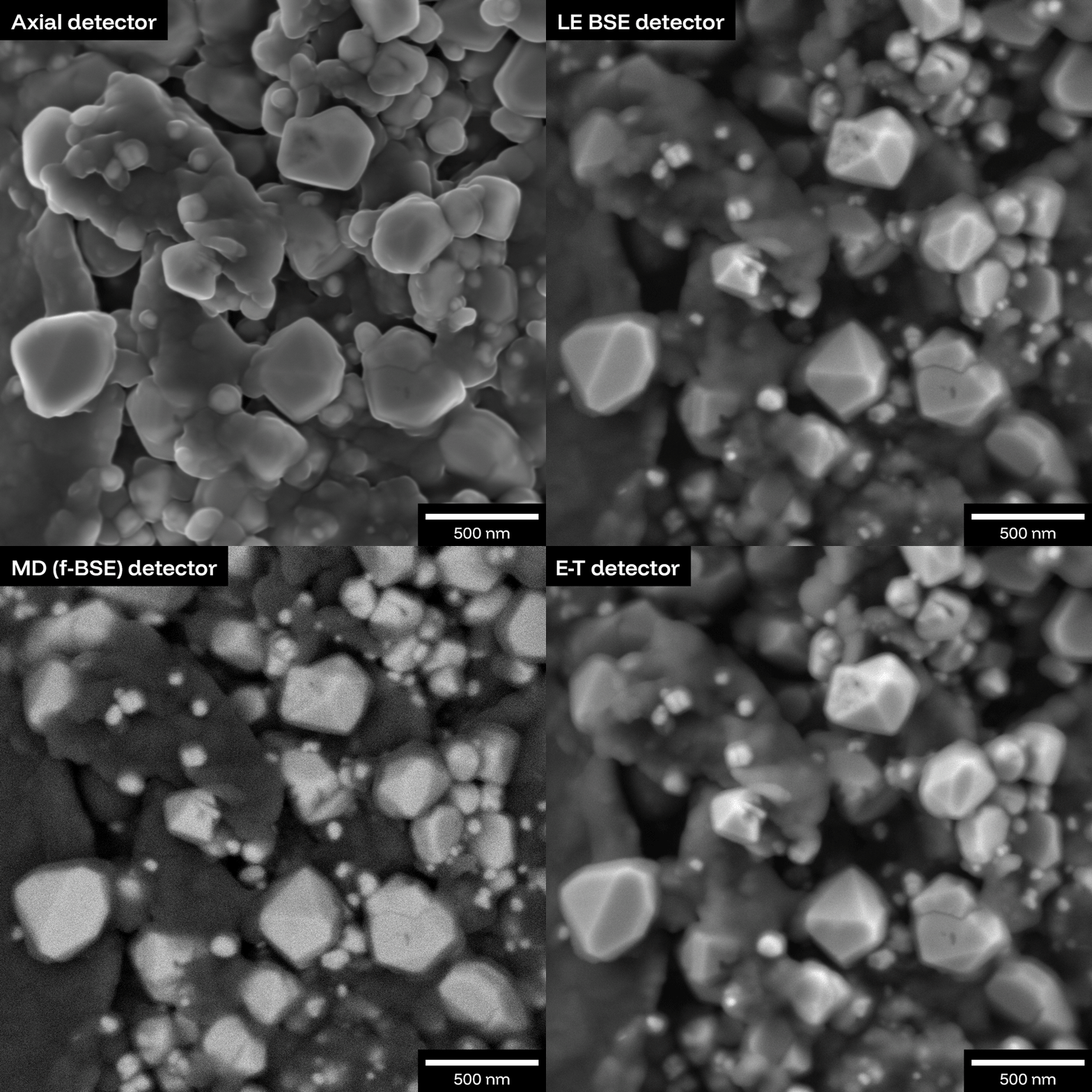
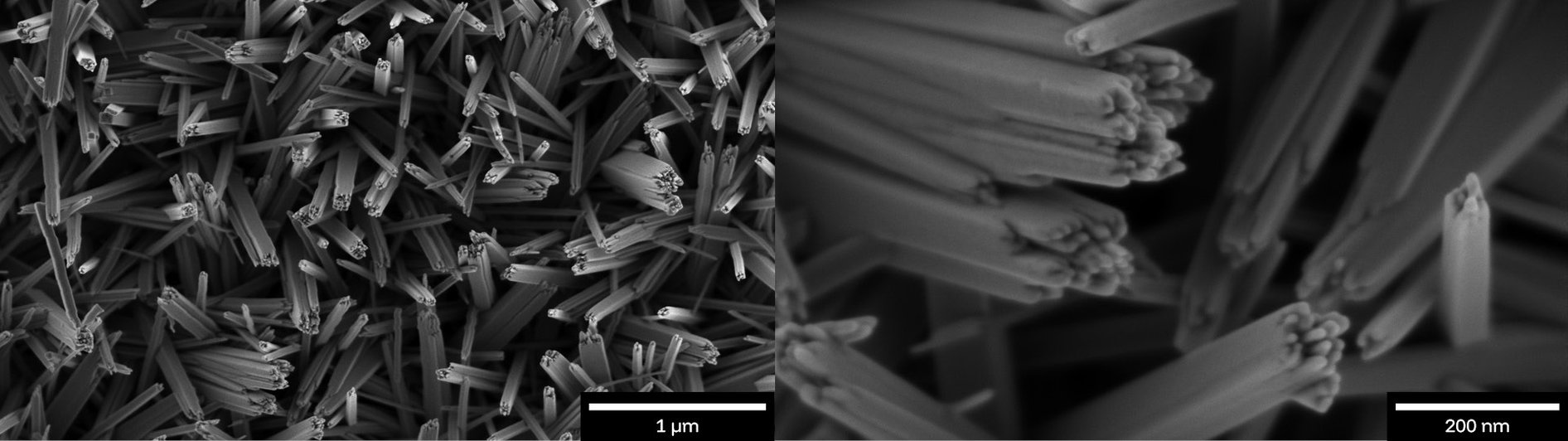
The redesigned MultiDetector™ and Axial detector enable flexible contrast selection for both surface-sensitive and material-sensitive imaging.

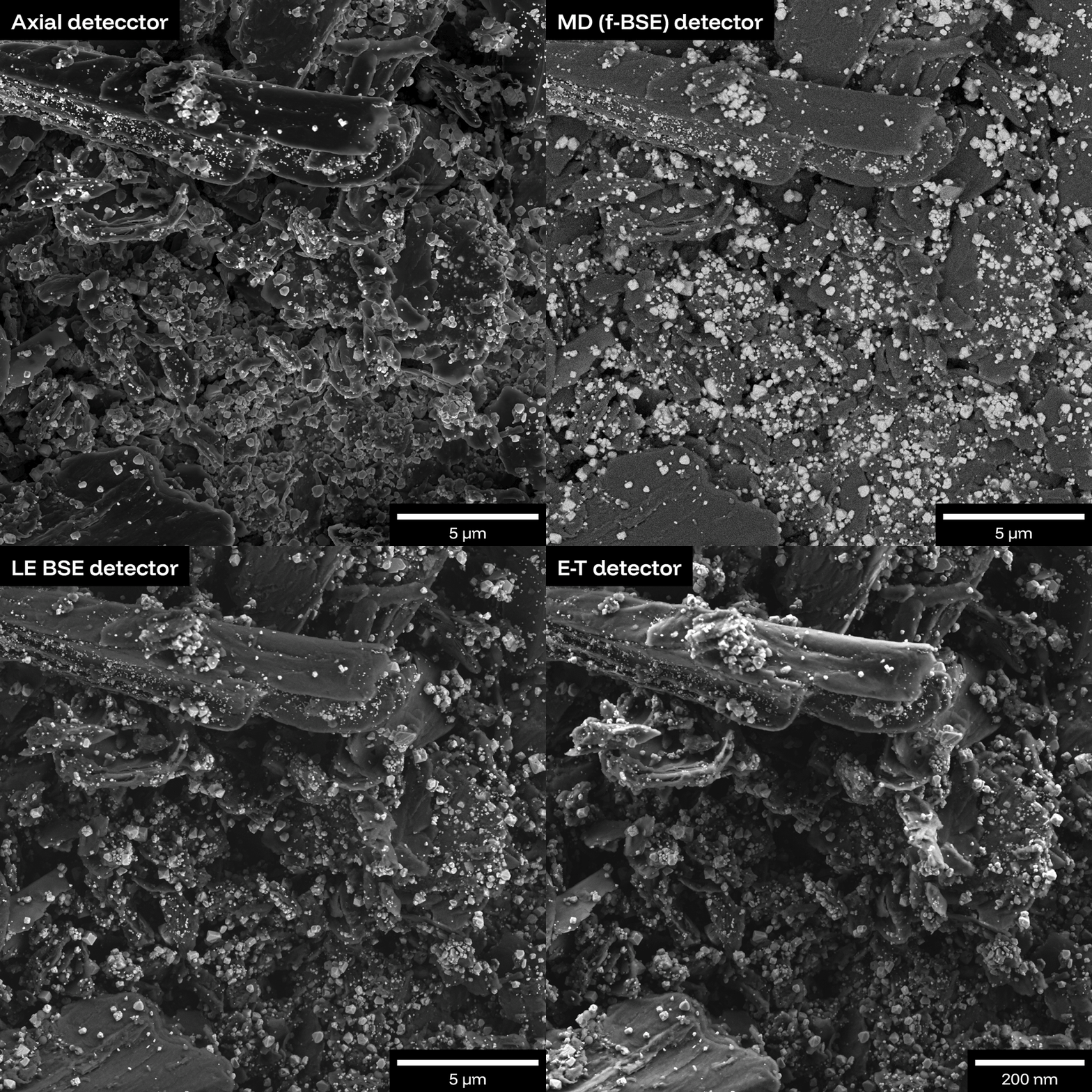
Energy-filtered BSE imaging helps reveal near-surface material differences and contamination that may remain hidden in conventional BSE workflows. Angular contrast selection further enhances the interpretation of topographic and compositional variation.

The result is richer nanoscale characterization from every acquisition.
Ultra-High-Resolution Imaging at Low Landing Energies

hero-banner-ultra-high-resolution


Capture stable ultra-high-resolution images while preserving sensitive materials closer to their native state.

Built on Tescan BrightBeam™ field-free SEM column technology, CLARA™ delivers stable, low-keV imaging performance across challenging samples, including nonconductive materials, magnetic samples, beam-sensitive structures, porous materials, and highly topographic specimens.

Low-landing-energy imaging helps reduce charging effects and minimize beam damage while preserving nanoscale detail.

The field-free optical design also enables reliable imaging of magnetic samples without the limitations associated with immersion lens systems.


Reduce Sample Preparation

Researchers often need to balance image quality against preparation complexity.

CLARA™ supports high-quality imaging of challenging samples with reduced reliance on conductive coating or extensive preparation workflows, helping preserve sample integrity while accelerating analysis.

Simultaneous UHR SE and BSE Imaging

Simultaneous UHR SE and BSE Imaging-scalebar

Acquire complementary topographic and material information simultaneously.

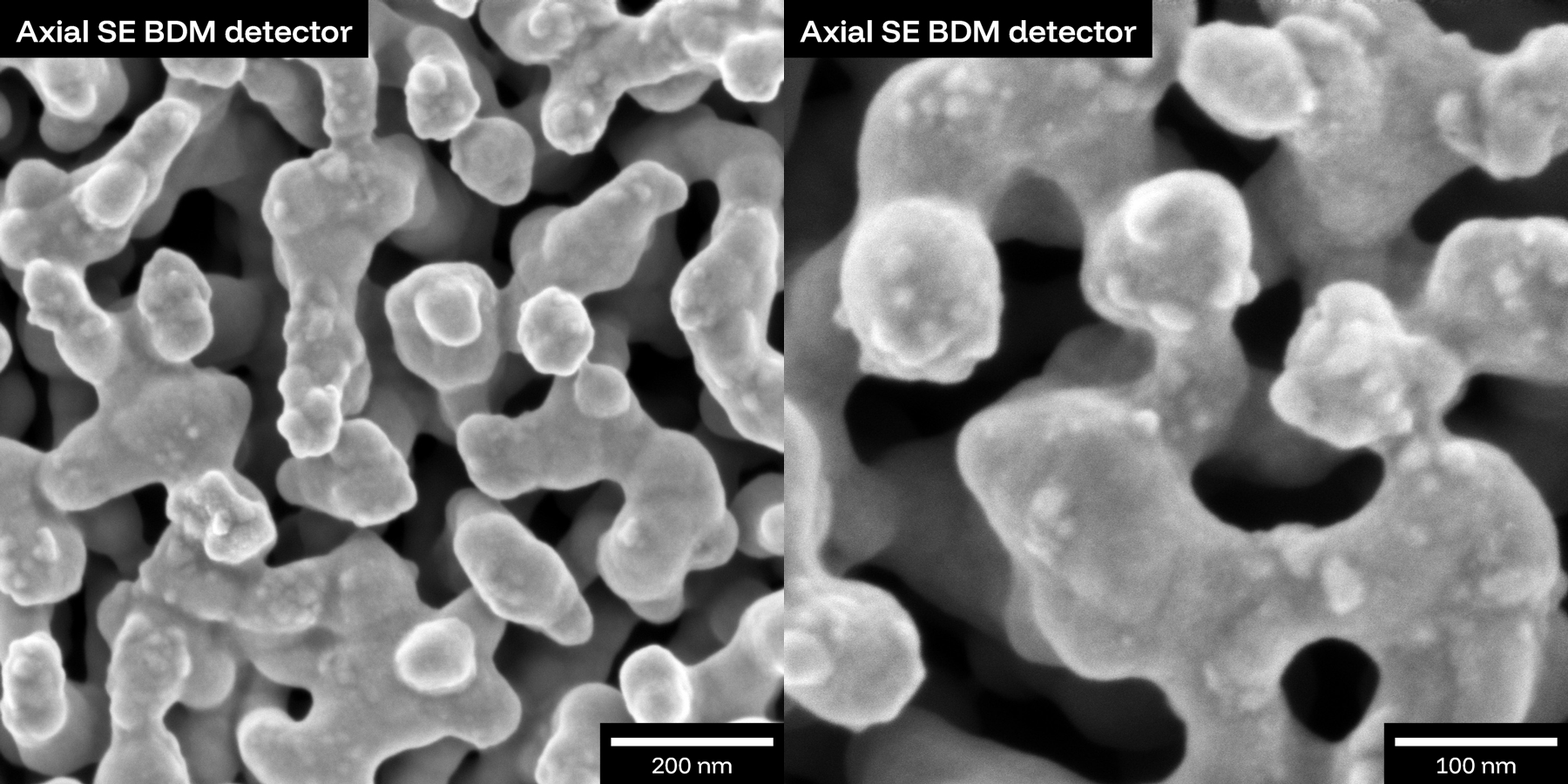
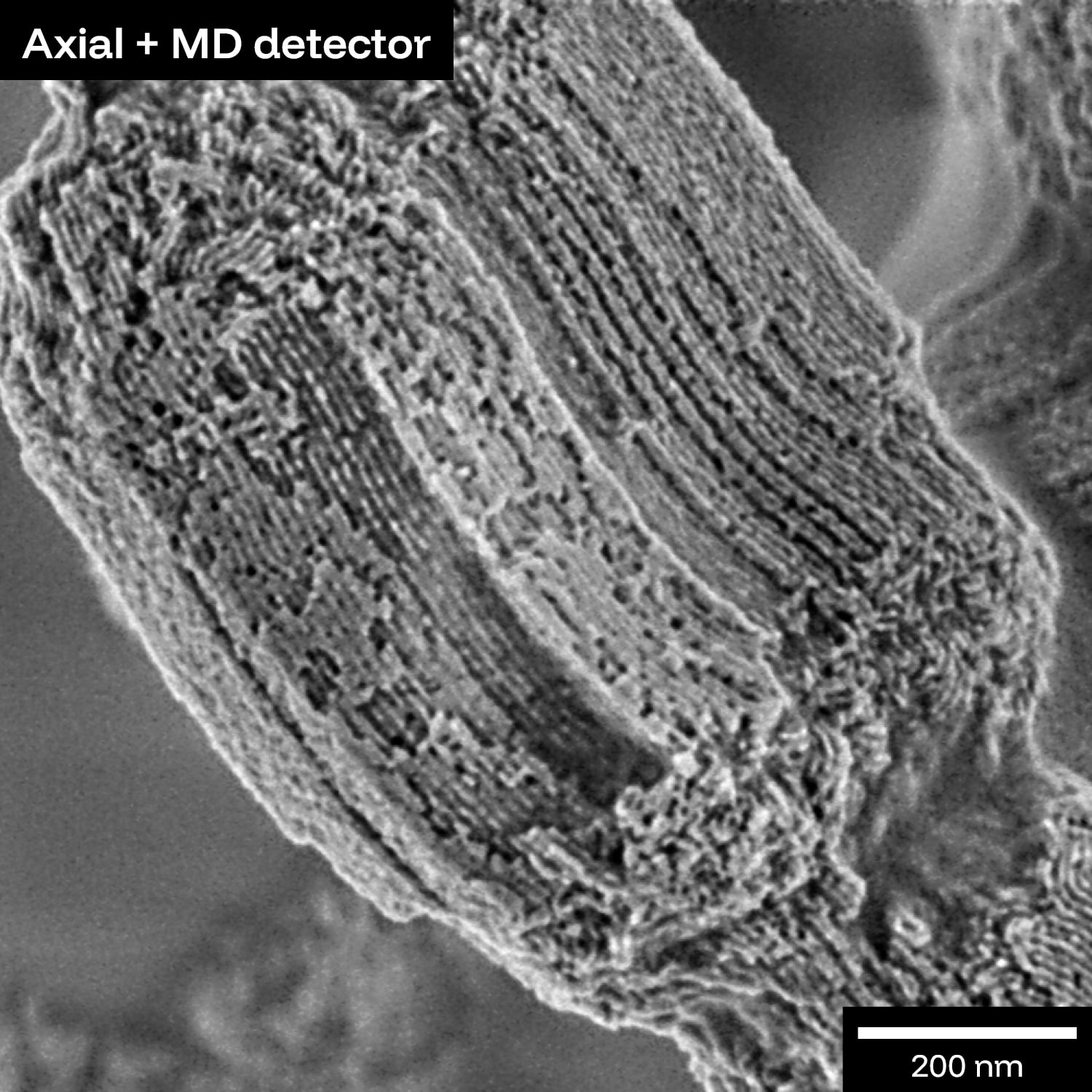
CLARA™ combines the Axial detector and MultiDetector™ to enable parallel ultra-high-resolution SE and BSE imaging from the same region of interest. This enables researchers to compare surface, topographical, and material contrast directly, reduce rescanning and repositioning, maintain ROI consistency, and accelerate interpretation and decision-making.

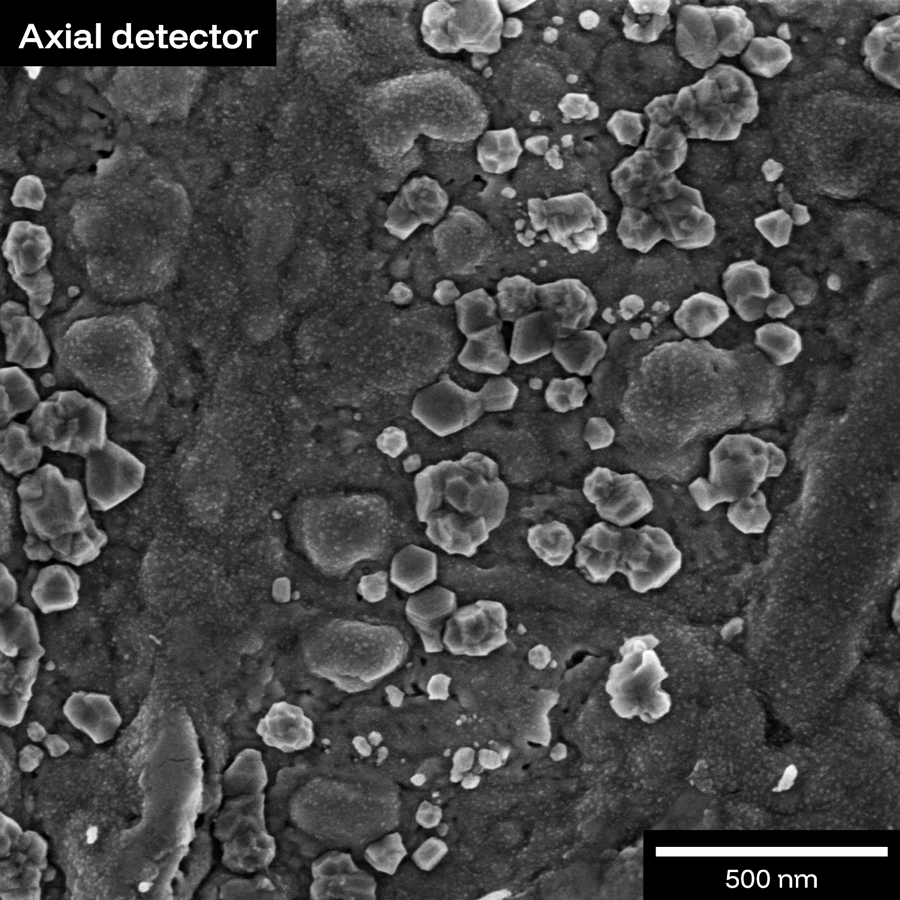
The Axial detector delivers highly surface-sensitive imaging for fine nanoscale detail, while the MultiDetector™ enables flexible BSE signal filtering and contrast optimization.


Advanced BSE Filtering and Contrast Selection

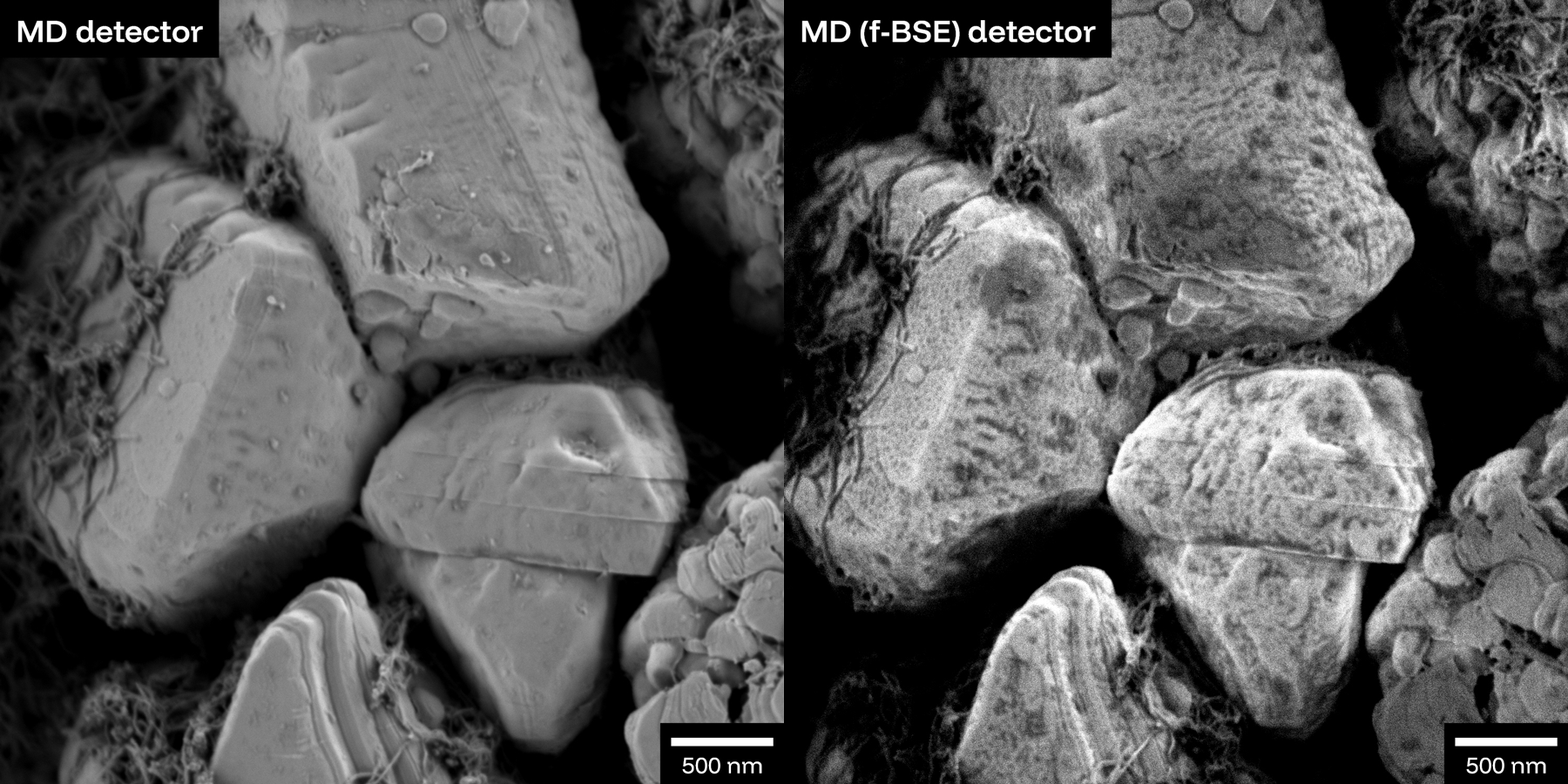
The MultiDetector™ supports energy filtering above 4 keV, enabling researchers to optimize material-sensitive contrast across a wide range of applications.

Researchers can tailor contrast conditions to highlight surface-sensitive material contrast, pure compositional contrast, orientation-sensitive contrast, near-surface contamination, and thin surface layers and buried features. This flexibility helps reveal information that would otherwise require multiple workflows or remain hidden entirely.

Faster Time-to-Data with Automation

Tescan-CLARA-subsection-hero-banner-faster-time-to-data

Move from navigation to optimized imaging conditions faster with less manual adjustment.

Tescan Essence™ software combines guided workflows with live In-Flight™ automation technologies to simplify operation across experience levels.

Integrated automation tools include continuous real-time beam optimization, autofocus, autostigmation, live automatic brightness and contrast adjustment, automated beam alignment, and workflow support. These tools help users reach stable imaging conditions faster, reduce operator dependency, shorten onboarding time, improve repeatability across shared labs, and maintain productivity across diverse workflows.


Seamless Navigation from Macro to Nano

Wide Field Optics® and Continual Wide Field™ support fast, distortion-free navigation across large or complex samples.

Researchers can move efficiently from overview imaging to ultra-high-resolution acquisition while maintaining the region of interest throughout the workflow.

Even in low vacuum mode, the scanning pivot in the aperture plane maintains a broad field of view, similar to high vacuum, no matter the inserted aperture. This facilitates quicker navigation, smoother workflows, and more efficient EDS analysis by minimizing the need for re-navigation and additional mapping. Overview mode simplifies analysis of large, topographic, and grainy specimens, even at tilt, with precise navigation, reliable measurements, across large field of view.

This is especially valuable for:

  • Failure analysis
  • Battery materials research
  • Large topographic samples
  • Multi-user laboratory environments
  • Correlative imaging workflows
Built for Shared Research Laboratories

Modern research facilities require instruments that combine high-end performance with operational flexibility.

CLARA™ is designed for collaborative laboratories handling diverse samples, analytical techniques, and operator experience levels.

Automated alignment, the live Essence™ 3D Collision Model, easy switching between high- and low-vacuum modes, and MultiVac operation with nitrogen and water vapor help researchers work efficiently across changing imaging conditions while protecting both the instrument and the sample.

Together, these workflow capabilities help laboratories support a broader range of applications, reduce training burden, improve workflow consistency across users, and increase throughput in shared research environments. 


Advanced Analytical Workflows

CLARA™ combines nanoscale imaging performance with the flexibility required for advanced analytical characterization.

The platform supports advanced analytical workflows, including EDS, EBSD, Raman, cathodoluminescence (CL), WDS, EBL, 4D-STEM, and correlative imaging techniques, enabling researchers to combine nanoscale imaging with complementary chemical, structural, and materials characterization methods within a single workflow.

Wide Field Optics®, In-Flight Beam Tracing®, and stable low-keV performance support efficient transitions between imaging and analytical conditions without interrupting the workflow.


Flexible Platform for Future Research Needs

CLARA™ is designed as a long-lasting nanoscale characterization platform.

A large chamber, flexible detector configuration, broad analytical compatibility, and upgrade-ready architecture help laboratories expand capabilities over time while maintaining workflow continuity.

Battery Materials Research: Reveal surface contamination, phase variation, and nanoscale structural changes across complex battery materials.

Failure Analysis: Detect subtle material differences, contamination layers, and topographic defects that contribute to product failure.

Advanced Materials Characterization: Analyze metals, ceramics, polymers, composites, and magnetic materials with high-resolution multimodal contrast.

Semiconductor and Microelectronics Research: Capture nanoscale surface detail and material contrast while supporting advanced analytical workflows.

Core Facilities and Shared Laboratories: Support diverse users and unpredictable sample types with different modalities, workflows, automation, and broad analytical flexibility.


MultiVac Low-Vacuum Imaging with Water Vapor

MultiVac extends low-vacuum imaging by supporting water vapor in addition to nitrogen, helping improve signal quality at low landing energies. Compared with conventional low-vacuum conditions, water vapor can reduce beam scattering and enhance secondary electron contrast, helping reveal finer surface features and improve image clarity on challenging samples.

Tescan Imaging Software

The Tescan Essence™ software provides a unified and intuitive user interface for complete SEM control

  • Integrated imaging, navigation, and analytical routine
  • Task-focused workflows and multi-user layouts
  • Live 3D collision model for safe movements and collision protection
  • Automated beam and imaging alignments and autofocus

image-Jul-15-2026-09-00-40-4135-AM


Get More From Every Scan

Advanced imaging made effortless; more detail, less setup

From Overview to Nano Detail in Seconds

Effortlessly navigate from wide field to ultra-high resolution without losing focus or time.

More Signals. More Insight. One Scan.

Capture multiple contrast signals simultaneously for deeper insight in a single acquisition.

Reveal Hidden Features with Signal Filtering

Use energy‑filtered detection to uncover surface and material details others miss.

Accessible Performance for Every User

Intuitive operation with automated workflows and smooth mode transitions allows users of all skill levels to achieve reliable results without expert help.

Where Tescan CLARA™

Makes the Difference

Reveal More Information from Every Scan 

Modern nanoscale characterization requires more than resolution alone.

CLARA™ 3 is designed to help researchers extract multiple complementary contrasts from the same region of interest, revealing information that conventional imaging workflows can miss.

Through simultaneous ultra-high-resolution secondary electron (SE) and backscattered electron (BSE) imaging, combined with energy-filtered and angle-selective BSE detection, CLARA™ 3 enables researchers to:

  • Reveal fine surface topography
  • Differentiate material phases and composition
  • Detect near-surface contamination and buried structures
  • Visualize orientation-sensitive features
  • Reduce rescans and repeated measurements
  • Move more quickly from imaging to interpretation

Unlike conventional UHR SEM workflows that require repeated acquisitions or detector switching, CLARA™ 3 combines multiple complementary signals within a single platform and workflow.

True Multimodal Contrast at the Nanoscale

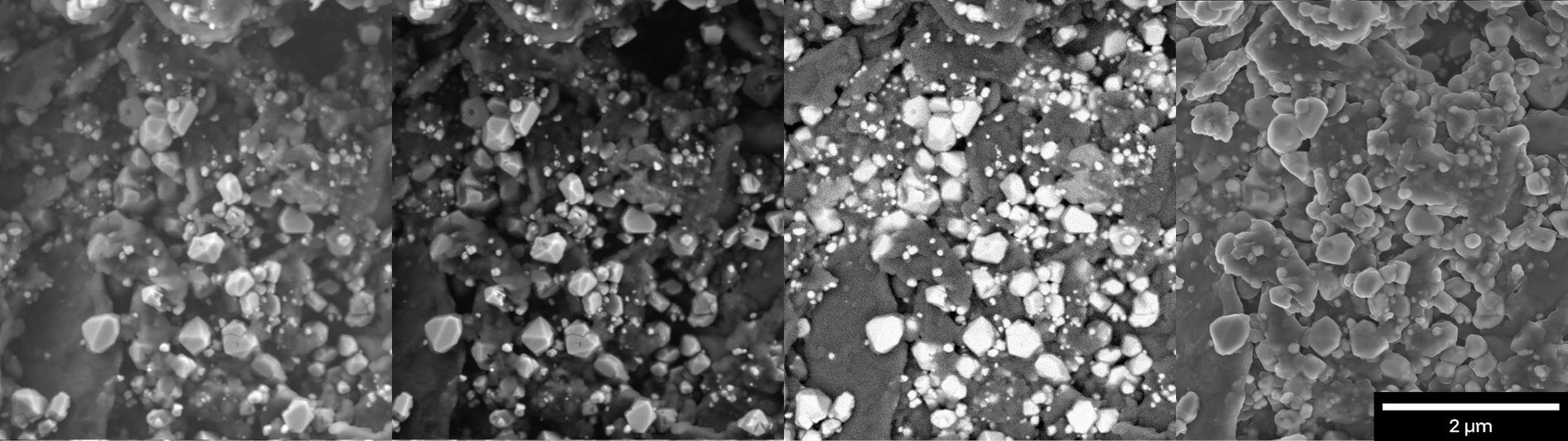
The redesigned MultiDetector™ and Axial detector enable flexible contrast selection for both surface-sensitive and material-sensitive imaging.

Energy-filtered BSE imaging helps reveal near-surface material differences and contamination that may remain hidden in conventional BSE workflows. Angular contrast selection further enhances the interpretation of topographic and compositional variation.

The result is richer nanoscale characterization from every acquisition.
Ultra-High-Resolution Imaging at Low Landing Energies  

Capture stable ultra-high-resolution images while preserving sensitive materials closer to their native state.

Built on Tescan BrightBeam™ field-free SEM column technology, CLARA™ 3 delivers stable, low-keV imaging performance across challenging samples, including nonconductive materials, magnetic samples, beam-sensitive structures, porous and outgassing materials, and highly topographic specimens.

Low-landing-energy imaging helps reduce charging effects and minimize beam damage while preserving nanoscale detail.

The field-free optical design also enables reliable imaging of magnetic samples without the limitations associated with immersion lens systems.


Reduce Sample Preparation
 

Researchers often need to balance image quality against preparation complexity.

CLARA™ supports high-quality imaging of challenging samples with reduced reliance on conductive coating or extensive preparation workflows, helping preserve sample integrity while accelerating analysis.


MultiVac™ Low-Vacuum Imaging with Water Vapor
 

MultiVac™ extends low-vacuum imaging by supporting water vapor in addition to nitrogen, helping improve signal quality at low landing energies. Compared with conventional low-vacuum conditions, water vapor can reduce beam scattering and enhance secondary electron contrast, helping reveal finer surface features and improve image clarity on challenging samples. 

Simultaneous UHR SE and BSE Imaging   

Acquire complementary topographic and material information simultaneously.

CLARA™ combines the Axial detector and MultiDetector™ to enable parallel ultra-high-resolution SE and BSE imaging from the same region of interest. This enables researchers to compare surface, topographical, and material contrast directly, reduce rescanning and repositioning, maintain ROI consistency, and accelerate interpretation and decision-making.

The Axial detector delivers highly surface-sensitive imaging for fine nanoscale detail, while the MultiDetector™ enables flexible BSE signal filtering and contrast optimization. 


Advanced BSE Filtering and Contrast Selection 

The MultiDetector™ supports energy filtering up to 4 keV, enabling researchers to optimize material-sensitive contrast across a wide range of applications.

Researchers can tailor contrast conditions to highlight surface-sensitive material contrast, pure compositional contrast, orientation-sensitive contrast, near-surface contamination, and thin surface layers and buried features. This flexibility helps reveal information that would otherwise require multiple workflows or remain hidden entirely.

Faster Time-to-Data with Automation   

Move from navigation to optimized imaging conditions faster with less manual adjustment.

Tescan Essence™ software combines guided workflows with live In-Flight™ automation technologies to simplify operation across experience levels.

Integrated automation tools include continuous real-time beam optimization, autofocus, autostigmation, live automatic brightness and contrast adjustment, automated beam alignment, and workflow support. These tools help users reach stable imaging conditions faster, reduce operator dependency, shorten onboarding time, improve repeatability across shared labs, and maintain productivity across diverse workflows. 


Seamless Navigation from Macro to Nano 

Wide Field Optics® and Continual Wide Field™ support fast, distortion-free navigation across large or complex samples.

Researchers can move efficiently from overview imaging to ultra-high-resolution acquisition while maintaining the region of interest throughout the workflow.

Even in Low vacuum mode with scanning pivot in the aperture plane maintains a full field of view in low vacuum, as in high vacuum, regardless of the inserted aperture, enabling faster navigation, smoother workflows, and more efficient EDS analysis by reducing re-navigation and multiple maps. Overview mode simplifies analysis of large, topographic, and grainy specimens, even at tilt, with precise navigation, reliable measurements, across large field of view.

This is especially valuable for:

  • Failure analysis
  • Battery materials research
  • Large topographic samples
  • Multi-user laboratory environments
  • Correlative imaging workflows

Built for Shared Research Laboratories    

Modern research facilities require instruments that combine high-end performance with operational flexibility.

CLARA™ is designed for collaborative laboratories handling diverse samples, analytical techniques, and operator experience levels.

Automated alignment, the live Essence™ 3D Collision Model, one-click switching between high- and low-vacuum modes, and MultiVac™ operation with N₂ and water vapor help researchers work efficiently across changing imaging conditions while protecting both the instrument and the sample.

Together, these workflow capabilities help laboratories support a broader range of applications, reduce training burden, improve workflow consistency across users, and increase throughput in shared research environments.

Advanced Analytical Workflows    

CLARA™ combines nanoscale imaging performance with the flexibility required for advanced analytical characterization.

The platform supports advanced analytical workflows, including EDS, EBSD, Raman, cathodoluminescence (CL), WDS, EBL, 4D-STEM, and correlative imaging techniques, enabling researchers to combine nanoscale imaging with complementary chemical, structural, and materials characterization methods within a single workflow.

Wide Field Optics®, In-Flight Beam Tracing™, and stable low-keV performance support efficient transitions between imaging and analytical conditions without interrupting the workflow. 


Flexible Platform for Future Research Needs 

CLARA™ is designed as a long-lasting nanoscale characterization platform.

A large chamber, flexible detector configuration, broad analytical compatibility, and upgrade-ready architecture help laboratories expand capabilities over time while maintaining workflow continuity.

Battery Materials Research: Reveal surface contamination, phase variation, and nanoscale structural changes across complex battery materials.

Failure Analysis: Detect subtle material differences, contamination layers, and topographic defects that contribute to product failure.

Advanced Materials Characterization: Analyze metals, ceramics, polymers, composites, and magnetic materials with high-resolution multimodal contrast.

Semiconductor and Microelectronics Research: Capture nanoscale surface detail and material contrast while supporting advanced analytical workflows.

Core Facilities and Shared Laboratories: Support diverse users and unpredictable sample types with different modalities, workflows, automation, and broad analytical flexibility. .

Where Tescan CLARA™

Makes the Difference

Reveal More Information from Every Scan

Modern nanoscale characterization requires more than resolution alone. 

CLARA™ 3 is designed to help researchers extract multiple complementary contrasts from the same region of interest, revealing information that conventional imaging workflows can miss. 

Through simultaneous ultra-high-resolution secondary electron (SE) and backscattered electron (BSE) imaging, combined with energy-filtered and angle-selective BSE detection, CLARA™ 3 enables researchers to: 

  • Reveal fine surface topography 

  • Differentiate material phases and composition 

  • Detect near-surface contamination and buried structures 

  • Visualize orientation-sensitive features 

  • Reduce rescans and repeated measurements 

  • Move more quickly from imaging to interpretation 

Unlike conventional UHR SEM workflows that require repeated acquisitions or detector switching, CLARA™ 3 combines multiple complementary signals within a single platform and workflow. 

True Multimodal Contrast at the Nanoscale

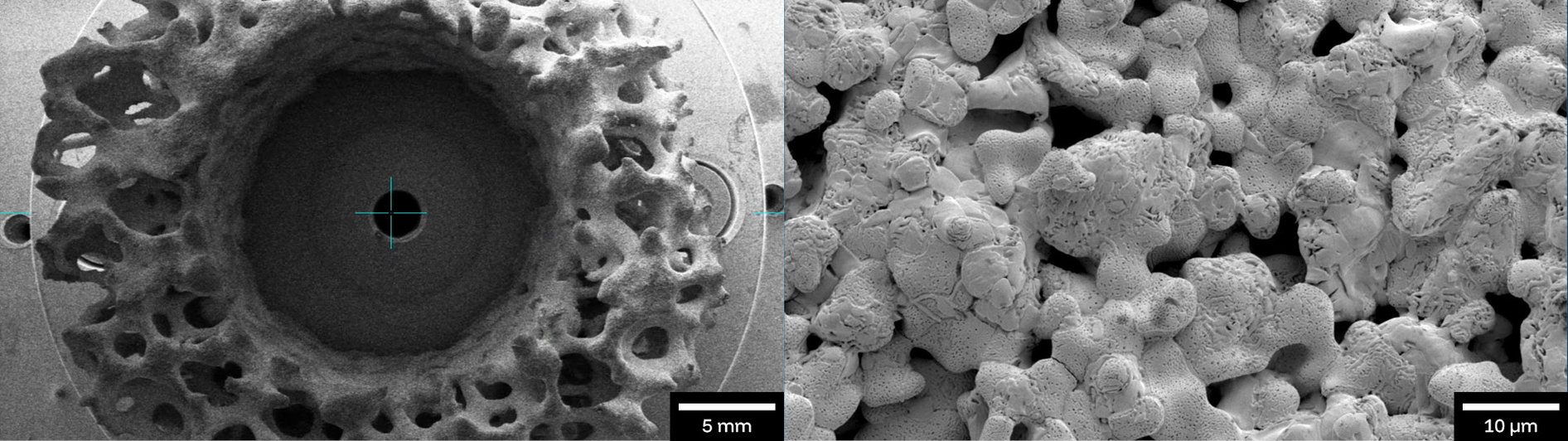
The redesigned MultiDetector™ and Axial detector enable flexible contrast selection for both surface-sensitive and material-sensitive imaging. 

Energy-filtered BSE imaging helps reveal near-surface material differences and contamination that may remain hidden in conventional BSE workflows. Angular contrast selection further enhances the interpretation of topographic and compositional variation. 

The result is richer nanoscale characterization from every acquisition.
Ultra-High-Resolution Imaging at Low Landing Energies

Capture stable ultra-high-resolution images while preserving sensitive materials closer to their native state. 

Built on Tescan BrightBeam™ field-free SEM column technology, CLARA™ 3 delivers stable, low-keV imaging performance across challenging samples, including nonconductive materials, magnetic samples, beam-sensitive structures, porous and outgassing materials, and highly topographic specimens. 

Low-landing-energy imaging helps reduce charging effects and minimize beam damage while preserving nanoscale detail. 

The field-free optical design also enables reliable imaging of magnetic samples without the limitations associated with immersion lens systems.

Reduce Sample Preparation 

Researchers often need to balance image quality against preparation complexity. 

CLARA™ supports high-quality imaging of challenging samples with reduced reliance on conductive coating or extensive preparation workflows, helping preserve sample integrity while accelerating analysis.

MultiVac™ Low-Vacuum Imaging with Water Vapor

MultiVac™ extends low-vacuum imaging by supporting water vapor in addition to nitrogen, helping improve signal quality at low landing energies. Compared with conventional low-vacuum conditions, water vapor can reduce beam scattering and enhance secondary electron contrast, helping reveal finer surface features and improve image clarity on challenging samples.

Simultaneous UHR SE and BSE Imaging

Acquire complementary topographic and material information simultaneously. 

CLARA™ combines the Axial detector and MultiDetector™ to enable parallel ultra-high-resolution SE and BSE imaging from the same region of interest. This enables researchers to compare surface, topographical, and material contrast directly, reduce rescanning and repositioning, maintain ROI consistency, and accelerate interpretation and decision-making. 

The Axial detector delivers highly surface-sensitive imaging for fine nanoscale detail, while the MultiDetector™ enables flexible BSE signal filtering and contrast optimization.

Advanced BSE Filtering and Contrast Selection

The MultiDetector™ supports energy filtering up to 4 keV, enabling researchers to optimize material-sensitive contrast across a wide range of applications. 

Researchers can tailor contrast conditions to highlight surface-sensitive material contrast, pure compositional contrast, orientation-sensitive contrast, near-surface contamination, and thin surface layers and buried features. This flexibility helps reveal information that would otherwise require multiple workflows or remain hidden entirely.

Faster Time-to-Data with Automation

Move from navigation to optimized imaging conditions faster with less manual adjustment. 

Tescan Essence™ software combines guided workflows with live In-Flight™ automation technologies to simplify operation across experience levels. 

Integrated automation tools include continuous real-time beam optimization, autofocus, autostigmation, live automatic brightness and contrast adjustment, automated beam alignment, and workflow support. These tools help users reach stable imaging conditions faster, reduce operator dependency, shorten onboarding time, improve repeatability across shared labs, and maintain productivity across diverse workflows.

Seamless Navigation from Macro to Nano

Wide Field Optics® and Continual Wide Field™ support fast, distortion-free navigation across large or complex samples. 

Researchers can move efficiently from overview imaging to ultra-high-resolution acquisition while maintaining the region of interest throughout the workflow. 

Even in Low vacuum mode with scanning pivot in the aperture plane maintains a full field of view in low vacuum, as in high vacuum, regardless of the inserted aperture, enabling faster navigation, smoother workflows, and more efficient EDS analysis by reducing re-navigation and multiple maps. Overview mode simplifies analysis of large, topographic, and grainy specimens, even at tilt, with precise navigation, reliable measurements, across large field of view.

This is especially valuable for: 

  • Failure analysis 

  • Battery materials research 

  • Large topographic samples 

  • Multi-user laboratory environments 

  • Correlative imaging workflows 

Built for Shared Research Laboratories

Modern research facilities require instruments that combine high-end performance with operational flexibility. 

CLARA™ is designed for collaborative laboratories handling diverse samples, analytical techniques, and operator experience levels. 

Automated alignment, the live Essence™ 3D Collision Model, one-click switching between high- and low-vacuum modes, and MultiVac™ operation with N₂ and water vapor help researchers work efficiently across changing imaging conditions while protecting both the instrument and the sample. 

Together, these workflow capabilities help laboratories support a broader range of applications, reduce training burden, improve workflow consistency across users, and increase throughput in shared research environments.

Advanced Analytical Workflows

CLARA™  combines nanoscale imaging performance with the flexibility required for advanced analytical characterization. 

The platform supports advanced analytical workflows, including EDS, EBSD, Raman, cathodoluminescence (CL), WDS, EBL, 4D-STEM, and correlative imaging techniques, enabling researchers to combine nanoscale imaging with complementary chemical, structural, and materials characterization methods within a single workflow. 

Wide Field Optics®, In-Flight Beam Tracing™, and stable low-keV performance support efficient transitions between imaging and analytical conditions without interrupting the workflow.

Flexible Platform for Future Research Needs

CLARA™ is designed as a long-lasting nanoscale characterization platform. 

A large chamber, flexible detector configuration, broad analytical compatibility, and upgrade-ready architecture help laboratories expand capabilities over time while maintaining workflow continuity. 

Battery Materials Research: Reveal surface contamination, phase variation, and nanoscale structural changes across complex battery materials. 

Failure Analysis: Detect subtle material differences, contamination layers, and topographic defects that contribute to product failure. 

Advanced Materials Characterization: Analyze metals, ceramics, polymers, composites, and magnetic materials with high-resolution multimodal contrast. 

Semiconductor and Microelectronics Research: Capture nanoscale surface detail and material contrast while supporting advanced analytical workflows. 

Core Facilities and Shared Laboratories: Support diverse users and unpredictable sample types with different modalities, workflows, automation, and broad analytical flexibility.

Tescan CLARA™ APPLICATIONS

_ Application area icon
Tescan CLARA™ in Materials Science
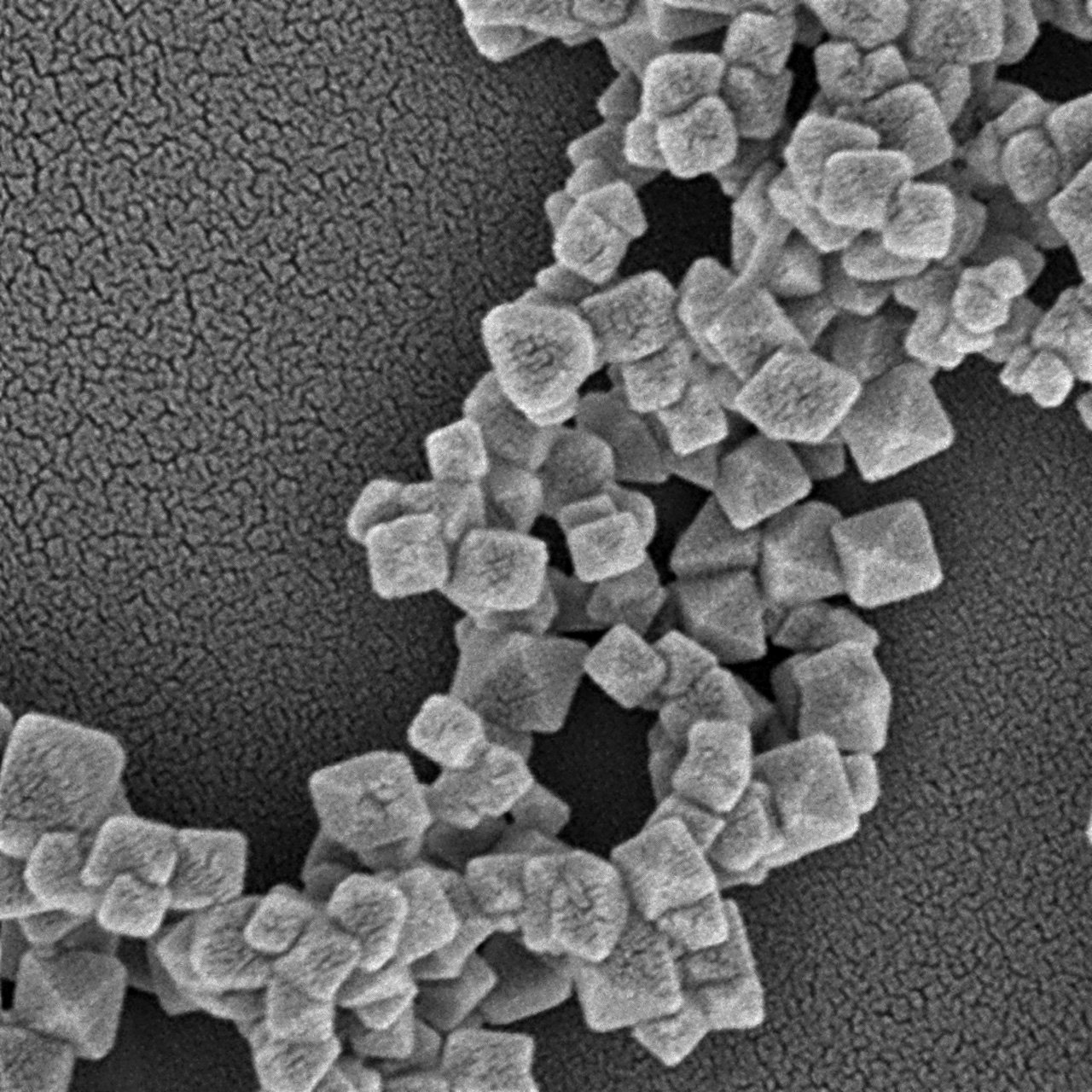
Tescan CLARA™ enables comprehensive characterization of advanced materials by combining ultra-high-resolution imaging with a broad range of contrast and analytical techniques. It is designed to extract maximum information from complex samples while maintaining ease of use and workflow efficiency.

  • Image non-conductive, magnetic, and porous materials with field-free SEM performance enabled by BrightBeam™ technology, supporting high-resolution imaging at low beam energies.

  • Extract maximum insight from every sample using low-energy imaging, beam deceleration, and energy- and angular-filtered BSE detection, enabling enhanced surface sensitivity and material contrast.

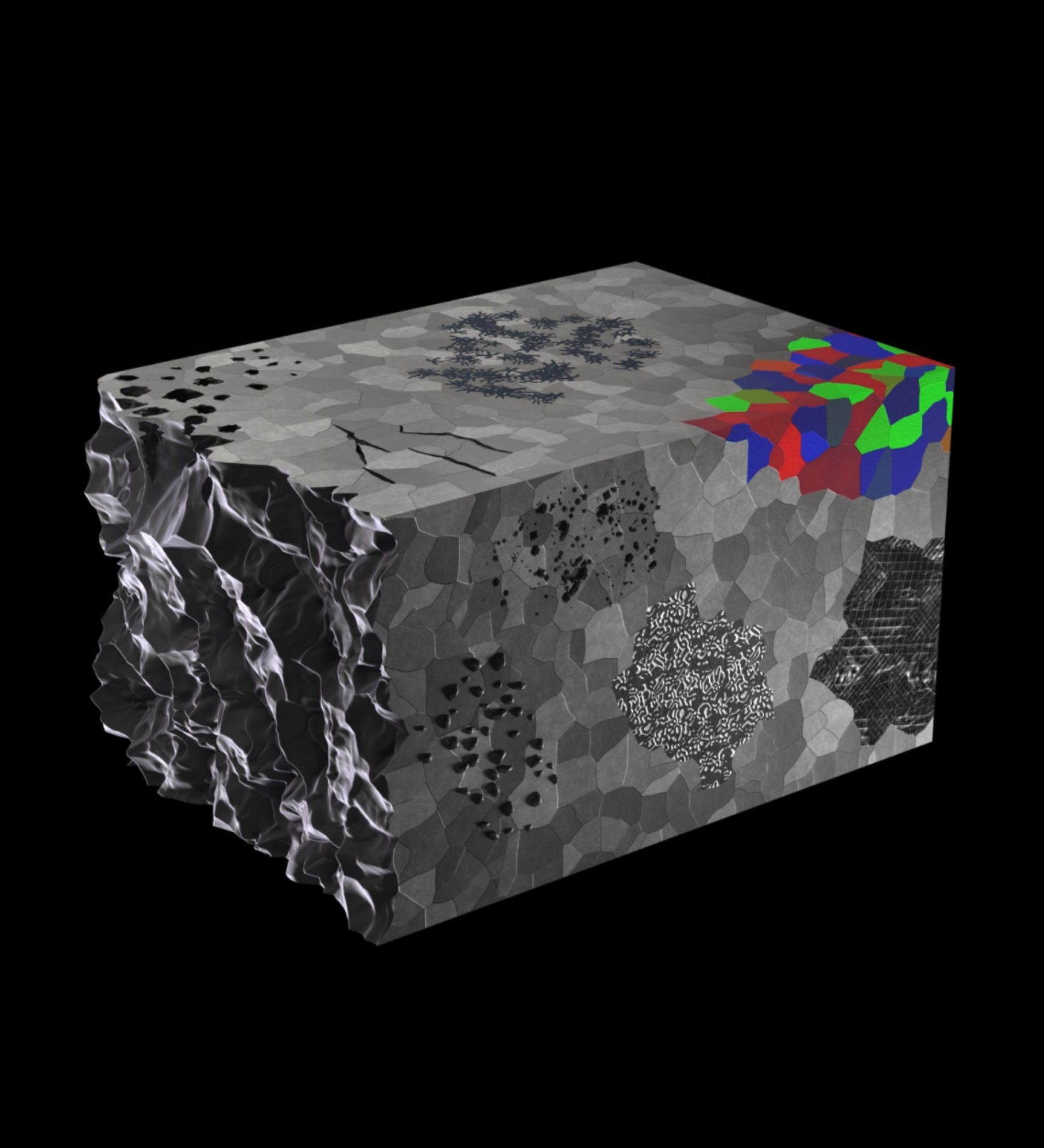
  • Analyze fractured surfaces, grain orientation, phase distribution, and chemical composition using EBSD and EDS workflows.

  • Study structural evolution, including crack propagation and phase changes, to support dynamic material characterization.

  • Correlate complementary analytical techniques such as Raman and SEM to connect structural, compositional, and chemical information within a single workflow.
Magnetite_ET-MD-Axial_2keV_1um_3-02

Tescan Imaging Software

Tescan ESSENCE™

Unified user interface for SEM control

  • Integrated imaging, navigation, and analytical routine
  • Task-focused workflows and multi-user layouts
  • Live 3D collision model for safe movements and collision protection
  • Automated beam alignments and autofocus

Tescan CLARA™ APPLICATIONS

Application area=BT-1
Tescan CLARA™ in Batteries

Deliver exceptional nanoscale imaging and analytical performance for battery material characterization with Tescan CLARA , an ultra-high-resolution, field-free SEM designed for advanced research, automated quality control, and failure analysis.


  • Drive battery R&D through detailed characterization of advanced materials, electrode interfaces, and SEI features using SEM, EDS, and integrated Raman spectroscopy

  • Improve cell quality by analyzing active material and separator characteristics, as well as electrode material distribution using low-voltage SEM and energy-filtered BSE imaging

  • Streamline QA/QC tasks with intuitive operation and automated imaging workflows

  • Enable post-cycling failure analysis to enhance cell safety and lifespan by evaluating material degradation, delamination, and cracking

  • Protect sensitive samples using inert gas transfer and cryogenic workflows

CLARA Batteries
Application area=LS-1
Tescan CLARA™ in Life Science

Designed for routine life‑science imaging and 3D analysis, helping you move efficiently from overview to ultrastructure without compromising data quality.

  • Ultra-high-resolution imaging: From large-area overviews to nanoscale detail for fast, confident sample analysis

  • Gentle imaging conditions: Low-keV operation preserves delicate biological structures while minimizing beam damage

  • Integrated 3D workflows: Built-in VolumeSEM capabilities (serial block-face SEM, array tomography) for true volumetric insights

  • High productivity: Rapid switching between 3D and standard SEM modes keeps your workflow efficient

  • Scalable and flexible platform: Supports EDS, STEM, Raman, Cryo and cooling options to match evolving research needs

  • Optimized for multi-user labs: Reliable, high-throughput performance for everyday biological imaging

Tescan CLARA is a tool of choice for life‑science labs and imaging centers that need a flexible, high‑throughput SEM for everyday work—from rapid overview imaging to ultra‑high‑resolution 2D and 3D workflows.  

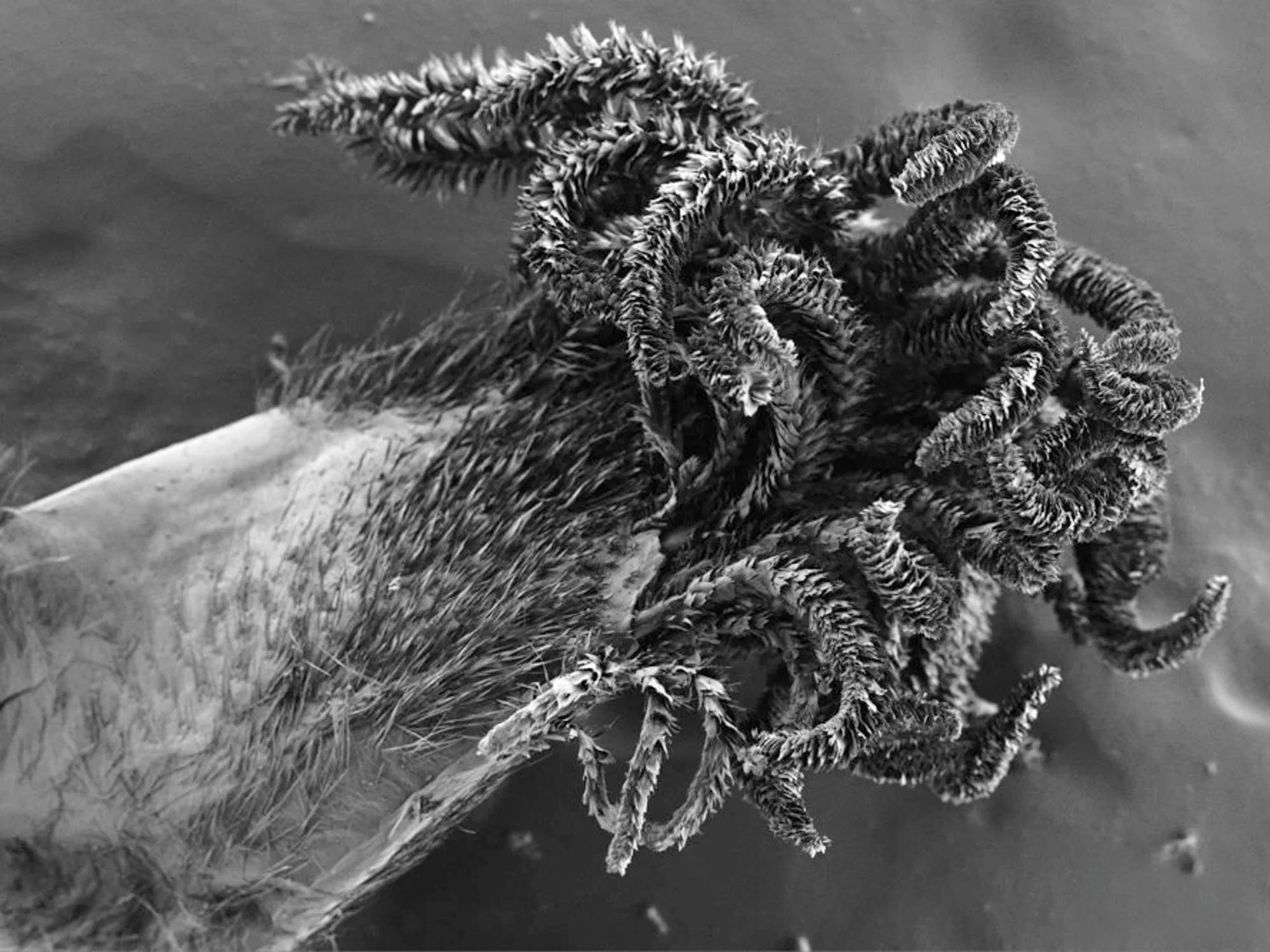
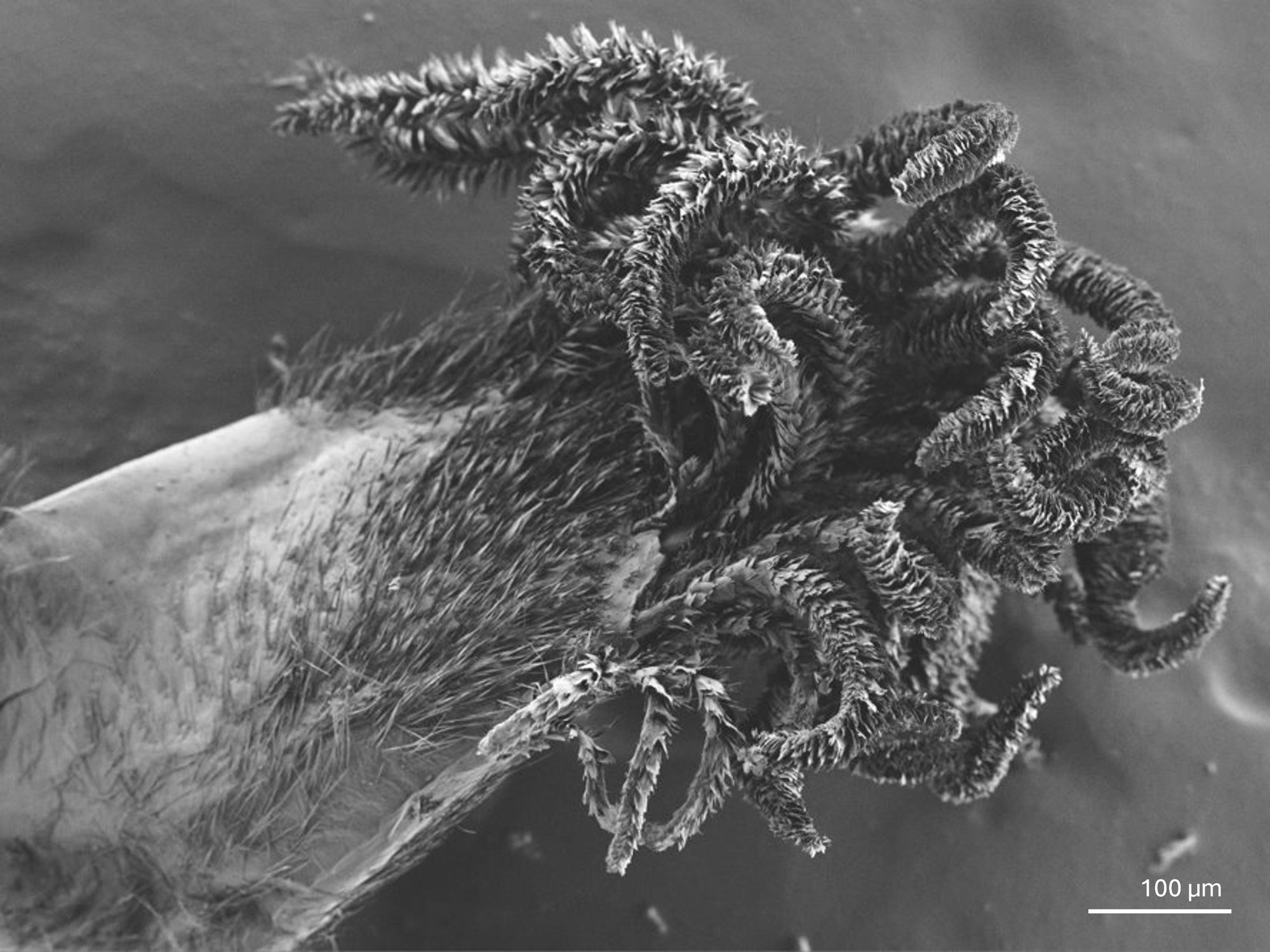
CLARA 1 Feather boa setae maxilla Didymochelia
Application area=MS-1
Tescan CLARA™ in Materials Science

Designed for routine life‑science imaging and 3D analysis, helping you move efficiently from overview to ultrastructure without compromising data quality.

  • Ultra-high-resolution imaging: From large-area overviews to nanoscale detail for fast, confident sample analysis

  • Gentle imaging conditions: Low-keV operation preserves delicate biological structures while minimizing beam damage

  • Integrated 3D workflows: Built-in VolumeSEM capabilities (serial block-face SEM, array tomography) for true volumetric insights

  • High productivity: Rapid switching between 3D and standard SEM modes keeps your workflow efficient

  • Scalable and flexible platform: Supports EDS, STEM, Raman, Cryo and cooling options to match evolving research needs

  • Optimized for multi-user labs: Reliable, high-throughput performance for everyday biological imaging

Tescan CLARA is a tool of choice for life‑science labs and imaging centers that need a flexible, high‑throughput SEM for everyday work—from rapid overview imaging to ultra‑high‑resolution 2D and 3D workflows.  

CLARA 1 Feather boa setae maxilla Didymochelia

Tescan CLARA Applications

_ Application area icon
Tescan CLARA in Materials Science

Precision imaging for structural and compositional insight

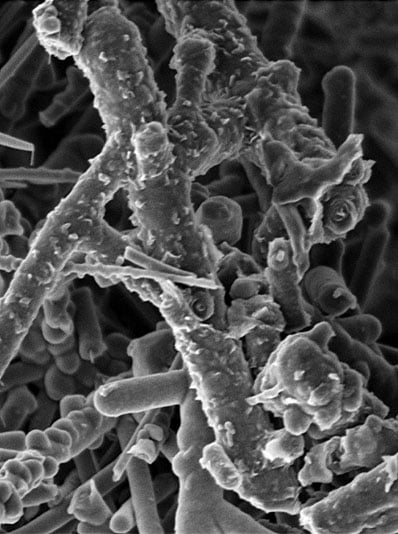
  • Image nanofibers and mesoporous materials without coating
  • Analyze fractured surfaces, grain orientation, and phase distribution
  • Perform EBSD and EDS for crystallographic and elemental analysis
  • Observe crack propagation and phase changes in real time
  • Correlate Raman and SEM data for deeper material understanding
EXLO_in_MS
Application area=BT
Tescan CLARA in Battery Research

Surface-sensitive imaging for lithium and interface studies

  • Visualize lithium and SEI layers at low keV without damage
  • Assess separator pore structure and detect ionic transport defects
  • Analyze electrode interfaces and binder distribution with BSE
  • Identify post-cycling degradation: cracking, delamination, dendrites
  • Automate QA/QC with Image Snapper, VisualCoder™, and In-Flight™ Automated Controls
EXLO_Nanomanipulation
Application area=LS
Tescan CLARA in Life Sciences

Sensitive imaging for hydrated and beam-sensitive samples

  • Capture ultra-high-resolution images at <1 keV without charging artefacts
  • Perform 3D ultrastructural analysis with SBFI and Array Tomography
  • Preserve native structure with cryo-compatible workflows
  • Use Essence™ software for guided or expert-level control


EXLO_Nanomanipulation
Unlocked content


Unlock
Tescan insight

leave a contact to access

Get the most out of Tescan

This is more than information; it's an advantage. We've compiled our technical whitepapers, detailed product flyers, and on-demand webinars to provide you with the knowledge that makes a real difference. Sign up now to access the insights you need to make an impact.

Tescan CLARA™

Technical specification

Electron Optics

Electron Beam Column 
BrightBeam™ Field-Free UHR-SEM Column 
Electron Source 

Schottky field electron emitter 

Electron Beam Resolution 

  • 1.1 nm @ 500 eV
  • 1.0 nm @ 1 keV
  • 1.0 nm @ 1 keV with sample bias (BDT)
  • 0.7 nm @ 15 keV
  • 0.7 nm @ 30 keV STEM

Magnification 

 1x to 2,000,000x

Electron Beam Landing Energy Range 

20 eV – 30 keV (<20 eV with BDT) 

Probe Current 

1 pA – 300 nA (continuously adjustable)

Detectors 

Standard Detectors 

  • E-T detector (Everhart-Thornley chamber detector)
  • In-column Energy-Filtered Multidetector (MD)
  • In-column Axial detector (Axial)
  • Chamber View (IR) Camera

Optional Detectors* 

  • LE-BSE detector (low-energy, scintillator type, mot.)
  • 4Q LE-BSE detector (low-energy, solid state, 4 quadrants, mot.)
  • R-BSE detector (scintilator type, mot.)
  • HADF R-STEM (BF, DF, HADF, mot.; holder for up to 8 grids)
  • CL detectors
  • Optical Navigation and Correlation Camera (ONCam)
  • GSD (Gaseous Secondary electron Detector)

Optional Analyzers* 

  • Tescan (Dual) Essence EDS (integrated)
  • 3rd party EDS
  • 3rd party EBSD
  • 3rd party WDS
  • Confocal Raman microscope with spectrometer (RISE™)

Accessories 

  • pA meter incl. touch alarm function
  • Integrated Plasma Cleaner (Decontaminator)*
  • Beam Deceleration Technology (BDT)*
  • Electrostatic Beam Blanker*
  • Electron Beam Lithography package*
  • Load Lock (manual or motorized)*
  • Stage Extensions and modifications*
  • 3rd party testing stages*
  • 3rd party Cryo solutions*

Stage & Sample 

Chamber type 

GM chamber (20+ ports)**  

Stage 

Motorized, 5-axis compucentric stage 

X & Y axis travel range 

130 mm

Z-axis travel range 

100 mm 

Rotation 

Compucentric, 360° (continuous) 

Tilt range

Compucentric, -70° to +90° 

Max. specimen height 

92 mm (133 mm without stage rotation) 

Max. specimen size

180 mm diameter specimen with full XY travel and rotation, no tilt 
(>180mm diameter specimen with limited stage travel and rotation)

Maximum specimen weight 

  • 8,000 g (full XYZ moves)
  • 1,000 g (full XYZRT moves)

Vacuum system 

Pump types 

Oil-free

Vacuum options 

MultiVac mode (up to 700 Pa; N2, H2O)

*Optional detectors, analyzers and accessories available on request.

 **Alternative chamber configurations available on request.

Electron Optics

Electron Beam Column 
BrightBeam™ Field-Free UHR-SEM Column 
Electron Source 

Schottky field electron emitter 

Electron Beam Resolution 

  • 1.1 nm @ 500 eV
  • 1.0 nm @ 1 keV
  • 1.0 nm @ 1 keV with sample bias (BDT)
  • 0.7 nm @ 15 keV
  • 0.7 nm @ 30 keV STEM

Magnification 

 1x to 2,000,000x

Electron Beam Landing Energy Range 

20 eV – 30 keV (<20 eV with BDT) 

Probe Current 

1 pA – 300 nA (continuously adjustable)

Detectors 

Standard Detectors 

  • E-T detector (Everhart-Thornley chamber detector)
  • In-column Energy-Filtered Multidetector (MD)
  • In-column Axial detector (Axial)
  • Chamber View (IR) Camera

Optional Detectors* 

  • LE-BSE detector (low-energy, scintillator type, mot.)
  • 4Q LE-BSE detector (low-energy, solid state, 4 quadrants, mot.)
  • R-BSE detector (scintilator type, mot.)
  • HADF R-STEM (BF, DF, HADF, mot.; holder for up to 8 grids)
  • CL detectors
  • Optical Navigation and Correlation Camera (ONCam)
  • GSD (Gaseous Secondary electron Detector)

Optional Analyzers* 

  • Tescan (Dual) Essence EDS (integrated)
  • 3rd party EDS
  • 3rd party EBSD
  • 3rd party WDS
  • Confocal Raman microscope with spectrometer (RISE™)

Accessories 

  • pA meter incl. touch alarm function
  • Integrated Plasma Cleaner (Decontaminator)*
  • Beam Deceleration Technology (BDT)*
  • Electrostatic Beam Blanker*
  • Electron Beam Lithography package*
  • Load Lock (manual or motorized)*
  • Stage Extensions and modifications*
  • 3rd party testing stages*
  • 3rd party Cryo solutions*

Stage & Sample 

Chamber type 

GM chamber (20+ ports)**  

Stage 

Motorized, 5-axis compucentric stage 

X & Y axis travel range 

130 mm

Z-axis travel range 

100 mm 

Rotation 

Compucentric, 360° (continuous) 

Tilt range

Compucentric, -70° to +90° 

Max. specimen height 

92 mm (133 mm without stage rotation) 

Max. specimen size

180 mm diameter specimen with full XY travel and rotation, no tilt 
(>180mm diameter specimen with limited stage travel and rotation)

Maximum specimen weight 

  • 8,000 g (full XYZ moves)
  • 1,000 g (full XYZRT moves)

Vacuum system 

Pump types 

Oil-free

Vacuum options 

MultiVac mode (up to 700 Pa; N2, H2O)

*Optional detectors, analyzers and accessories available on request.

 **Alternative chamber configurations available on request.

Clara_GM_right-w900px

GET IN Touch

with specialist

map

Where can you find us: 

Tescan
Libušina třída 21
623 00 Brno
Czech Republic

130405923 us US 37.09024 -95.712891 25.3575 29.349345 20.67957527 42.082797 39.91384763 -33.693421 13.93320106 3.039986586 31.997988 38.050985 47.579533 48.1485965 58.375799 54.663142 19.195447 56.975106 47.916997 50.493053 45.868592 10.79556993 44.35660598 43.2371604 55.536415 14.557577179752773 32.100937 -6.116829 -6.212299277967318 33.600194 -12.08688 23.7104 -33.471062 31.998740087 -23.69149395 43.462349 51.529848 49.1893523 49.197486 25.072375 31.075811 1.299027 40.676979 52.30150662 51.013813 35.684121 37.566531 52.246622 40.581349 39.911632 -26.1811371 41.818215 33.429928

No distributors found.