Navigate Samples Easily with the Specimen Overview Map
Begin every session with a clear view of your specimen. The overview map helps you locate regions of interest quickly and intuitively, so you can move across complex samples with confidence.

Novel Automated Platform for Analytical STEM and 4D-STEM Characterization
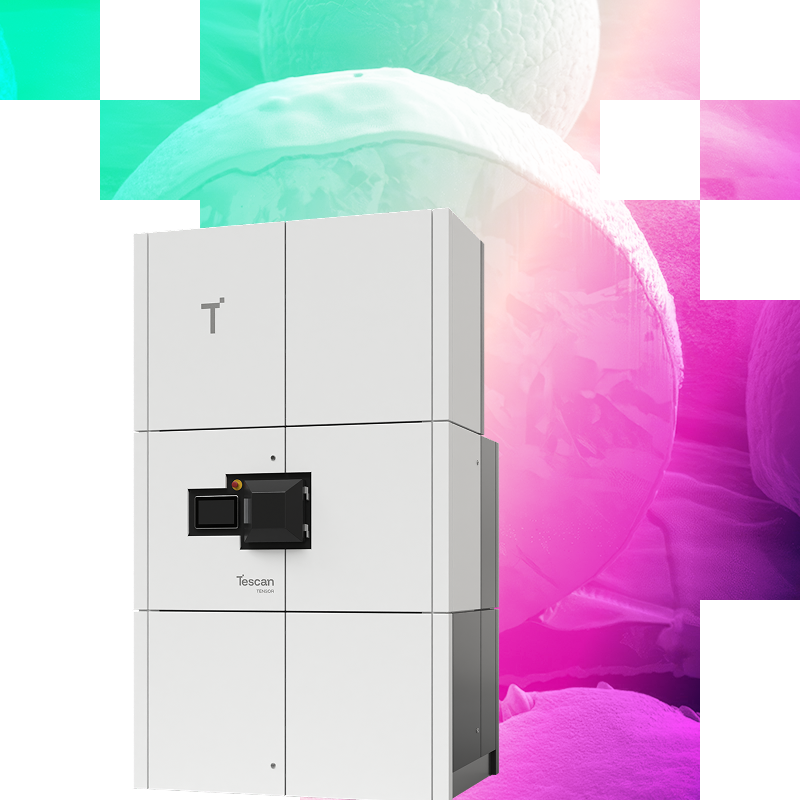
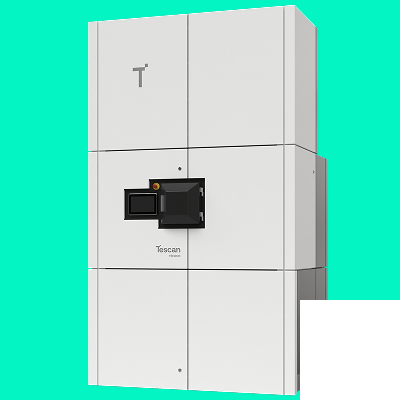
Tescan TENSOR™ delivers fast, multimodal characterization of nanoscale morphological, chemical, and structural properties. It uses STEM imaging, EDS analysis, and advanced 4D-STEM as well as 3D-ED and STEM/EDS tomography workflows.
Fully integrated beam precession provides enhanced quality of diffraction data, resulting in higher accuracy and precision of strain analysis and phase-orientation mapping measurements.
The TENSOR™ cryo-EM solution extends these capabilities to cryo-STEM, cryo-EDS, cryo-3D ED, and cryo-4D STEM analysis of beam-sensitive materials by combining a cryo-transfer holder with low-dose procedures in Tescan Explore™ software.
From room-temperature analysis to cryogenic workflows, TENSOR™ helps you make confident decisions with data you can trust.
Low-Dose Cryo Analysis for Beam-Sensitive Materials
The Tescan TENSOR™ cryo-EM solution extends TENSOR™’s multimodal analytical capabilities to cryogenic analysis of beam-sensitive materials, enabling cryo-STEM, cryo-EDS, cryo-4D-STEM, and cryo-3D ED workflows. By combining a cryo-transfer holder with low-dose procedures in Tescan Explore™ software, it helps preserve sample integrity and supports advanced characterization of materials that are difficult to analyze under room-temperature conditions.



Tescan TENSOR™ analytical STEM diffraction microscope transforms nanoscale characterization of material structure and composition with much higher productivity compared to the traditional TEM/STEM systems on the market.
Fast, multimodal characterization of nanoscale morphological, chemical, and structural properties of functional materials, thin films, synthetic particles, and other samples is achieved flawlessly due to high levels of automation. For conventional STEM imaging and EDS compositional analysis, or advanced 4D-STEM and 3D-ED workflows, diffraction data quality is enhanced by fully integrated and synchronized beam precession.
TENSOR™ gives you the clarity needed to understand the underlying structural and compositional characteristics of materials and relate them to their physical and functional properties. Its multimodal analytical STEM workflows help you bring structure, chemistry, and crystallography together in one sample analysis session.
.png?width=2000&height=926&name=TENSOR-app-MS%20(1).png)

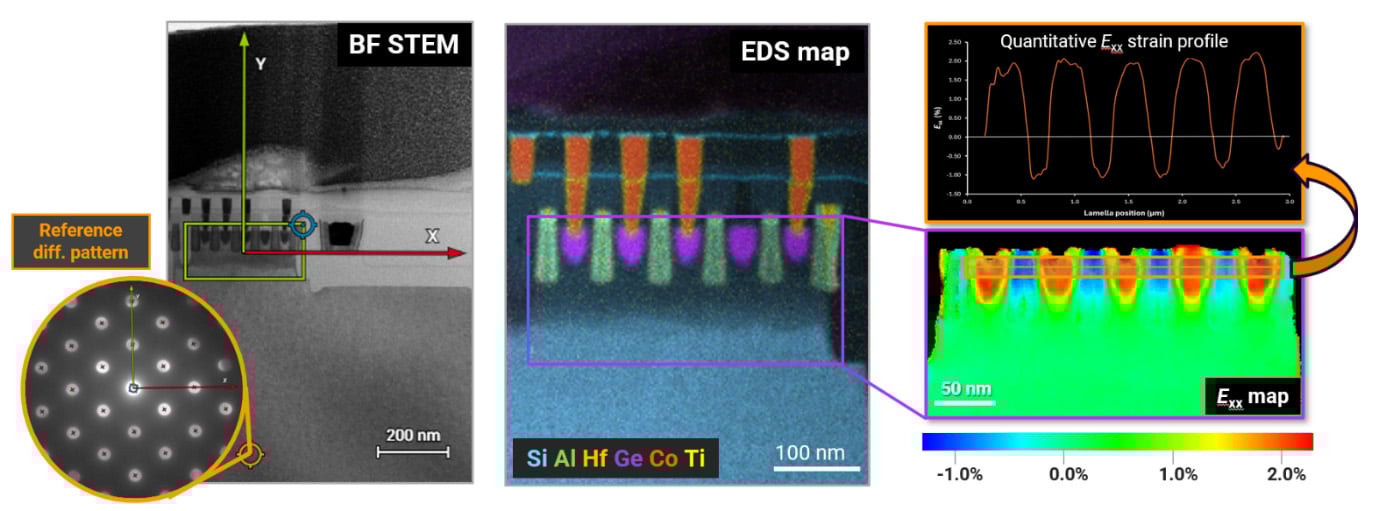
Tescan TENSOR™ enables precise strain mapping, phase and crystallinity analysis, and high-throughput compositional and structural measurements to regular TEM operators for routine and reliable characterization of a broad variety of samples.
This integrated analytical STEM platform with synchronized EDS and precession-assisted 4D-STEM systems is designed for advanced semiconductor device analysis. TENSOR™ delivers clarity, speed, and reliability across applications ranging from FinFET strain analysis to quantification of different phases in thin HZO films and to grain size mapping in VNAND stacks.

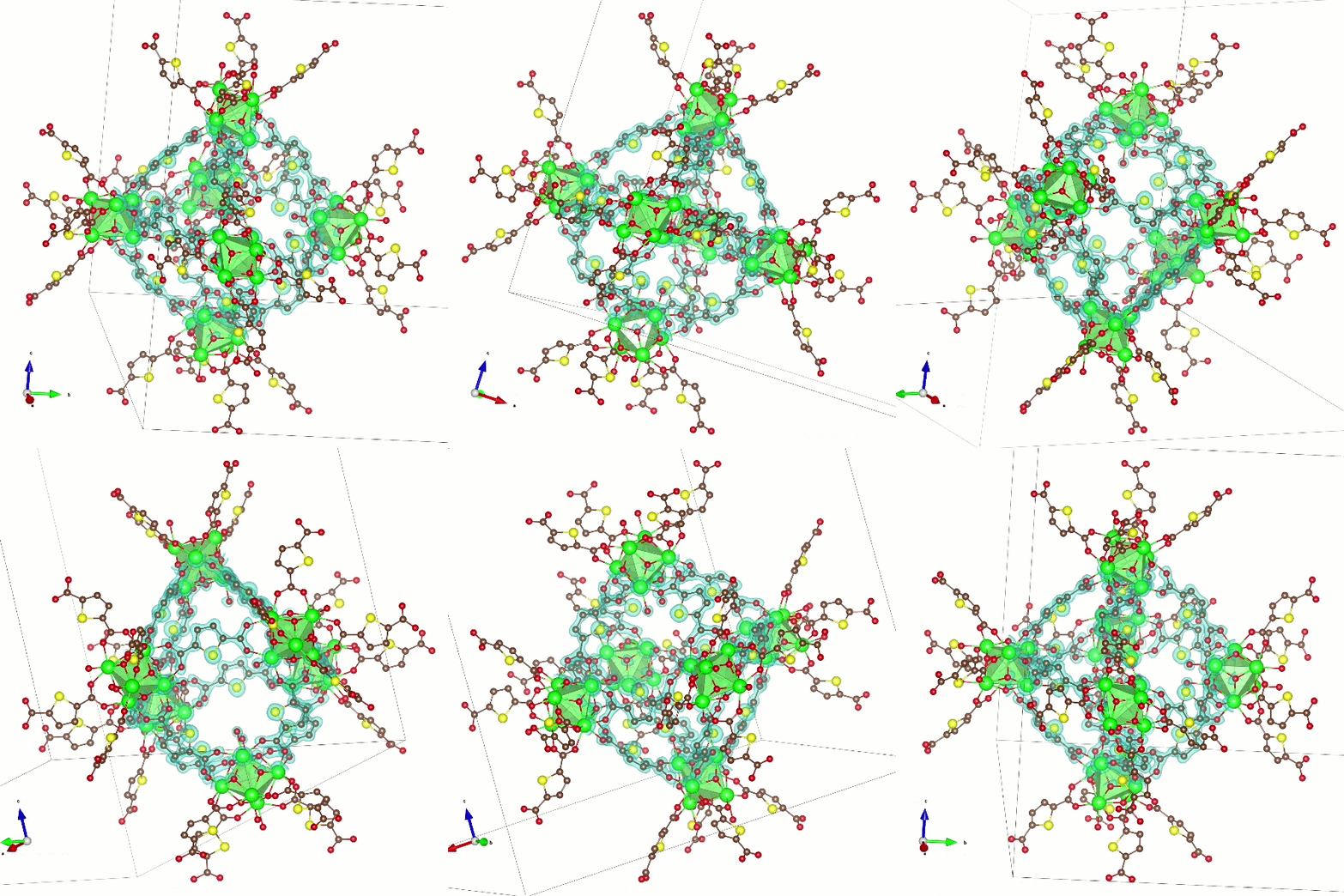
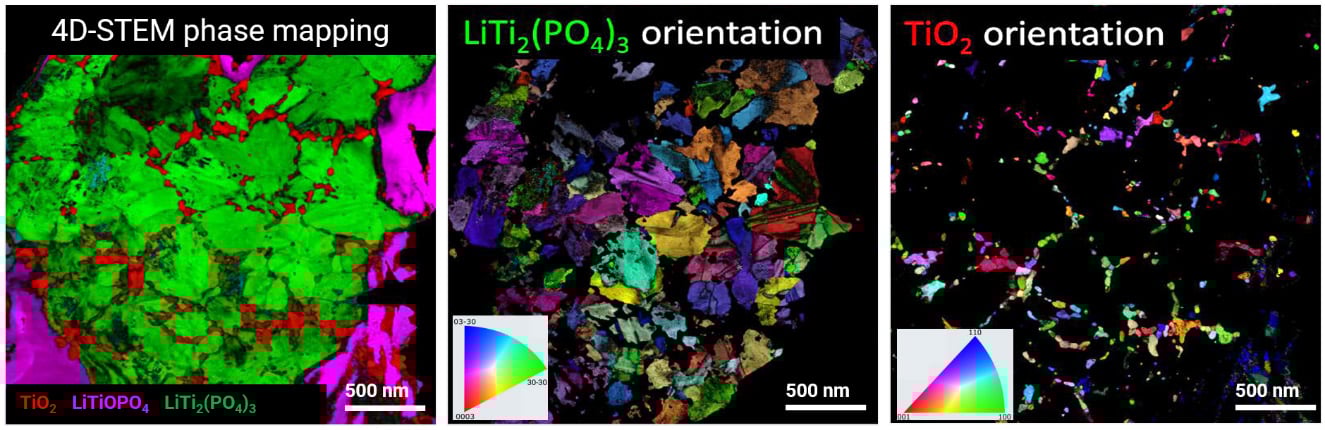
Performance losses in lithium-ion batteries are often driven by local structural changes that are invisible to standard imaging techniques. To understand the real mechanisms behind degradation, phase heterogeneity, and ion transport, a combination of spatially resolved and crystallographically sensitive methods are required.
Tescan TENSOR™, a fully integrated and synchronized multimodal analytical STEM microscope, captures sample morphology, internal crystallinity, and composition by natively correlated STEM imaging, 4D-STEM mapping, and EDS analysis measurements. Revealing nanoscale structure–performance relationships in cathodes and anodes using Tescan TENSOR™ becomes easy and accessible for any operator as routine SEM.

Accurate mineral identification is crucial for understanding geological processes on and beneath the Earth’s surface. Minerals often exhibit nanocrystalline internal structure and are defined by their distinct elemental composition and atomic arrangement. Therefore, their accurate identification requires both chemical composition and crystal structure determination. However, identification and determination of the atomic structure of unknown minerals remain challenging.
While traditional X-ray diffraction (XRD) techniques require crystals of several microns in size, especially when embedded in complex matrices, TEM-based electron diffraction techniques (4D-STEM and 3D-ED) are affected by strong dynamical scattering. Beam precession can significantly reduce the detrimental effects of dynamical scattering and overcome its limitations.
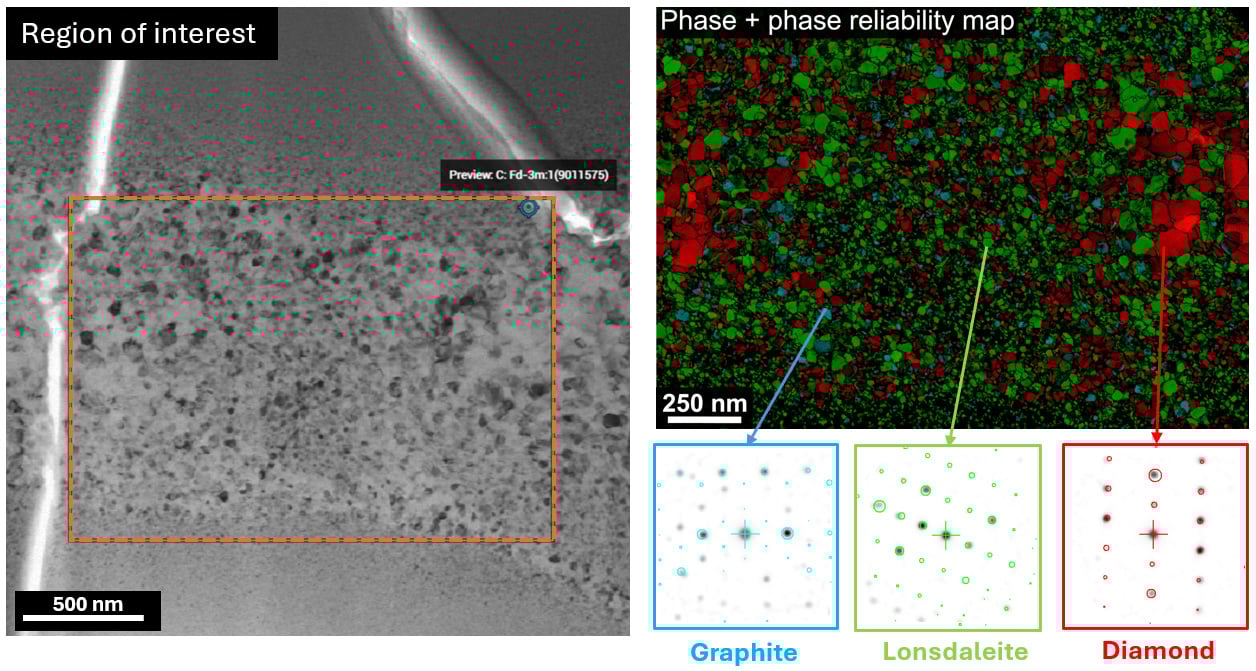
Both major and minor phases can therefore be reliably identified in prepared samples (TEM lamellas) by 4D-STEM phase-orientation mapping, while the structure of unknown phases determined or validated by 3D-ED (precession electron diffraction tomography).
Accurate structural and chemical insight at the nanoscale
TENSOR gives you the clarity needed to understand the underlying structural and compositional characteristics of materials and relate them to their physical and functional properties. Its multimodal analytical STEM workflows help you bring structure, chemistry, and crystallography together in one sample analysis session.