




WEBINAR | From Infrastructure to Impact: EM & Micro-CT in Materials Core Facilities

Smart Oxygen Injection for Selective Milling 

Targeted oxygen injection enhances surface contrast and reduces curtaining during high-resolution cross-sectioning of carbon materials.

hero
hero
Unlocked content

Why Oxygen Injection Improves Contrast and Structural Visibility in Carbon-Based Nanocomposites

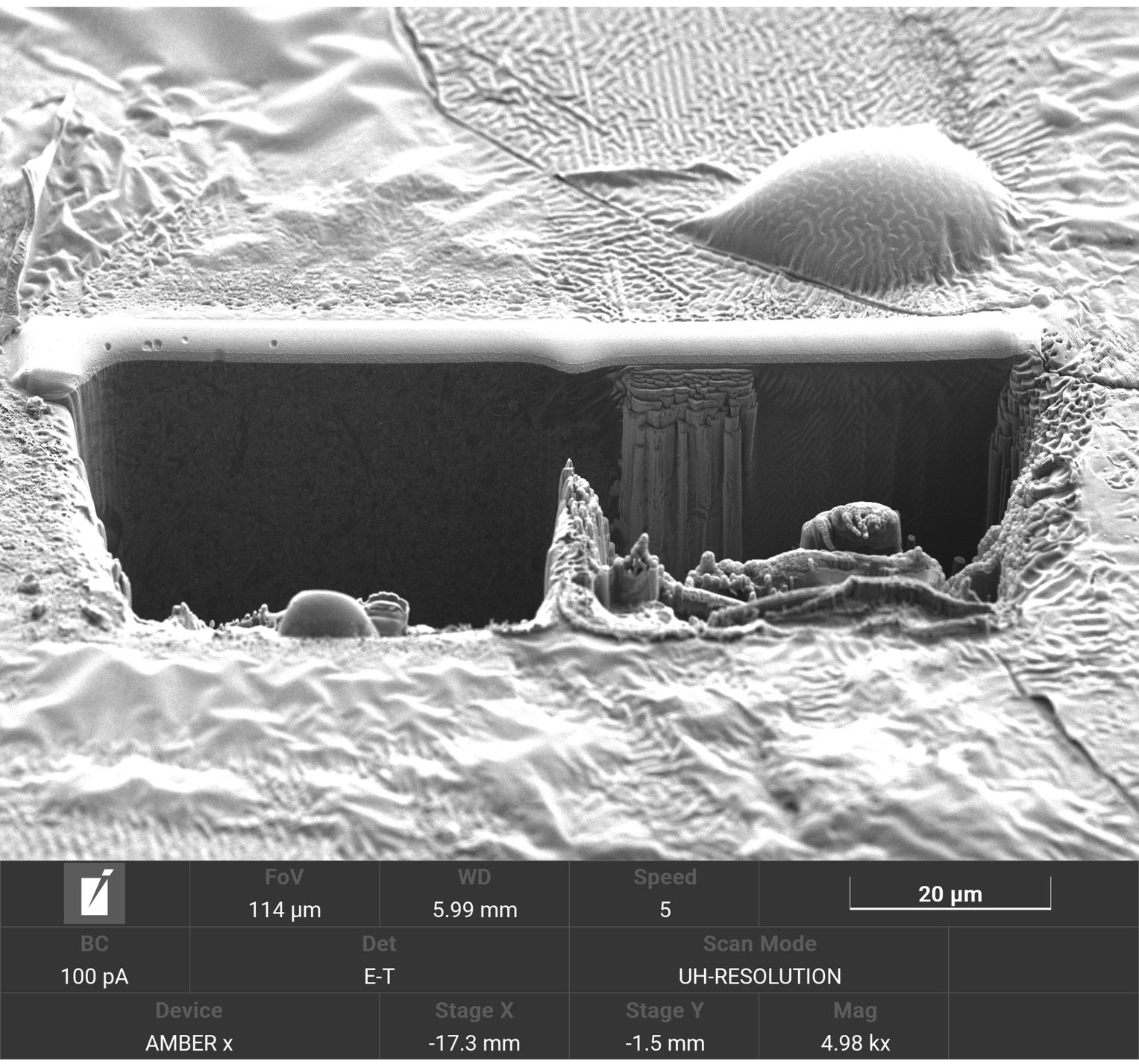
Polymer nanocomposites incorporating MXene sheets offer promising properties for mechanical, electrical, and thermal applications. However, their internal structure is difficult to analyze using conventional FIB-SEM workflows. Xe⁺ plasma milling often produces curtaining artifacts and only limited material contrast, so introducing oxygen gas injection helps manage curtaining more effectively and enhances phase distinction between the carbon-rich polymer and MXene sheets.

This study presents a selective milling workflow using Tescan OptiGIS O2. Gas-assisted plasma milling improves surface quality, reduces curtaining, and reveals MXene sheet orientation inside the composite — offering more reliable insights into material behavior and dispersion.

Why study Oxygen Injection

with Tescan?

01
Root of the Problem

Limitations of Standard Plasma Milling in MXene–Polymer Systems

MXene/polymer nanocomposites pose a challenge in FIB-SEM workflows. The carbon-rich composition of both matrix and filler leads to poor intrinsic contrast. Standard plasma FIB milling, while effective for bulk materials, introduces curtaining artifacts and terracing, obscuring structural relationships. Differentiating MXene sheets within the polymer is particularly difficult without selective contrast enhancement.

02
Materials and Methods

Gas-Enhanced Plasma FIB Workflow for Contrast Improvement

The study analyzed 10:90 wt:wt Ti₃C₂Tₓ MXene/polyDADMAC nanocomposites using a Tescan AMBER X plasma FIB-SEM equipped with the OptiGIS O2module. A 30 kV, 10 nA Xe⁺ beam was used for trenching, followed by a 30 kV, 1 nA polish with flowing oxygen at 2×10⁻³ Pa.

Some regions were protected with a FIBID Pt layer to evaluate curtaining behavior. Additional conditions tested included lower voltages and beam currents, with and without oxygen, to optimize conditions for surface clarity and material contrast.

03
Results and Discussion

Contrast and Curtaining Improve with Targeted Gas Injection

Initial Xe⁺ milling alone resulted in heavy terracing and low contrast. When oxygen was introduced during the polishing step, surface quality improved significantly — especially under the Pt protective layer. MXene sheets became distinguishable from the surrounding polymer, even at depths greater than 10 µm.

Samples polished without a Pt layer still benefited from gas injection, though to a lesser degree. Lower-voltage experiments (20–10 kV) showed diminishing returns in milling depth but confirmed that oxygen-assisted milling consistently enhanced contrast and reduced curtaining.

These results demonstrate that the introduction of oxygen gas selectively interacts with carbon-based phases, allowing more precise material differentiation in FIB-SEM cross-sectioning.

GET IN Touch

Contact us

Get the most out of Tescan

This is more than information; it's an advantage. We've compiled our technical whitepapers, detailed product flyers, and on-demand webinars to provide you with the knowledge that makes a real difference. Sign up now to access the insights you need to make an impact.

Tescan Instruments & Technology

Used in This Workflow

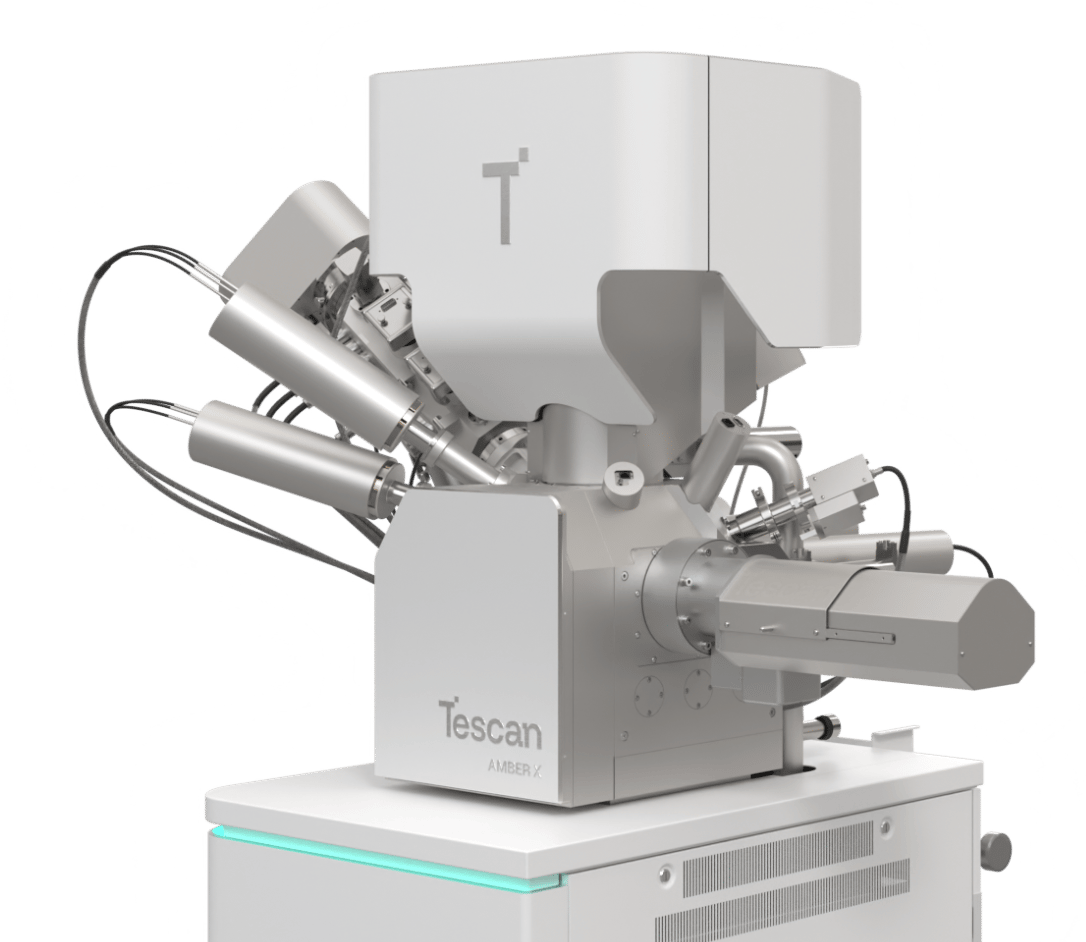
Tescan AMBER X 2 

Engineered for advanced sample preparation in beam-sensitive or compositionally complex materials, the AMBER X supports targeted contrast enhancement workflows with ultra-high-resolution imaging.

  • Xe⁺ plasma FIB enables trenching and polishing of nanocomposites – without structural distortion

  • Integrates with OptiGIS O2 module for improved imaging of carbon-rich materials

  • Field-free SEM column delivers enhanced topographical and phase contrast at low kV
AMBER-X 2

Tescan OptiGIS O2 – Oxygen Injection Module for Plasma FIB-SEM

The OptiGIS O2 module enhances FIB-SEM workflows with controlled oxygen delivery, improving surface quality and imaging precision in carbon-based materials.

  • Enables faster material removal in carbon-rich polymers and composites, with reduced redeposition

  • Enhances SEM contrast and smoothness by minimizing curtaining artifacts

  • Allows fine-tuned milling in materials like silicon or aluminum, improving control over trench shape and depth

GET IN Touch

Contact us

map

Where can you find us:

Tescan Brno
Libušina třída 21
623 00 Brno
Czech Republic

info@Tescan.com 

130405923 us US 37.09024 -95.712891 25.3575 29.349345 20.67957527 42.082797 39.91384763 -33.693421 13.93320106 3.039986586 31.997988 38.050985 47.579533 48.1485965 58.375799 54.663142 19.195447 56.975106 50.493053 45.868592 10.79556993 44.35660598 43.2371604 55.536415 14.557577179752773 32.100937 -6.116829 -6.212299277967318 23.7104 -33.471062 31.998740087 -23.69149395 43.462349 51.529848 49.1893523 49.197486 25.072375 31.075811 1.299027 40.676979 52.30150662 51.013813 35.684121 37.479653 52.246622 40.581349 39.911632 -26.1811371 41.818215 33.429928

No distributors found.