
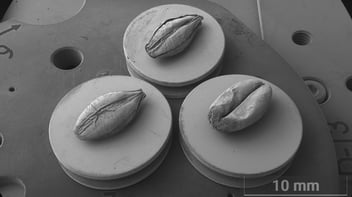
Beer is generally made from water, malted grain, hops and yeast.
Listen to article
Beer is a fermented beverage made primarily from malted grain, water, hops, and yeast. Behind that simple definition is a complex brewing process shaped by microbiology, chemistry, physics, agriculture, and engineering. From enzymes breaking starch into sugar to yeast producing alcohol and flavor, every glass reveals a microscopic world that helps explain how beer is made.
Beer is more than a beverage. It reflects thousands of years of accumulated knowledge and a complex collaboration across geology, agriculture, biology, microbiology, chemistry, physics, engineering, and logistics. Every glass contains an invisible world that explains how raw ingredients become a stable, distinctive product.
The story started long ago: Evidence of fermented grain-based beverages dates back thousands of years, with some of the earliest examples found in ancient Mesopotamia. These early beers differed greatly from today’s clear lagers and were often thick and cloudy. Beer became part of daily and ceremonial life long before people understood the microorganisms responsible for fermentation.
For thousands of years, brewing remained largely an art. Brewers understood which techniques worked, but rarely why. That began to change during the eighteenth century, when thermometers reduced guesswork, hydrometers made sugar measurable, and knowledge once held within individual breweries spread through schools and scientific publications. Brewing became more predictable, laying the foundation for modern process control.
How is beer made? Everything starts with barley.
Brewing begins with malting and mashing, continues through boiling with hops and fermentation with yeast, and ends with filtration, packaging, and serving. Each stage controls the beer’s flavor, aroma, clarity, stability, and foam.
Built for Longer, More Reliable Cryogenic Experiments
Cryogenic workflows can be affected by contamination, ice growth, and the risks associated with cryo-holder insertion into the microscope. TENSOR™ helps address these challenges through near-UHV conditions, achieved without liquid nitrogen cooling of the column, and a unique holder-loading mechanism that prevents liquid nitrogen spillover from the cryo-transfer holder dewar during insertion into the microscope.
This helps reduce safety-related risks and increases the success rate of cryogenic sample transfer. With a cryo-transfer holder designed to maintain cryogenic conditions for more than 8 hours, the TENSOR™ cryo-EM solution supports day-long experiments with essentially no need for liquid nitrogen refills.
How Malting Prepares Barley for Brewing
Before barley can turn into beer, it must first 'believe' it is about to grow into a plant. During malting, the grain is soaked and germinates, activating enzymes that would normally enable a young plant to access the seed's stored energy. Brewers halt germination at the perfect moment, preserving these enzymes for brewing. Ultimately, the grain never transforms into a plant; instead, it becomes beer.


During mashing, these enzymes break large starch molecules into smaller, fermentable sugars. The most important of these is maltose, often called malt sugar, along with smaller amounts of glucose and maltotriose. The result is a sweet liquid known as wort, which provides the nutrients yeast will later consume and convert into alcohol and carbon dioxide.
Before the sugars can be extracted, the malt is crushed to open the grain while keeping much of the husk intact. Grinding it into flour would create a dense paste that is difficult to separate. Preserving the husk supports the next step in the process.
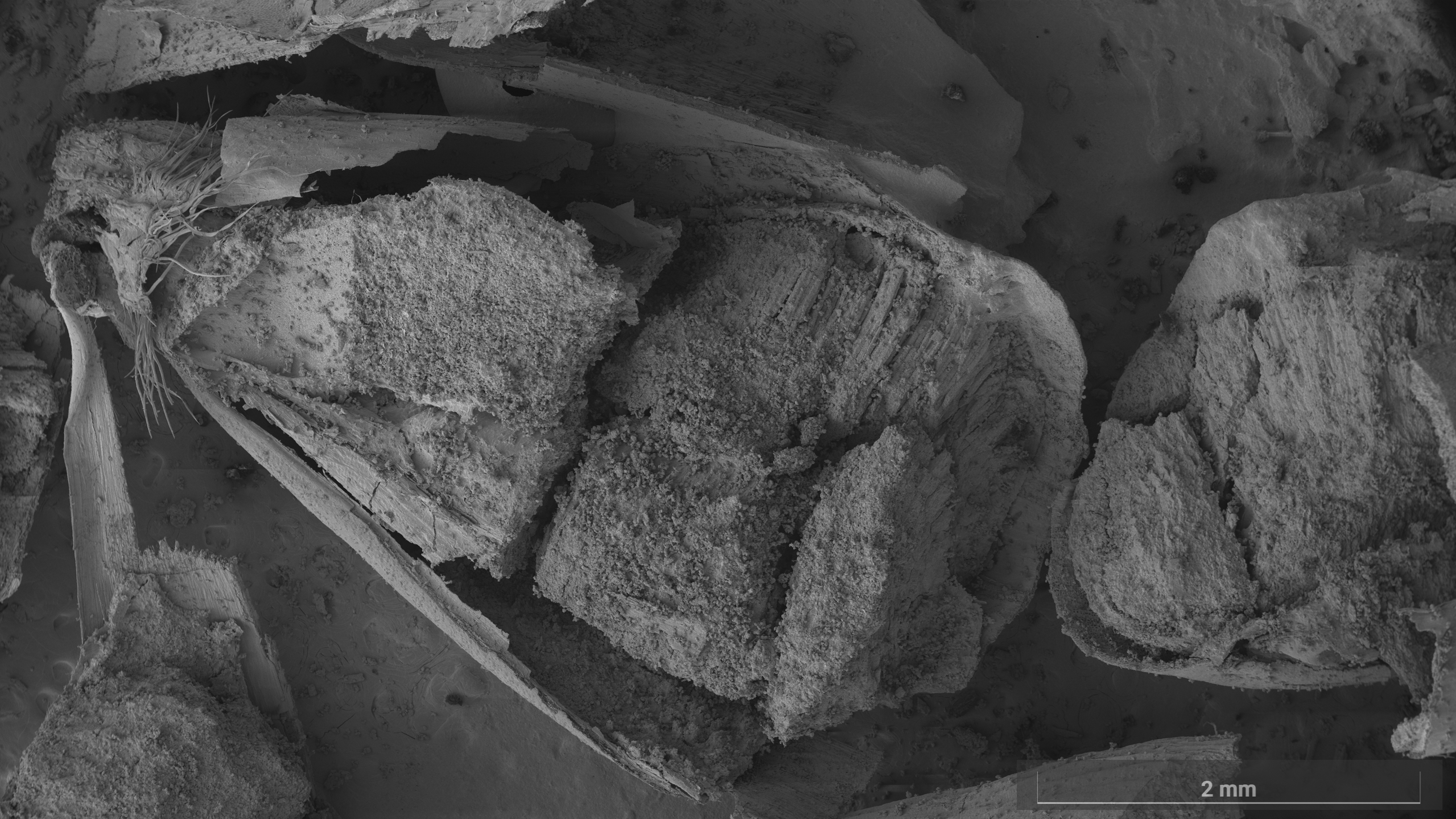 Crushing opens the grain and exposes its interior, making starch available for conversion during mashing. Image captured on Tescan CLARA™.
As the sweet liquid is separated from the spent grain, the husks form a natural filter bed. This practical use of the raw material improves separation and demonstrates how brewing processes make efficient use of each ingredient.
At this point, there is still no alcohol. The liquid is sweet - very sweet. Without adding the next ingredients, it would stay that way.
What Do Hops Add to Beer?
Most people know hops as the source of bitterness, but bitterness is only part of the story. Hidden inside hop cones are tiny yellow glands filled with lupulin, a sticky mixture of resins and essential oils. This is where much of beer's aroma originates. Depending on the variety, hops can contribute floral, herbal, spicy, citrusy, or tropical-fruit notes.


Historically, their role was even more important. Long before microbiology explained why, brewers observed that hopped beer remained stable longer than unhopped alternatives. Some hop compounds have antibacterial activity that can suppress undesirable microorganisms. Hops, therefore, contribute not only flavor and aroma, but also protection.
Boiling changes the biological conditions of the wort. At around 100 °C, enzymes stop working, and most microorganisms are eliminated. The wort must then be cooled quickly because, while rich in nutrients, it is highly vulnerable to contamination.
Then comes the moment when breweries hand control over to another organism. Yeast.
How Yeast Ferments Beer
If malt is the heart of brewing, yeast is its soul.
Yeast consumes fermentable sugars and produces alcohol, carbon dioxide, heat, and energy. It also creates flavor compounds that help define individual beer styles. Banana-like notes in some wheat beers, fruity aromas in many ales, and the clean character of lagers all reflect yeast metabolism.
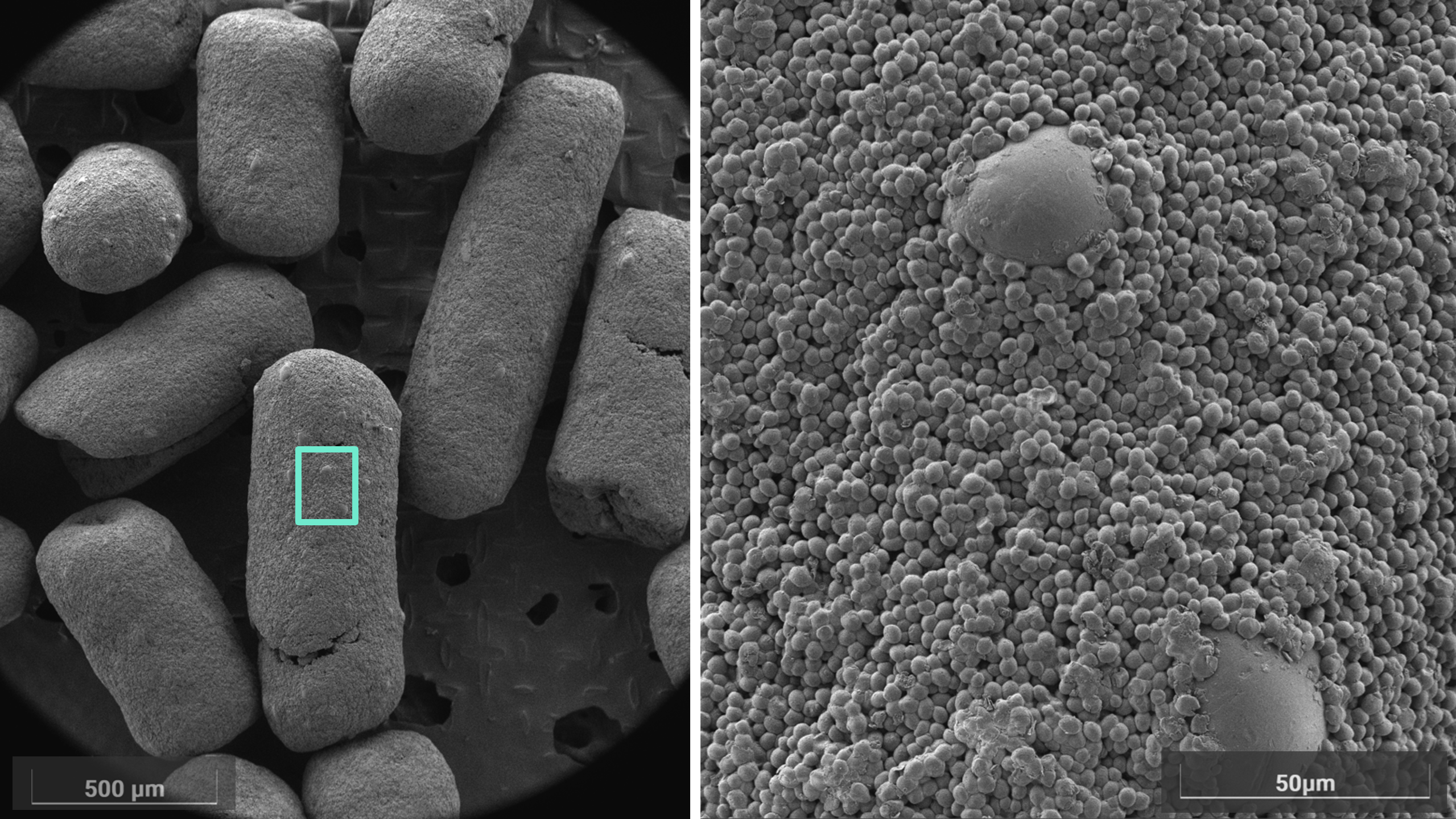 Commercial brewing yeast is often produced and stored in dried form before being rehydrated for fermentation. Images captured on Tescan CLARA.
What follows is, essentially, a population explosion.
Brewers select pitching rates according to beer style, wort strength, fermentation temperature, and yeast condition. A common guideline is about 0.75 to 1.0 million viable cells per milliliter per degree Plato for standard ales, whereas lagers are usually pitched at approximately 1.5 million. As fermentation begins, the cells multiply and rapidly metabolize sugars, producing ethanol, carbon dioxide, and flavor-active compounds that transform the wort into beer.


Every fermentation tank briefly becomes a living ecosystem.
As fermentable sugar becomes scarce and alcohol concentration rises, conditions become less favorable for yeast. Growth slows and eventually stops, following the same biological principles seen whenever a population reaches the limits of its available resources.
At this point, beer technically exists. But it is still cloudy.
How Beer Filtration Removes Yeast and Particles
Suspended yeast cells, protein fragments, and hop particles continue floating through the liquid. Many breweries, therefore, turn to filtration. One of the most fascinating filtration materials is diatomaceous earth, also known as diatomite.


Diatomaceous earth consists of fossilized silica shells of microscopic algae and is widely used as a filtration aid in brewing. Images captured on Tescan CLARA.
Diatomite is a porous sedimentary material composed mainly of the siliceous remains of microscopic algae called diatoms. Their intricate silica structures accumulate in marine or freshwater deposits over long geological periods. Processed diatomaceous earth can be used as a filter aid to remove suspended particles, including yeast, from beer.
The microscopic structures formed by ancient organisms, therefore, help remove modern microorganisms from beer, linking natural materials with precise process control.
How Packaging Protects Beer from Oxygen
By the time beer reaches a keg, bottle, or can, the priority shifts to stability. Even small amounts of oxygen introduced during packaging can gradually accelerate staling and alter the flavor and aroma. Brewers therefore minimize oxygen pickup and use packaging that combines materials and closures suited to the product and its intended shelf life throughout storage and distribution.
Yet the journey is still not over.
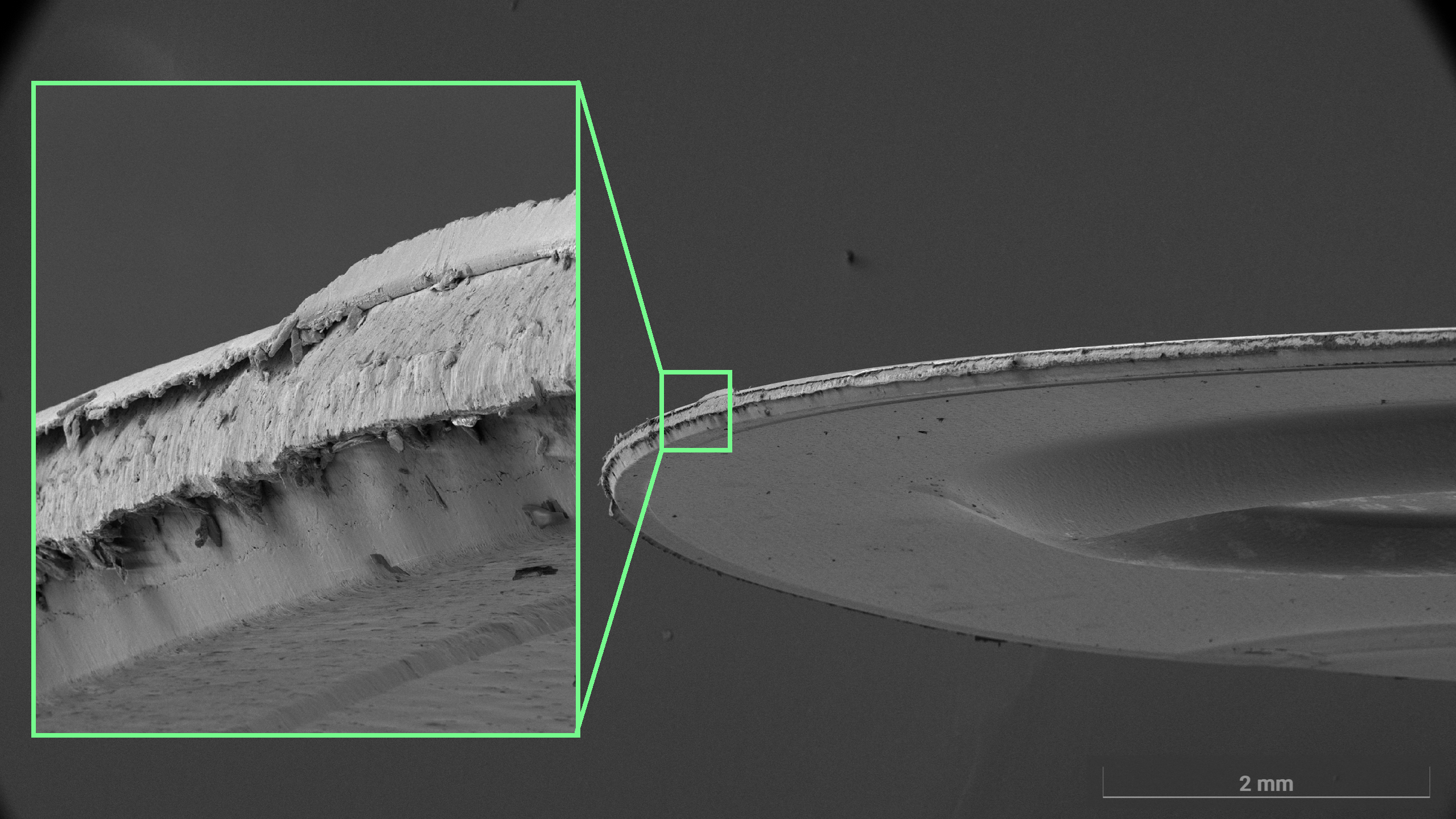 The opening mechanism of a beverage can rely on a carefully designed weakened section in the aluminum lid. Images captured on Tescan CLARA.
A perfectly brewed beer can be ruined by something as simple as a poorly maintained draft line. Biofilms can develop inside dispensing systems, changing aroma, flavor, and stability. This is why breweries, pubs, and bartenders spend so much effort on cleaning equipment. The last few meters of tubing can be just as important as everything that happened inside the brewery.


Finally, the beer reaches the glass, and the foam begins to form.
Using Tescan DynaTOM®, we captured its collapse in 3D over time. Detailed results of the experiment are published in the Journal of Microscopy and can be found here: https://doi.org/10.1111/jmi.12879
Why Does Beer Foam Form and Last?
Foam appears simple: bubbles floating on liquid. Beer foam is a delicate structure formed when carbon dioxide creates bubbles, and malt-derived proteins help stabilize their walls. Bitter compounds from hops can further reinforce the structure. These interactions allow the foam to persist, retain aroma, and enhance the drinking experience. Without that architecture, the foam would collapse almost immediately. The rings left on the inside of the glass after each sip are evidence that thousands of microscopic interactions are working exactly as intended.


Even after the foam collapses, microscopic residues remain attached to the glass, recording the structure of the original beer head. Images captured on Tescan CLARA™.
Understanding beer’s journey requires an interdisciplinary perspective. Geology explains how water sources and mineral composition influence brewing chemistry. Agriculture and plant biology show how barley and hops are cultivated and how their structures and composition determine their brewing potential. Biochemistry reveals how enzymes convert grain starches into fermentable sugars, while microbiology explains how yeast transforms those sugars into alcohol, carbon dioxide, and flavor-active compounds. Chemistry helps us understand flavor formation, oxidation, and stability, and physics describes heat transfer, carbonation, fluid flow, and foam behavior. Engineering integrates these principles into controlled, repeatable production systems, while logistics preserves product quality as ingredients and finished beer move through the supply chain.
And somehow all of those fields meet inside a single glass.
Its complexity is not the point. What makes beer fascinating is how it brings together thousands of years of knowledge, living organisms, and multiple branches of science in a single glass.
Electron microscopy offers a unique way to explore many of the structures involved in brewing, from malted grains and starch granules to hop lupulin glands, yeast cells, filtration materials, and even residues left behind by beer foam. Many of these samples require only minimal preparation before imaging, while more delicate biological materials can be examined using specialized techniques such as cryogenic imaging. Although electron microscopy is not a routine tool in brewing, it provides a fascinating perspective on the microscopic structures that shape familiar ingredients, materials, and processes throughout the brewing journey.
Written by Martin Buran
Senior Applications Engineer, Tescan


Related Resources
Learn more about the New Tescan CLARA™
Explore advanced imaging and contrast with the new CLARA™.

Tescan CLARA™
Ultra-high-resolution SEM for advanced materials analysis

Submit Your Sample for Advanced Contrast SEM Analysis
Improve sample analysis with advanced SEM contrast.