
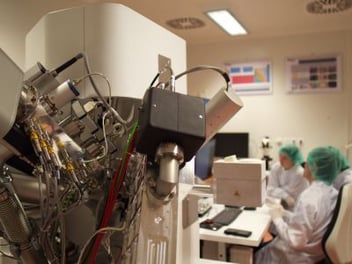
An interview on the shared CEITEC Nano infrastructure, a new plasma FIB-SEM with integrated ToF-SIMS analysis, and the future of the cryo workflow.
Ondrej Man, PhD. serves as Deputy Head of the large research infrastructure CEITEC Nano. CEITEC Nano is the largest cleanroom-based research infrastructure in the Czech Republic, providing open access to a comprehensive portfolio of the highest end instrumentation for nanofabrication, nanocharacterization, and structural analysis at the sub-nanometer scale. It is part of CEITEC (Central European Institute of Technology), a multidisciplinary centre of scientific excellence in Brno, Czech Republic, where life sciences, advanced materials, and nanotechnologies are integrated within a state-of-the-art research infrastructure designed to foster international collaboration and address global health and environmental challenges.
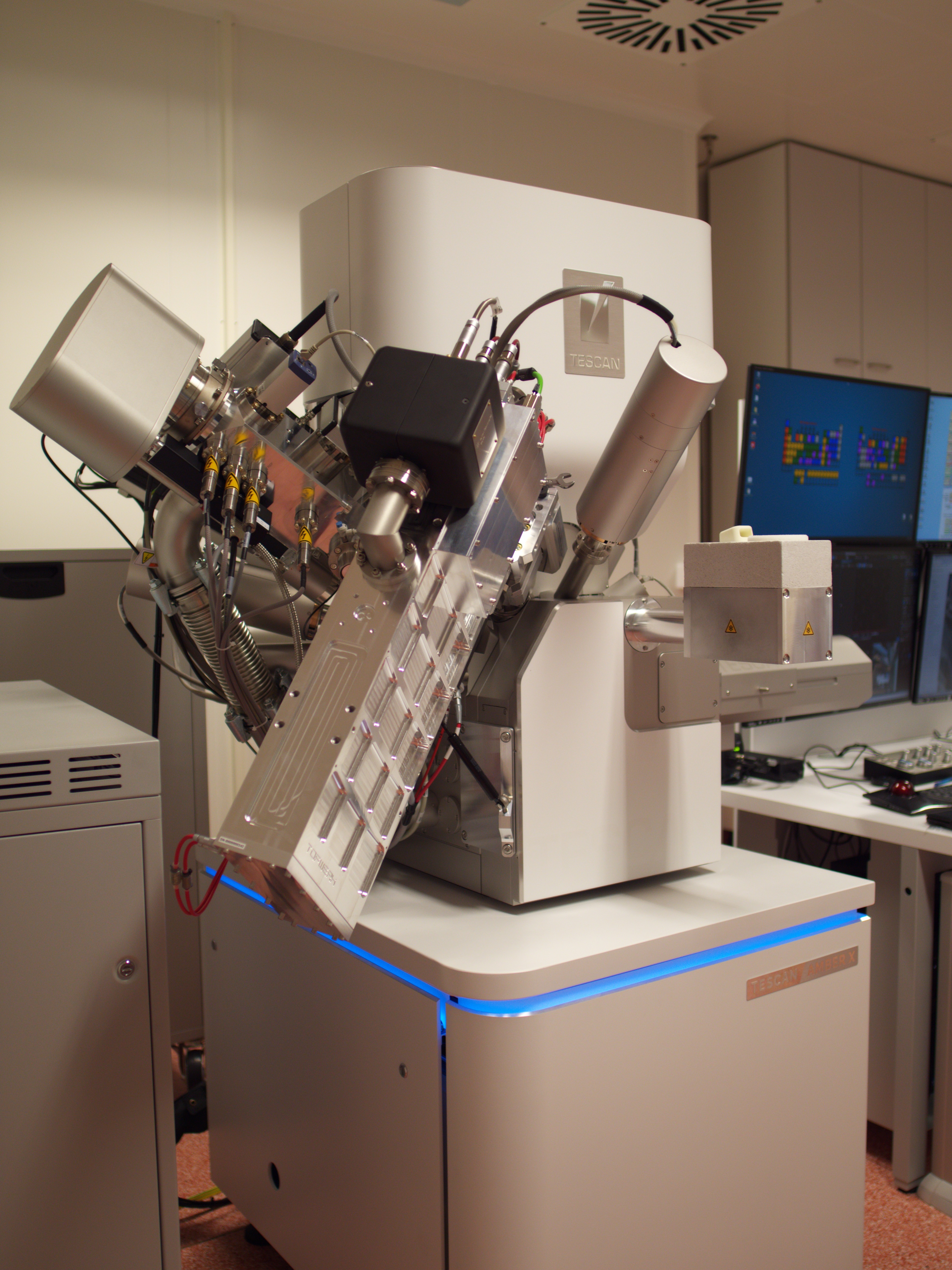
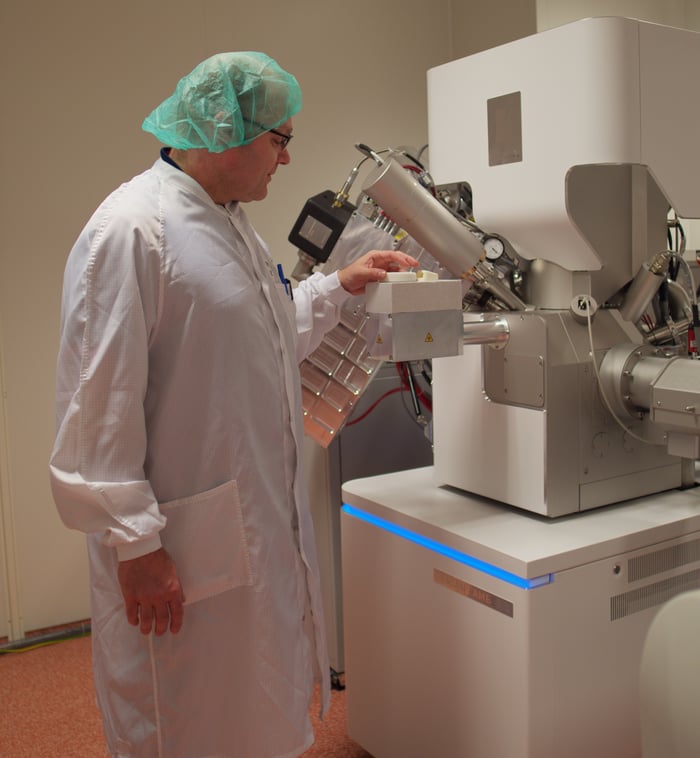
Following a laboratory expansion, which included the addition of a Tescan AMBERX™ 2 with the market leading Tescan MISTRAL™ Plasma FIB column and a high resolution ToF-SIMS detector, we invited him for an interview.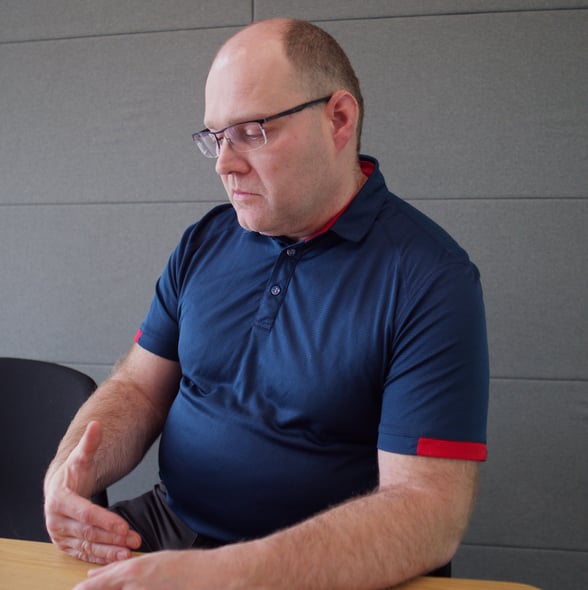
Who are the typical external users of your infrastructure?
If we look at the user community as a whole, the largest group consists of CEITEC students and researchers, both from Brno University of Technology and, to some extent, Masaryk University. Another important group comprises academic staff from Brno University of Technology and Masaryk University more broadly.
In addition, colleagues from other institutions also come to us, for example from the Institute of Physics of the Czech Academy of Sciences in Prague, and we also have a strong community of researchers from Austria and other countries. They usually learn about our infrastructure through joint projects and other professional connections.
Is work on the electron microscopes tied to specific projects you are running?
A one of the key principle of our operation is open access. That is one of the main ways users gain access to our instruments. Most commonly, we use a mode we call "self-service".Users pays a fee that covers training, basic support, and the necessary infrastructure. After completing safety training and meeting other requirements, they gain access to the specific instruments they select and for which they are trained.
This is the most efficient mode for us because it places the least burden on the infrastructure. In addition, however, we also offer a service mode, meaning measurements and analyses provided as a service. This is preferred primarily by our commercial customers, but academic partners also use it when it is not worth training their own staff member for a one-off analysis. In such cases, they send us samples, we perform the measurements, evaluate the data, and deliver the results.
Are electron microscopes also part of teaching?
Without question, yes. For example, I teach at the Faculty of Mechanical Engineering, of the Institute of Materials Science and Engineering, where I am responsible for a course focused on microscopy techniques. We start with light microscopy, but a substantial part of the course is devoted to electron microscopy, mainly from the perspective of materials engineering and the practical use of these methods. We do not go too deeply into instrument design details or the underlying physics; rather, we focus on what microscopes are suitable for a give application and how to work with them.
For instance, at the faciliy, we have a Tescan VEGATM microscope available, so students can acquire basic operational skills on that system. When we move on to dual-beam systems and FIB technology, we bring them to CEITEC and demonstrate more advanced systems in real operation.
In addition, CEITEC has an accredited doctoral program in which we also lecture on microscopy and analytical techniques in a broader overview. Doctoral students very often become our users later, because they have the most direct access to the infrastructure. So, we do meet them again, in the context of specialized training on specific instruments.
Let us move to the new AMBER XTM 2 that has expanded your laboratory capabilities. Why this particular system?
We had long been aiming to acquire a plasma FIB-SEM system with a xenon ion beam. The need for such an instrument increased significantly after we established collaboration with colleagues from the Institute of Physics of the Czech Academy of Sciences working on advanced materials for which a conventional gallium FIB had begun to complicate our experiments.
Specifically, we were performing in situ experiments in which samples were heated inside a transmission electron microscope while their electrical response was measured simultaneously. These experiments could run continuously for as long as two days. It was precisely in such situations that it became clear that gallium introduced during preparation could migrate into the area of interest and compromise the measurement result. Gallium contamination was therefore the pricipal reason we wanted a xenon-based system.
So the point was to expand into applications where a Ga beam was no longer sufficient?
Exactly. And it was also about capacity. With a slight exaggeration, I would say that you can never have too many dual-beam systems. Once users learn that such a capability exists, demand for it grows very quickly. So the goal was both to expand capacity and to parallelize operations. At the same time, however, we also wanted to gain new analytical capabilities.
Including ToF-SIMS?
One of the important reasons for this configuration was the integration of ToF-SIMS, specifically time-of-flight mass spectrometry. We had not had this type of analyzer on our FIB systems before. We do have a standalone dedicated SIMS system with very good resolution, but that system has capacity limitations. We therefore wanted to add another option for chemical analysis.
What exactly does ToF-SIMS enable?
Its most fundamental benefit lies in elemental analysis, over an exceptionally broad range. Many other spectroscopic techniques have difficulty detecting light elements. By contrast, ToF-SIMS can detect virtually the entire periodic table, including hydrogen. Light elements such as hydrogen or helium are often problematic for other techniques.
In addition, ToF-SIMS allows one to distinguish chemical and ionization states, i.e., whether a given element occurs alone or as part of a molecule or a particular chemical bond. This significantly broadens the interpretive possibilities.
Read more: Multimodal 3D FIB-SEM with ToF-SIMS Reveals Lithium-Ion Battery Electrode Degradation
For what type of research is this most attractive?
That will only become fully apparent over time, but we already know of specific users who will benefit from this combination. For example, a group from the Institute of Physics of Materials of the Czech Academy of Sciences in Brno is working on solid-state hydrogen storage materials. It was precisely for such applications that we wanted the system to include a liquid-nitrogen-cooled cryo stage from the outset.
If you saturate a material with hydrogen and want to study its distribution using ToF-SIMS , you need to prevent the hydrogen from escaping from the sample during analysis. That means cooling the sample, ideally prior to insertion, then maintaining it at a low temperature throughout the analysis. The same applies to other light elements, for example lithium, whose observation is important in studies of battery electrolytes.
The cryo stage is also useful in more routine situations, for example when working with polymers and other sensitive materials that decompose or change under ion or even electron beam irradiation. For polymers, the cryo stage is very practical.
Can you give a specific example?
Our colleagues produce nanofibers from polyvinylidene fluoride and other polymer materials. They were trying to create multicomponent fibrers with different compositions in the core and in the shell. To prove that this structure had been achieved, they needed to make a cross-section through a fiber with a diameter below one micrometer.
Under normal FIB conditions, that was impossible. The fiber always melted under beam exposure because heat mitigation options for such a small structure are extremely limited. Only when a cryo stage on an older FIB system was used were we able to section the fibere without deformation, and the colleagues could truly demonstrate that they had prepared a core-shell structure.
So it is fair to say that the range of applications is very broad?
Certainly, and that is also because we ourselves usually do not manufacture the materials. Our task is to prepare suitable specimens for analysis and provide the measurements. The materials themselves come from our colleagues in research groups or from external users. It is precisely this diversity of the user base that means we encounter a very wide spectrum of applications.
Is there anything even such a universal instrument cannot handle? For example biological samples?
That is an area we did not intend to enter. We do receive requests at the interface of life sciences and materials science, but in general we do not aim to move toward biological tissues and similar samples, because within CEITEC and other Brno institutions we already have colleagues who specialize in that area. There is very strong expertise in life sciences at CEITEC Masaryk University, and similarly at the Institute of Scientific Instruments. So we focus mainly on materials and technology-oriented applications.
Besides ToF-SIMS, what other analytical detectors are available on the system?
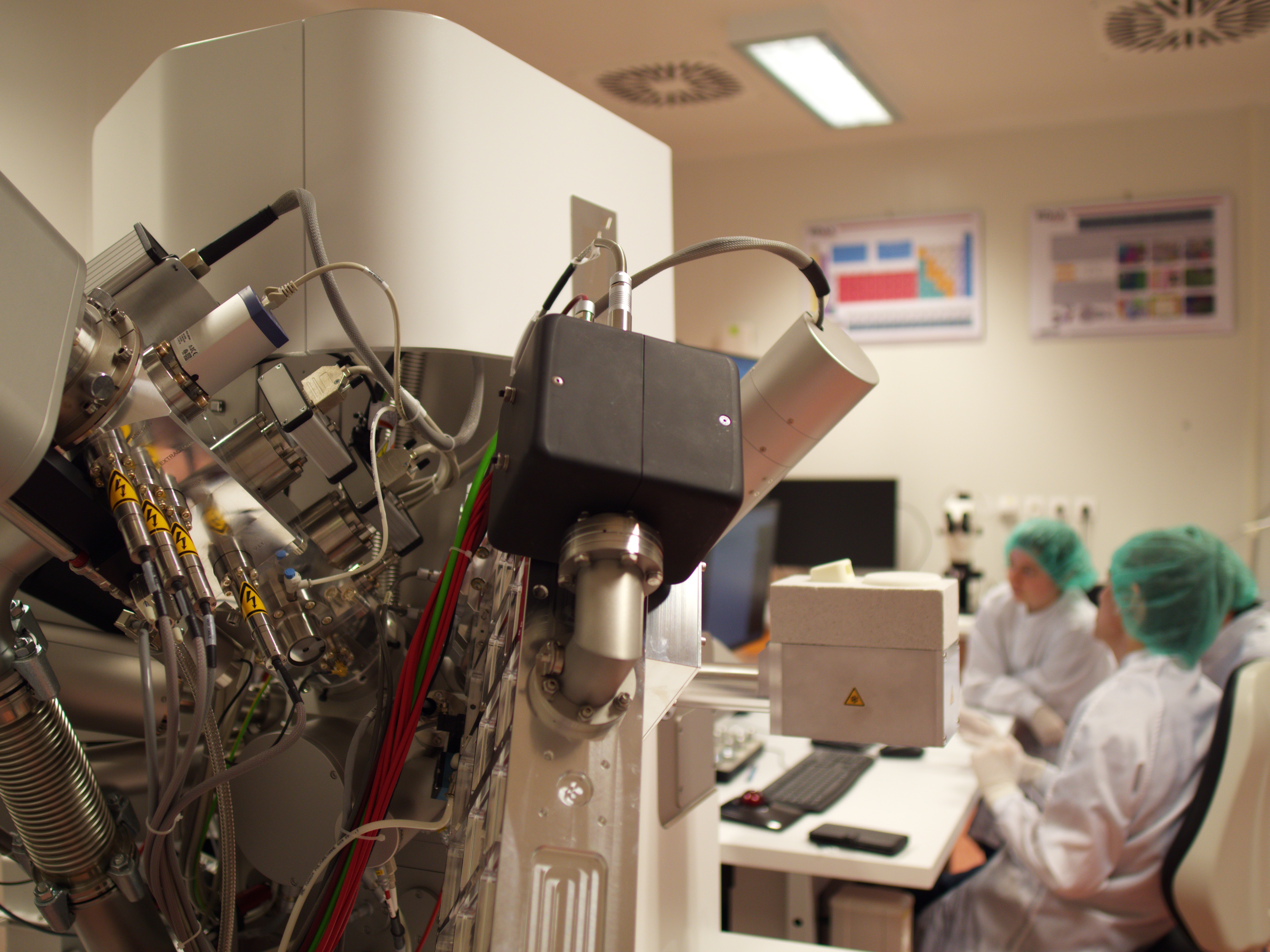
We, of course, also have EDS, or, energy-dispersive spectroscopy. What is interesting about this particular EDS detector is that it uses a modern window with high transmissivity, allowing us to analyze lighter elements than we can using older and more conventional detector designs. We also have electron backscatter diffraction, or EBSD. This is no longer pourely an elemental analysis technique, but a method that provides information about local crystallographic structure, grain orientation, and related features.
How would you describe the added value of EBSD?
The most common application of EBSD is grain mapping and crystallographic orientation mapping. If you imagine a piece of metallic material, its internal structure is made up of a system of grains. Each grain has its own crystal lattice, oriented slightly differently in space. EBSD makes it possible to determine precisely how each grain is oriented, and from that one can derive a whole range of additional information: degree of deformation, anisotropy, texture, and much more.
Over the course of my career, the major changes in EBSD have been primarily in data acquisition speed and software. Some analyses used to take two days; today it is possible to acquire an orientation map with one million data points in an hour to an hour and a half. That is a huge shift. Equally important are the new algorithms, which can handle poor-quality diffraction patterns, for example from heavily deformed samples, where earlier approaches would fail.
You also have a personal professional history with EBSD, don’t you?
That is correct. I first got into electron microscopy about twenty years ago during my PhD studies. My then supervisor had acquired a new EBSD detector for a Philips XL30 microscope and needed someone to learn how to work with the technique. At the time, I did not realize that I was essentially the first guinea pig, but I became one of the pioneers of EBSD at our institute. Later we found out that we were only the second workplace in the Czech Republic to have such a detector, and effectively the first to begin producing scientific results with it in a systematic way. EBSD has stayed with me throughout my career ever since.
What is the benefit of combining ToF-SIMS, EDS, and EBSD specifically on a dual-beam system?
When these detectors are mounted on a dual-beam system, it opens the possibility of slice-and-view or slice-and-analyze workflows. That means you progressively remove material layer by layer and after each step obtain image data, elemental maps, or orientation maps. From these data, you then reconstruct a three-dimensional volume.
And it is precisely because of the xenon plasma system that these 3D analyses can now be performed over much larger volumes within a reasonable timeframe. With the older gallium FIB, one could typically process a volume of around 8,000 cubic micrometers over a weekend. With the plasma FIB, we expect that in a comparable time we will be able to work with volumes in the range of tens of cubic micrometers up to cubic millimeters. That is an order-of-magnitude difference.
Does xenon also have an advantage in the preparation of TEM lamellae?
Yes, but perhaps in a different way than one might expect. It is not primarily a matter of speed or sputtered volume. For TEM lamellae, the main advantage is that you are not introducing gallium into the sample. That was particularly critical in our in situ TEM experiments, where gallium could migrate into the region being observed during heating. Xenon can also be implanted to some extent, but to a much smaller degree, and moreover it is an element that is unlikely to be confused with the expected composition of the sample.
Speed itself matters mainly for large lamellae. We routinely prepare lamellae ten to twenty micrometers long, but with a plasma FIB you can readily reach hundreds of micrometers or even half a millimetre. In practice, xenon allows you to remove large volumes faster when preparing for lift‑out, especially for larger lamellae. But you still spend a significant amount of time on the final fine polishing - very similar to polishing using Ga FIB. As a result, the overall throughput benefit is not necessarily as dramatic when high precision is required. So, this is not a matter of one technology fully replacing the other, but rather of expanding the range of possibilities.
How unique is the equipment you have?
If we are talking only about the category of plasma dual-beam systems, that in itself is no longer exotic today. But the combination of a plasma dual beam with high-resolution ToF-SIMS, a cryo stage, and additional analytical detectors such as EDS and EBSD is, in my opinion, relatively unique. I would venture to say that there will not be many comparable installations in the CEE region.
Was a certain degree of differentiation from surrounding facilities also part of your specification strategy?
Yes, absolutely. When you acquire a system this expensive, you need to very clearly justify why you want it in precisely that configuration. One argument may be special analytical requirements, another may be insufficient capacity, but in our case a key factor was also the desire not to purchase an exact copy of what was already available nearby. If you invest this kind of money, it is logical to aim for a configuration that expands regional capabilities rather than duplicating them.
I suppose it is also an advantage that you have a transmission electron microscope in the neighboring lab.
That is a tremendous advantage. In some cases, it is absolutely crucial. For example, if you are working with a sample that oxidizes rapidly, you can prepare a lamella in the FIB and transfer it into the TEM within a few minutes, without the sample changing significantly. That would be very difficult if you had to transport it across the city or between institutions. Having these technologies together in one place is essential for certain applications.
What further upgrades would you like to see in the future?
The next logical step is to complete the cryo workflow. At the moment, we have the cryo stage operational in the chamber, but we lack the possibility to insert the sample through a load lock, i.e. through a separately pumped transfer chamber. That is a significant drawback, because at present we hmust vent the entire chamber whenever we change a sample. In addition, with the current cryo stage we cannot interrupt cooling; we must wait until the liquid nitrogen evaporates, which can take up to four hours. In terms of workflow, that is practically unusable. Without further upgrades, we would be able to process at most one sample per day in this mode, which is unrealistic.
That is why we would like to add the remaining elements of the cryo workflow. Structurally, the system is prepared for it; the remaining issue is funding.
Thank you for the interview, and I wish you many more successes in your work.


Discover related application notes
Multimodal 3D FIB-SEM with ToF-SIMS Reveals Lithium-Ion Battery Electrode Degradation

Perform TEM Sample Preparation Without Ion Implantation using Tescan AMBER X™ 2
