

WEBINAR | Up to 40% Faster Automated TEM Lamella Preparation with new Ga⁺ FIB Column

Improving 4D-STEM Phase Mapping with Correlated EDX Signals

Identify structurally similar crystalline phases with Tescan TENSOR by combining synchronized 4D-STEM and EDX for precise and reliable phase mapping.

hero
hero
Unlocked content

A New Standard in 4D-STEM Phase Analysis

When two crystalline phases have almost identical lattice parameters, their electron diffraction patterns may not differ enough for reliable identification. This makes accurate phase identification difficult and affects the reliability of materials characterization workflows.

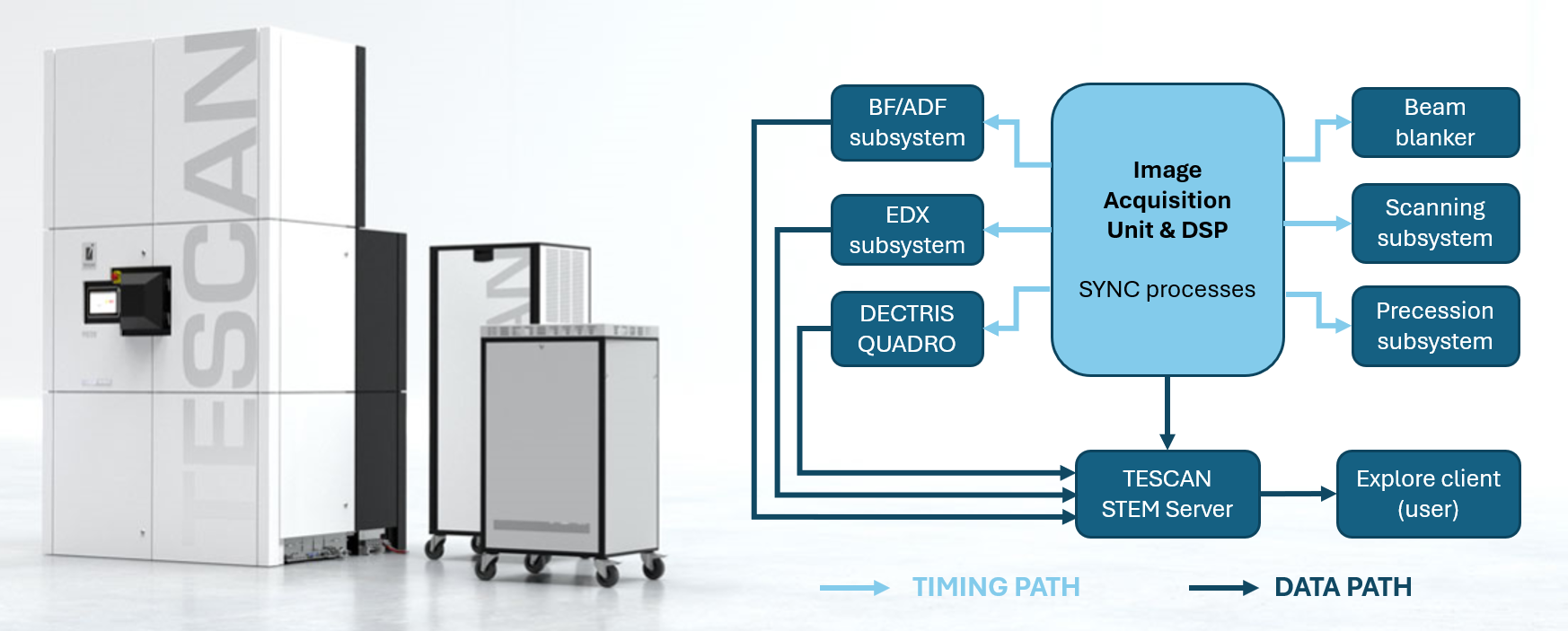
Tescan TENSOR addresses this limitation by perfectly synchronizing the acquisition of precession-assisted 4D-STEM datasets with EDX signal. Structural and chemical information is collected simultaneously at each pixel, resulting in more precise segmentation of phases, even when the difference lies within a fraction of a percent in lattice spacing.

This application note demonstrates how the integration of EDX into 4D-STEM mapping helps to eliminate spurious assignments, improve grain segmentation, and enhance material statistics - all within a unified, user-accessible interface. 

Why Combine 4D-STEM

with EDX?

01
Root of the Problem

Structural Ambiguity in Similar Phases

In many advanced materials, phases may differ only subtly in their lattice structure but significantly in their properties and function. In such cases, electron diffraction alone may not resolve these differences, leading to high sensitivity to the noise in acquired data and inaccurate phase analysis.

This presents a challenge for researchers working on alloys, thin films, or ceramics where multiple phases coexist with near-identical crystallographic structures. An incorrect phase map may affect downstream analysis, including process control or functional predictions.

02
Materials and Methods

A Unified Multimodal Workflow

The study used a polycrystalline aluminum film doped with gold nanoparticles, measured on the Tescan TENSOR system at 100 kV. Two data sets were collected under identical conditions:

  • Beam convergence: 1.5 mrad
  • Beam current: 1.0 nA
  • Precession:  0.8°
  • Dwell time: 10 ms

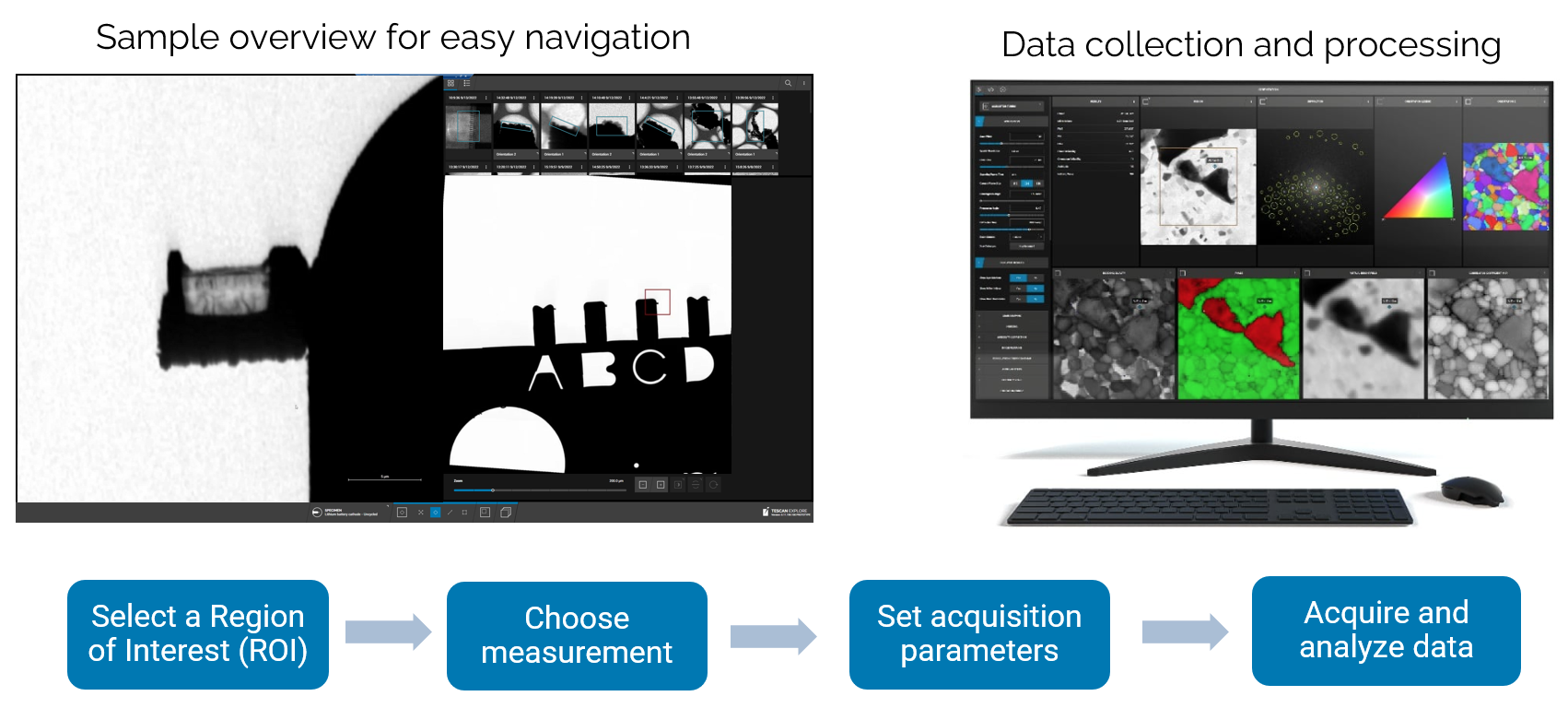
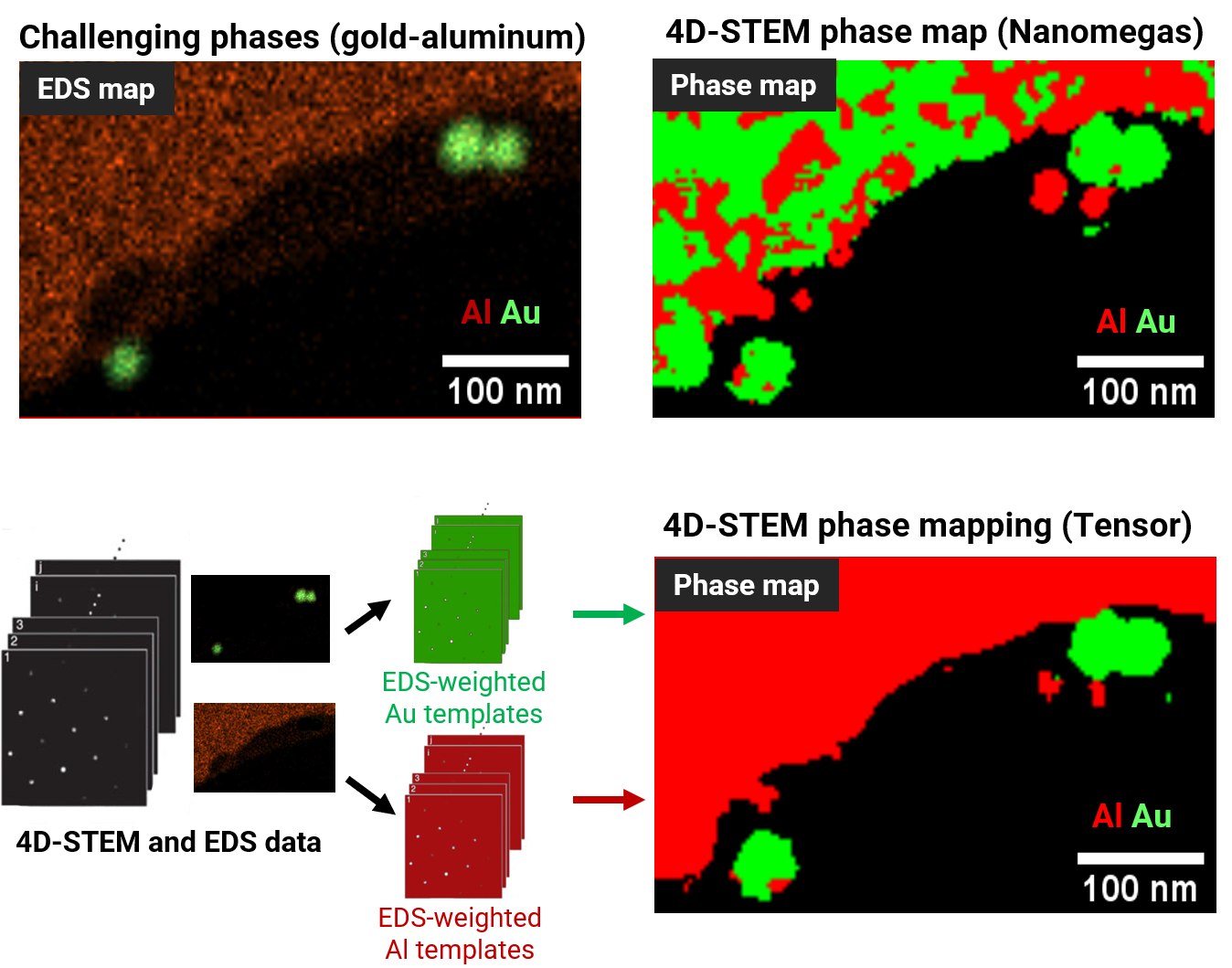
In one dataset, phase mapping was performed using 4D-STEM diffraction data only. In the other, the algorithm incorporated simultaneously acquired EDX signals to assist template matching of the 4D-STEM data. The ExploreTM software interface enabled straightforward inclusion of the correlated EDX data in the 4D-STEM data acquisition and the phase map calculation.

03
Results and Discussion

Improving Phase Differentiation with Elemental Composition

The comparison revealed that using EDX data in the mapping process eliminated incorrect phase assignments. Regions of pure aluminum were no longer labeled as gold, and gold nanoparticles were correctly segmented.

This correction is not just visual; it also impacts quantitative analysis. Without EDX, phase maps can fragment continuous grains and skew statistical metrics. The correlative 4DSTEM/EDX method eliminates the influence of different orientations in different grains, supports accurate phase analysis, and reflects the true material composition.

The approach scales to materials with three or more crystalline phases, providing reliable separation when neither EDX nor diffraction alone delivers robust and accurate results.

GET IN Touch

Contact us

Get the most out of Tescan

This is more than information; it's an advantage. We've compiled our technical whitepapers, detailed product flyers, and on-demand webinars to provide you with the knowledge that makes a real difference. Sign up now to access the insights you need to make an impact.

Tescan Instruments & Technology

Used in This Workflow

Tescan TENSOR

A fully integrated, synchronized scanning transmission electron microscope that simultaneously captures morphology, chemical composition, and internal structure for comprehensive nanoscale characterization.

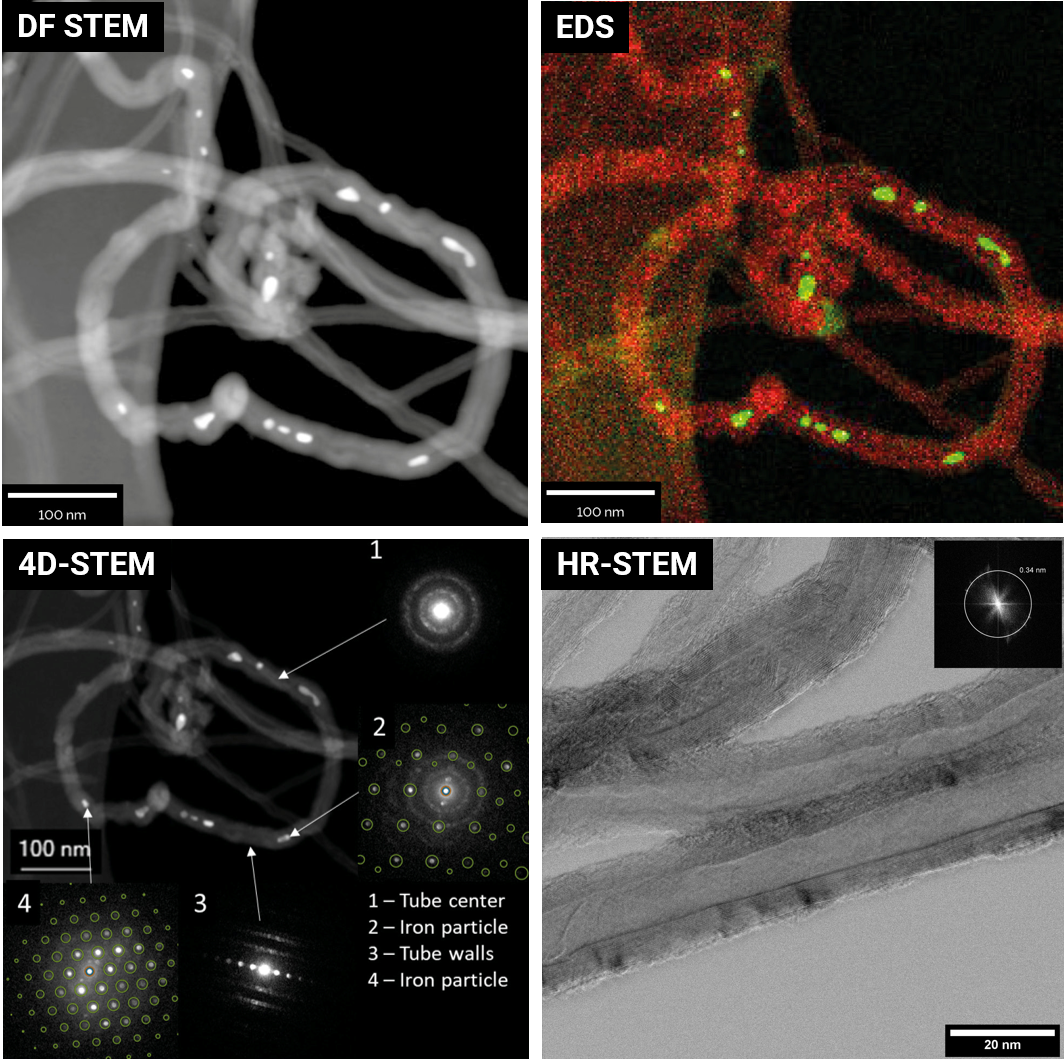
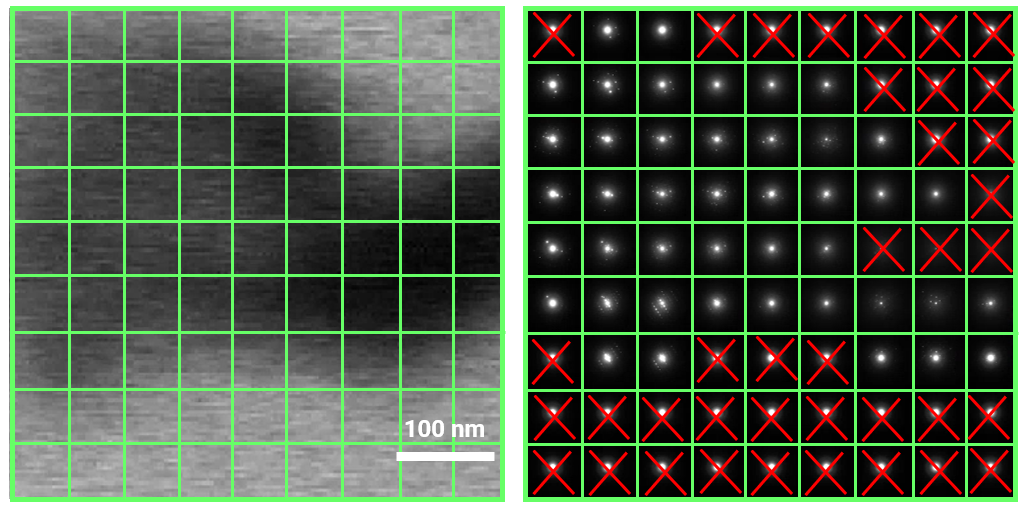
  • 4D-STEM records the lattice structure of crystalline grains in electron diffraction patterns.
  • ADF-STEM visualizes sample morphology through differences in electron scattering.
  • EDS-STEM maps chemical composition based on characteristic X-ray emission.
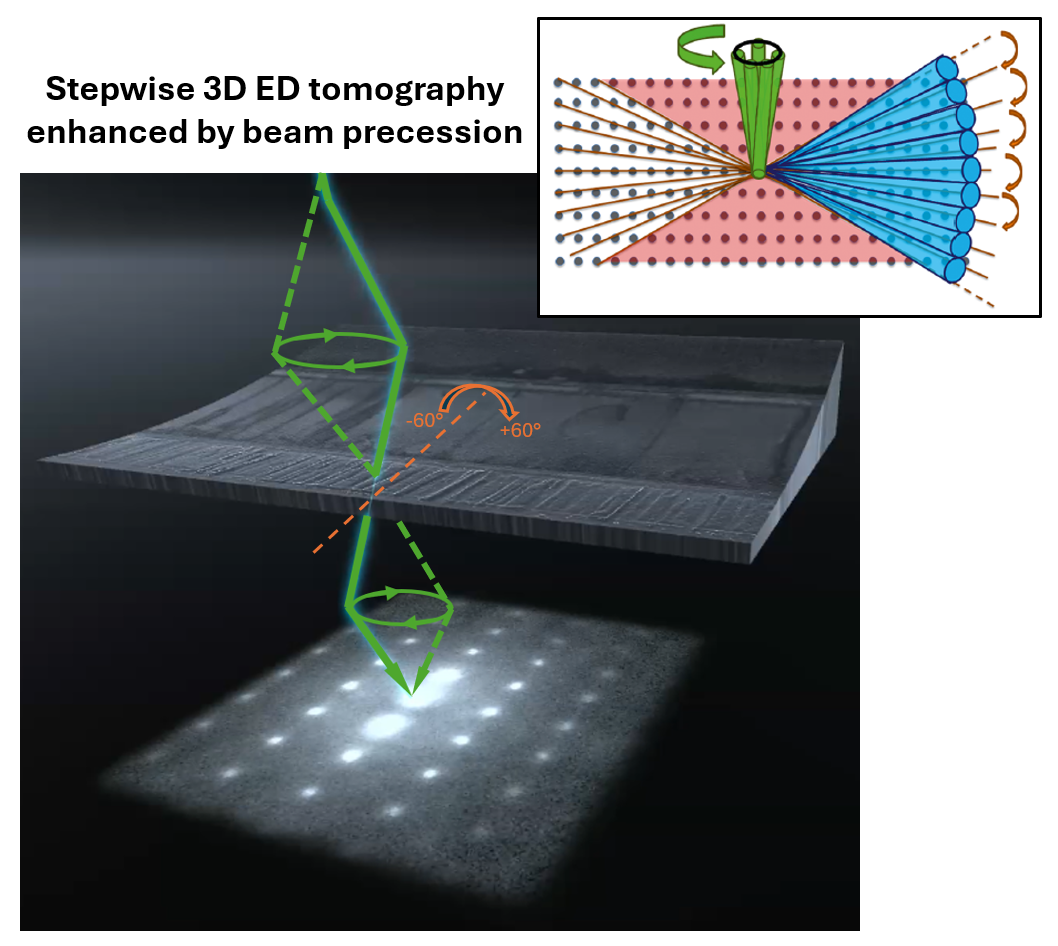
  • Beam precession enhances diffraction quality for more precise structural analysis.
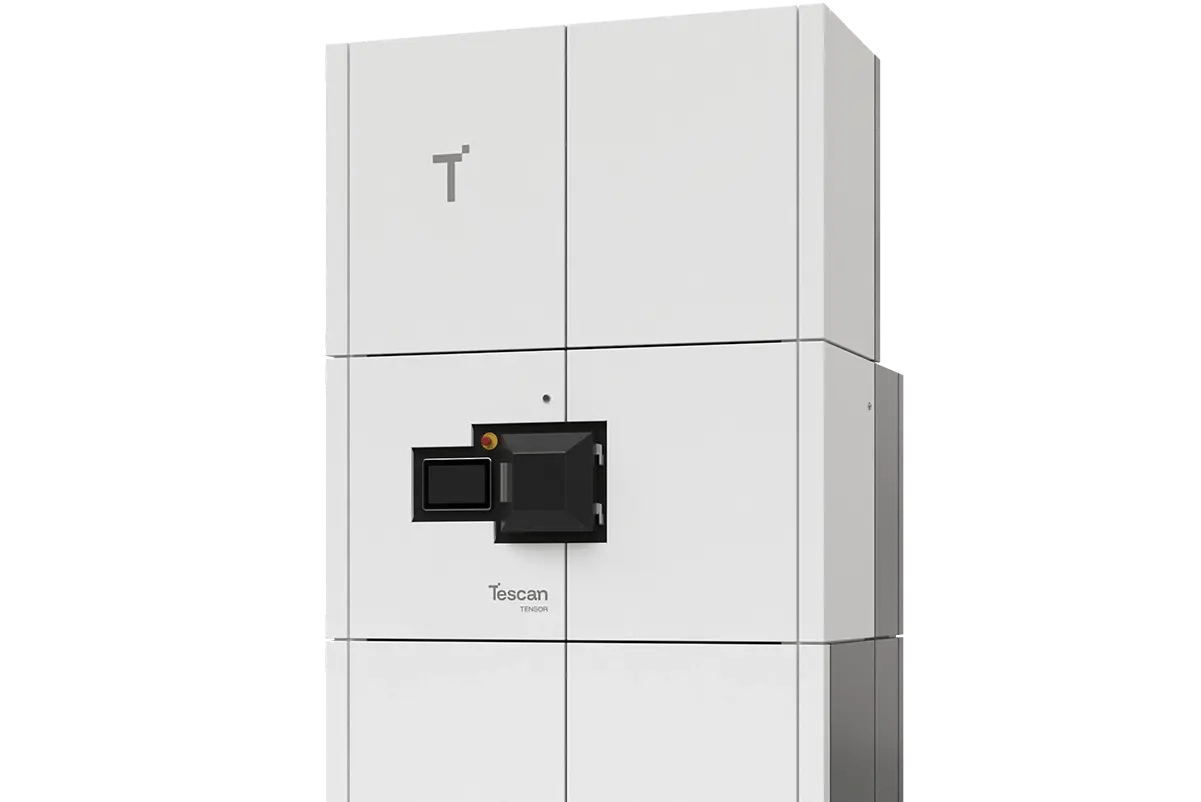
TENSOR_1

GET IN Touch

Contact us

map

Where can you find us:

Tescan Brno
Libušina třída 21
623 00 Brno
Czech Republic

info@Tescan.com