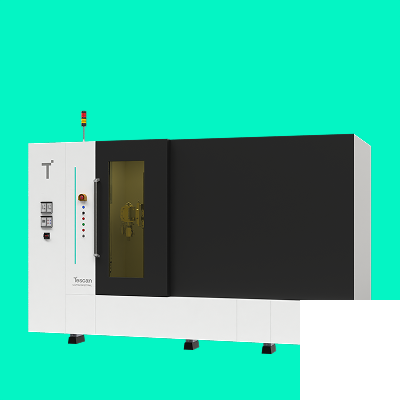
High Temporal Resolution without Compromise
Capture real-time sample changes with continuous 4D scanning at temporal resolutions under three seconds, without sacrificing image quality or stability.

High-Throughput, Multi-Scale Dynamic micro-CT for Imaging in Real-Time
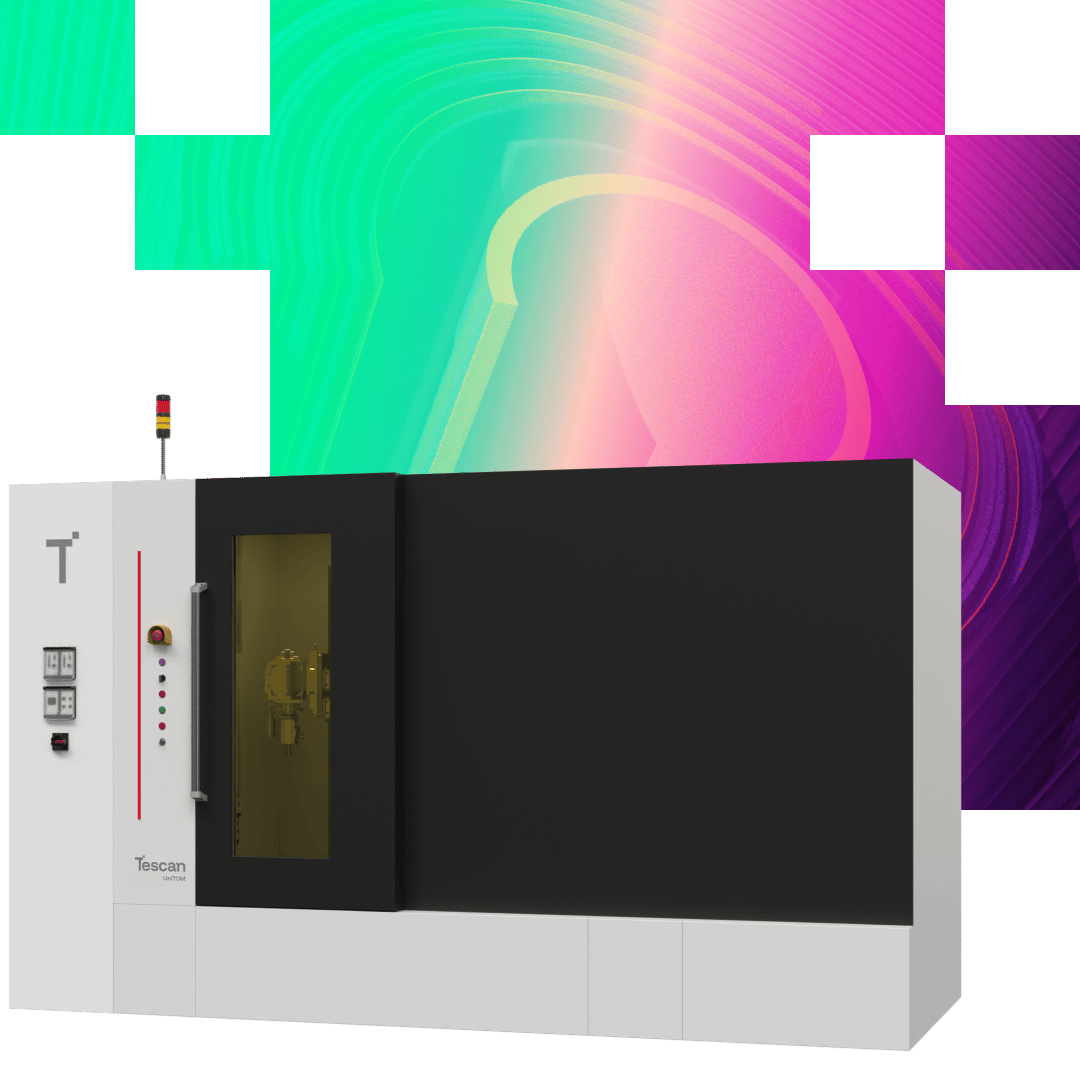
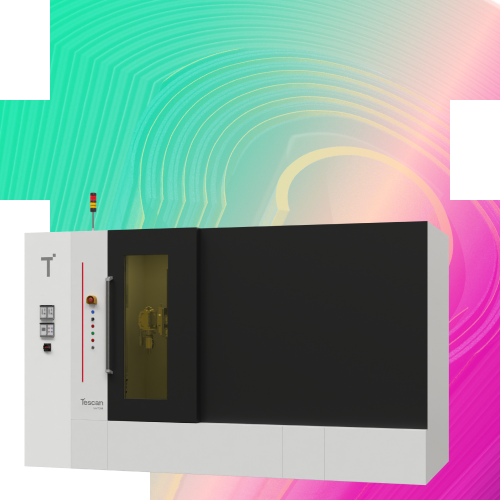
Tescan UniTOM® XL, and its smaller version, CoreTOM® are designed for research environments where temporal resolution, imaging flexibility, and experimental throughput matter. A high-power X-ray source, fast large-field detector, and automated multi-sample workflows work together to keep your lab focused on insight, not setup. This results in faster scans, richer data, and true 4D visualization of materials in action.

Non-destructive 3D characterization of pores, cracks, inclusions, fibers, interfaces, and internal defects
Multi-scale imaging connects whole-sample context with micron-scale structural detail
In situ and continuous 4D imaging track deformation, cracking, phase changes, and failure mechanisms over time
Tescan UniTOM® XL supports material research from routine 3D characterization to advanced time-resolved studies. Researchers can quantify the internal structure of intact materials in 3D, including morphology, porosity, defects, and interfaces, then extend the same workflow into 4D when they need to observe how those structures evolve under load, heat, or chemical exposure. The result is reproducible, non-destructive insight into both material architecture and performance over time.
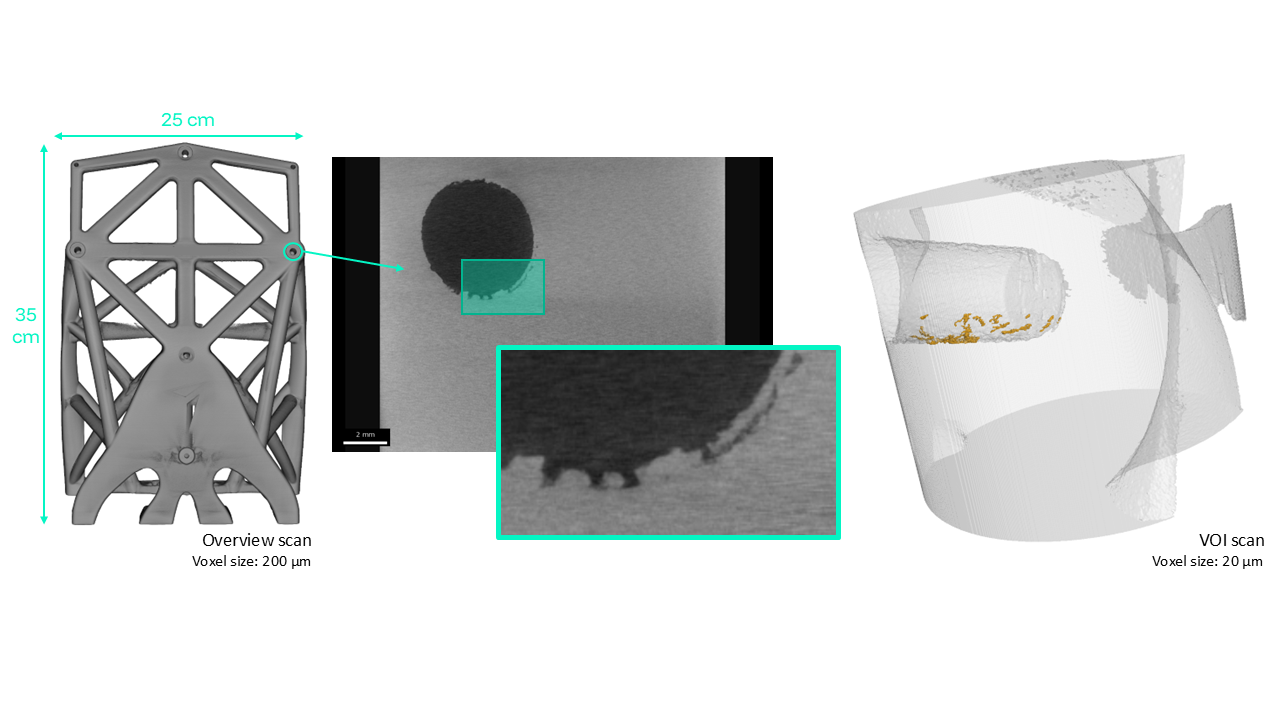

Non-destructive 3D inspection of complete devices, from small consumer electronics to larger assemblies such as laptops
Large field of view preserves full-device context while enabling analysis of internal components, connections, batteries, PCBs, and housings
High image quality at practical scan times supports failure analysis, design validation, and quality investigation without disassembly
4D capability can support selected mechanical or thermal reliability studies where internal changes need to be followed under controlled conditions
Tescan UniTOM® XL enables researchers and engineers to inspect consumer electronics and electronic assemblies in 3D without opening, cutting, or disassembling the device. Its large field of view makes it possible to image anything from compact devices and individual modules to larger assemblies such as laptops, while preserving the spatial relationship between components. Users can investigate batteries, printed circuit boards, connectors, housings, adhesives, interfaces, voids, cracks, assembly defects, and other internal features that influence reliability and performance. For selected reliability workflows, Tescan UniTOM® XL can also extend from static 3D inspection to 4D imaging, helping teams observe internal changes during controlled mechanical or thermal testing.

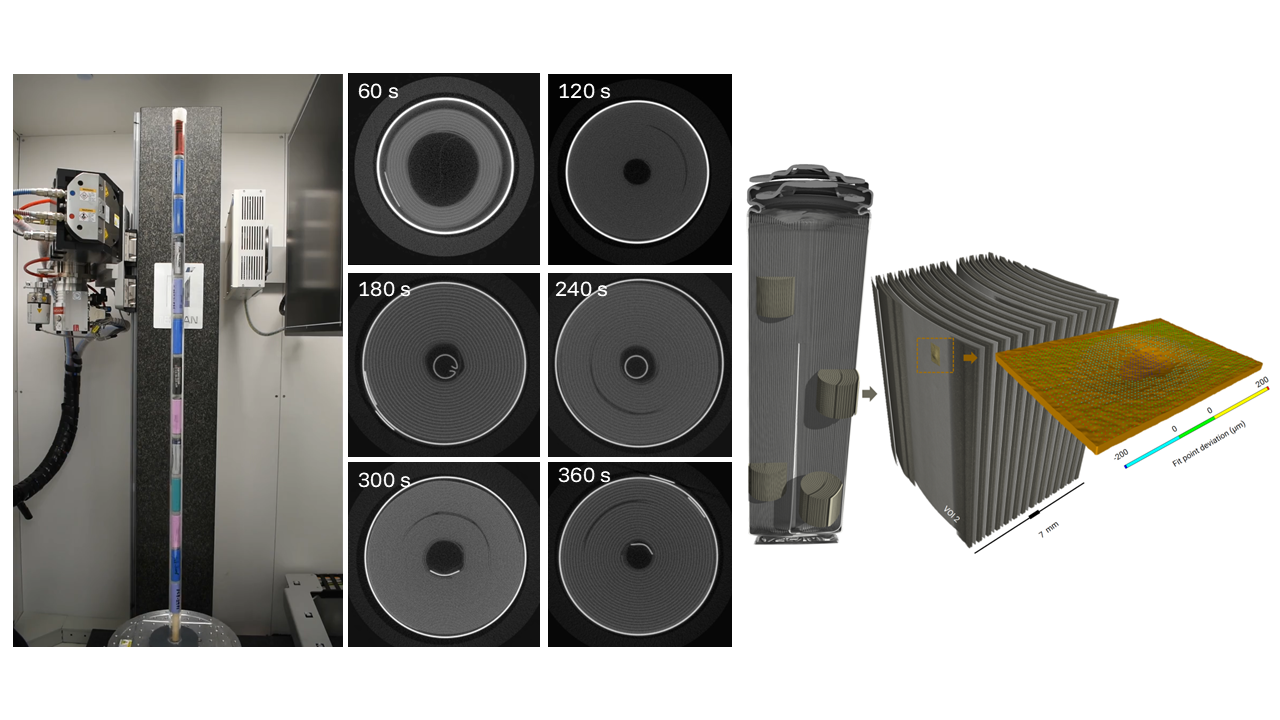
Non-destructive 3D analysis of battery cells, electrodes, and solid-state interfaces
Multi-scale imaging captures structure from electrode level to full-cell context
Operando 4D imaging tracks swelling, cracking, electrolyte movement, and degradation during cycling or stress testing
Tescan UniTOM® XL supports battery research from static 3D characterization to in-situ 4D experiments, enabling time-resolved micro-CT imaging of batteries under realistic operating conditions. Fast acquisition and continuous rotation support uninterrupted observation during charge–discharge cycling or thermal stress. This enables clearer insight into electrode design, cycle-life behavior, and safety performance.

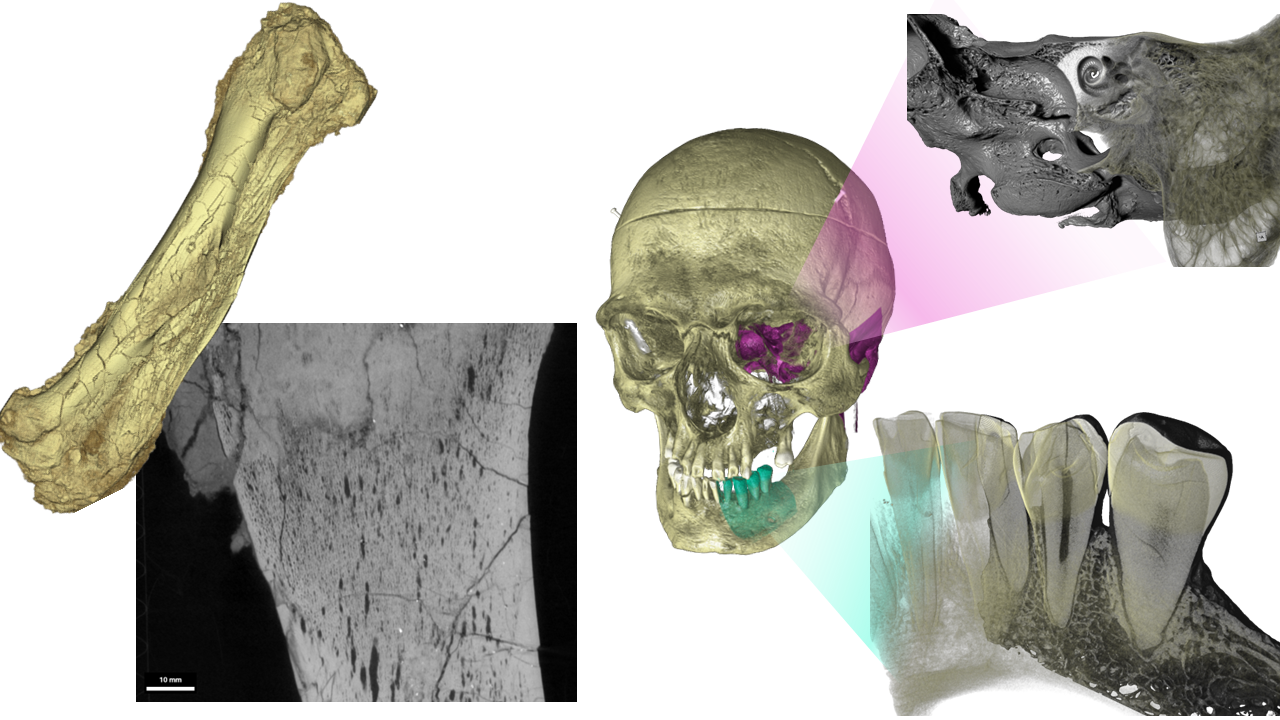
Non-destructive 3D imaging of biological specimens, tissues, and natural history collections
Large field of view supports a wide range of sample sizes while preserving anatomical and morphological context
High image quality at practical scan times for soft tissue, stained samples, mineralized structures, fossils, and dense materials
4D capability supports biomechanics studies where deformation, motion, or mechanical response needs to be followed over time
Tescan UniTOM® XL enables life science researchers to visualize internal structures in 3D across an exceptionally broad range of specimen types and sizes. From delicate biological samples and human tissues to larger developmental, clinical, forensic, and natural history specimens, the system provides the flexiblity needed for multi-user research environments. Its large field of view and strong image quality help preserve whole-sample context while revealing fine internal detail, supporting non-destructive investigation of valuable, rare, or difficult-to-prepare samples. In addition, in situ connectivity and 4D imaging can support time-resolved imaging to connect morphology with mechanical behavior.

Non-destructive 3D characterization of pore networks, fractures, grains, mineral phases, and core heterogeneity
Large scanning envelope accommodates full-size rock cores up to 1 m tall
In situ and 4D imaging capture fluid flow, trapping, fracture dynamics, and mineral–fluid interactions over time
Tescan UniTOM® XL, and its smaller version, Tescan CoreTOM® support geoscience workflows from static 3D rock characterization to dynamic 4D experiments. Researchers can quantify pore networks, fractures, mineral distributions, and core-scale heterogeneity in 3D, then observe how these structures affect fluid migration, trapping, and deformation under relevant experimental conditions. The systems’ large sample capacity and dynamic imaging performance help connect pore-scale measurements with reservoir-scale models.

High-resolution, non-destructive imaging for structural and dynamic analysis
Tescan UniTOM XL supports material research where understanding internal structure and evolution over time is essential. Its combination of high temporal and spatial resolution enables researchers to quantify changes such as fracture propagation, composite failure, and pore evolution. The result is a reproducible, non-destructive insight into material performance and durability.

Dynamic micro-CT for studying material behavior during operation
TESCAN UniTOM XL enables time-resolved micro-CT imaging of batteries under realistic operating conditions. Fast acquisition and continuous rotation support uninterrupted observation during charge–discharge cycling or thermal stress. This enables clearer insight into electrode design, cycle-life behavior, and safety performance.

In situ observation of fluid flow and structural changes in geological samples
Tescan UniTOM XL, and its smaller version, CoreTOM enable geoscientists to observe pore-scale processes in real time. Researchers can follow fluid migration pathways and mineral–fluid interactions in reservoir rocks, extending to CO₂ and H₂ storage scenarios. The system’s large sample capacity and dynamic imaging performance make it ideal for correlating laboratory experiments with reservoir-scale models.
High-throughput 3D and 4D imaging for process optimization and quality assurance
TESCAN UniTOM XL delivers fast, repeatable imaging that supports process validation and failure analysis in industrial R&D and quality control. Its combination of throughput, resolution, and large-sample handling reduces inspection time while maintaining quantitative accuracy, ensuring reliable evaluation of manufactured materials and components.
Tescan UniTOM® XL integrates seamlessly with the Acquila™ and Panthera™ software environment, providing coordinated control of acquisition, reconstruction, and visualization. Dynamic CT experiments may run without interruption, with reconstruction and analysis carried out alongside acquisition to maintain workflow efficiency, ensuring uninterrupted operation and maximum throughput.
The software suite offers automated workflow management, live monitoring, and real-time visualization in an intuitive interface that reduces setup time and ensures reproducible results. For dynamic or in situ studies, Acquila™ and Panthera™ synchronize imaging with external rigs and detectors to maintain full experimental control throughout the 4D imaging process.