Fully integrated Ar+ polishing for high-quality S/TEM specimens

Tescan Aura™ Gentle Ion Beam (GIB)

Aura-Gentle-ion-Beam---hero---desktop
Aura Gentle ion Beam - hero - mobile

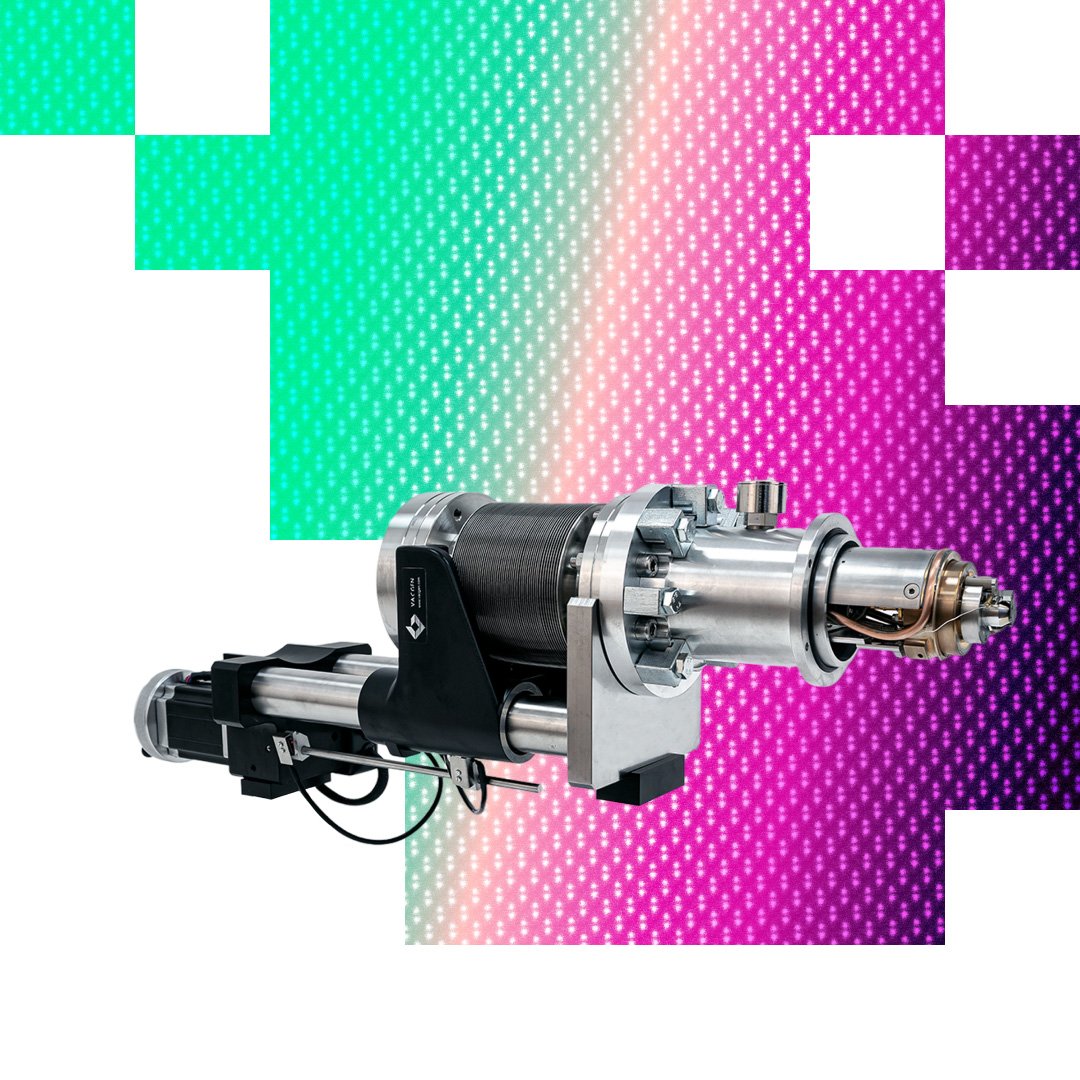
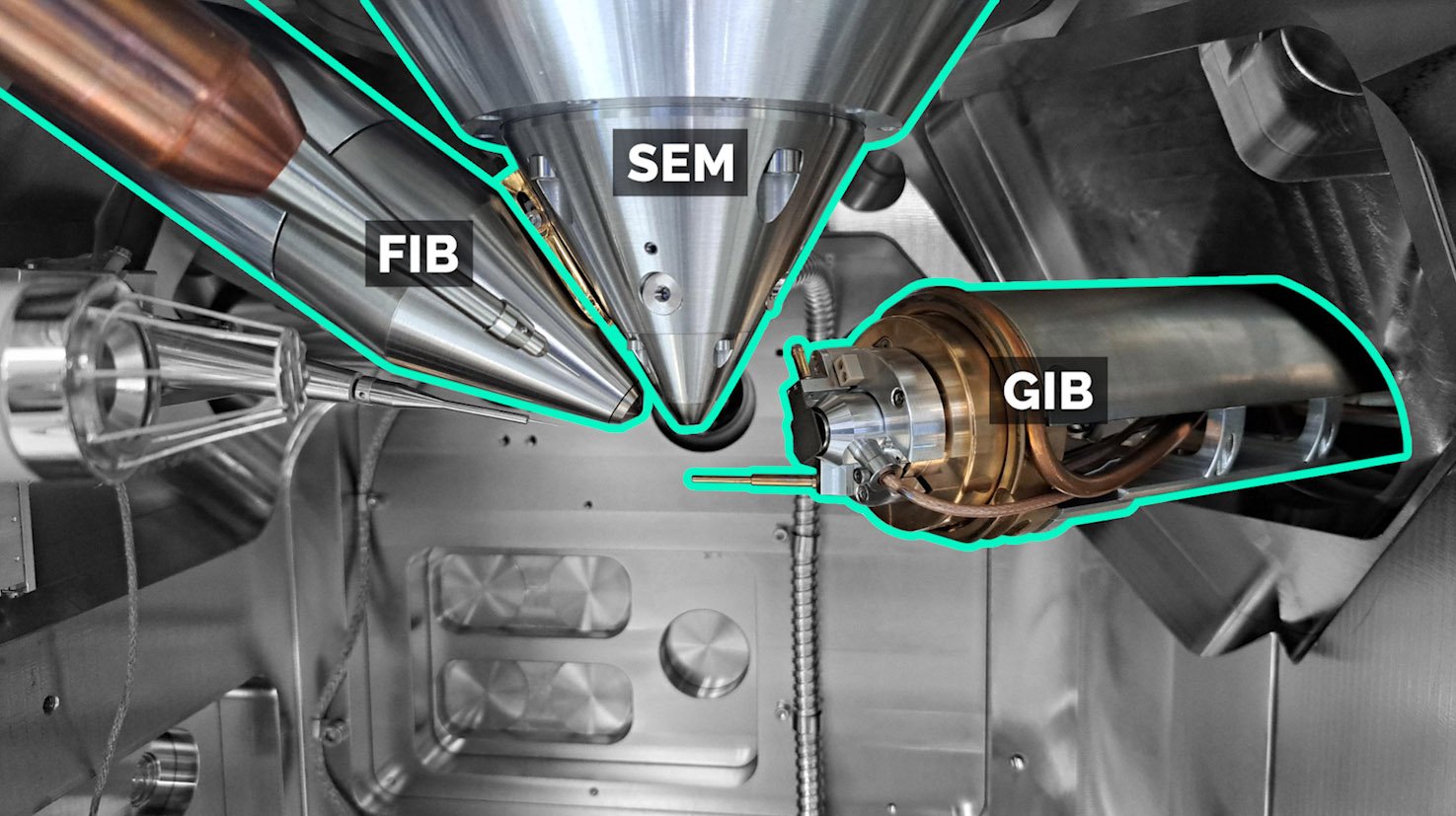
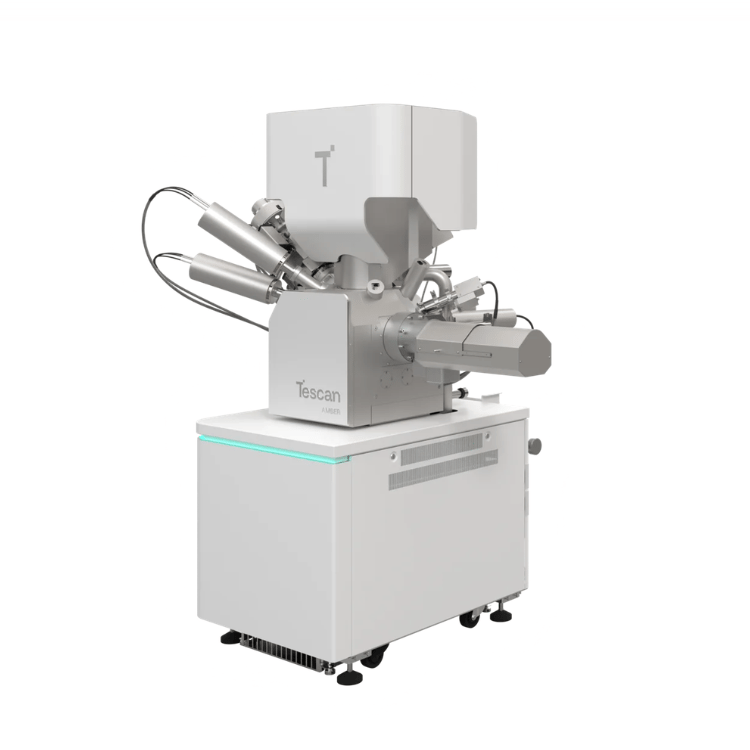
Aura™ Gentle Ar Ion Beam (GIB) enables consistent preparation of high-quality sub-50 nm S/TEM specimens by performing low-energy 200 eV Ar polishing directly inside the Tescan AMBER™ and Tescan SOLARIS™ FIB-SEMs.


Clean, ultra-thin specimens for accurate S/TEM analysis

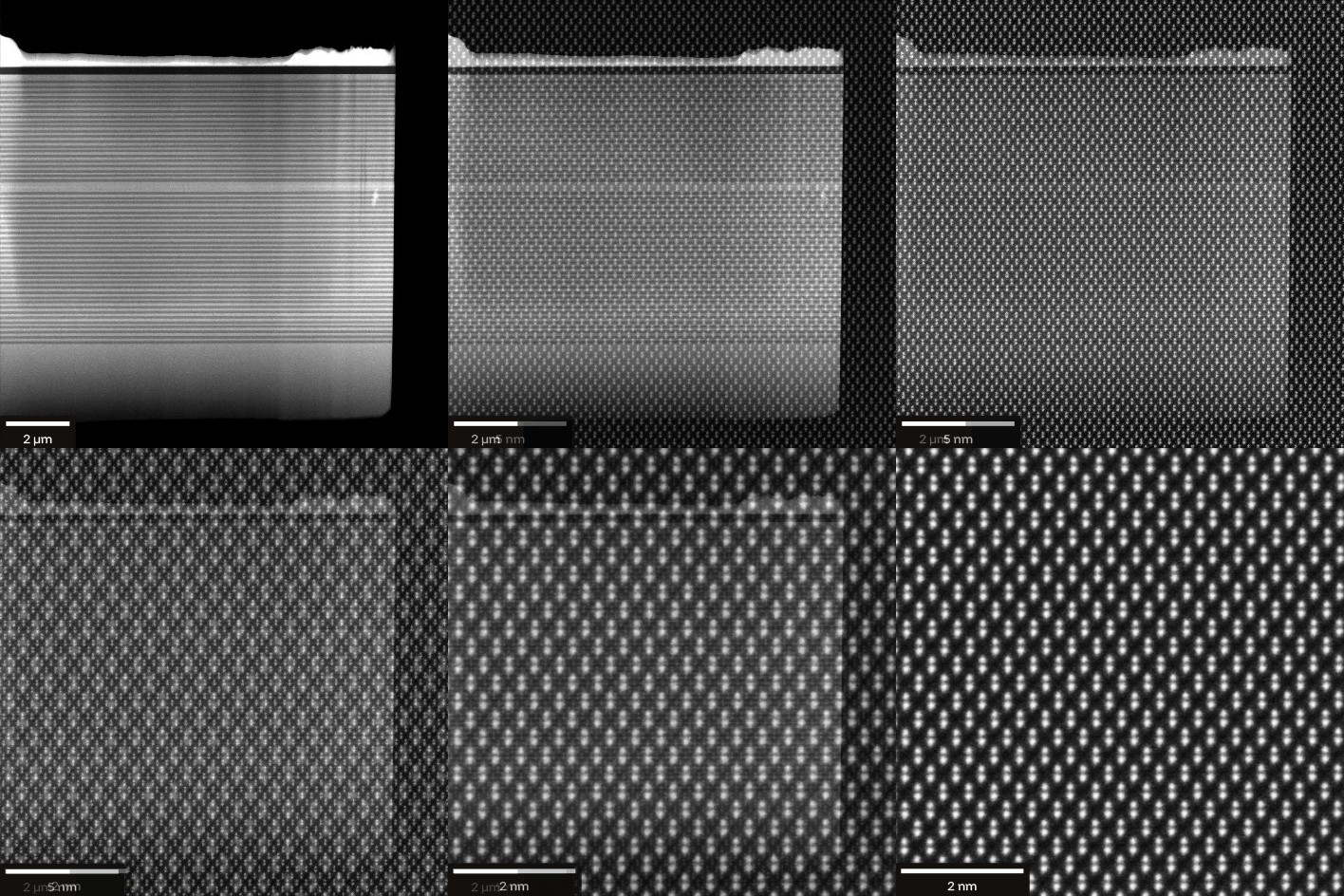
Aura™ GIB is ideal for samples where conventional Ga FIB finishing can introduce damage, variability, or artifacts, including ultra-thin TEM lamellae below 50 nm and beam-sensitive materials such as GaN, Cu, Al alloys, and Al/Ga multilayer structures. Its broad-area, low-energy Ar beam provides smooth, uniform surface removal across different specimen phases, helping reduce uneven thinning and curtaining artifacts. By removing implantation damage, minimizing amorphization down to 2 nm, and preserving the true material structure, Aura™ supports more reliable HR-S/TEM analysis of demanding samples such as 3D semiconductor devices, heterostructures, ultra-fine interfaces, nanoscale precipitates, and crystalline structures.


Reliable in-chamber Ar polishing for consistent specimen quality

Full integration into the Tescan FIB-SEM hardware and software makes Aura™ a seamless part of the S/TEM preparation workflow. Final polishing takes place inside the microscope chamber, removing the need for a separate Ar milling tool with dedicated setup and helping avoid transfer-related risks such as specimen damage, misalignment, oxidation, contamination, and loss

Users can configure the entire Aura™ GIB polishing process through the step-by-step Tescan Essence™ software interface or run it using predefined recipes. This improves reproducibility, helps standardize results across samples and operators, and enables users with different experience levels to achieve consistent, high-quality results with minimal effort.


  • Pristine S/TEM specimen surfaces:  Minimize amorphization, intermixing, surface contamination, oxidation, and Ga+-implanted zones with gentle Ar polishing inside the FIB-SEM.


  • Unified FIB-SEM and Ar+ Gentle Ion Beam polishing workflow:  Eliminate the need for transfer to a separate Ar milling tool and reduce risk of specimen degradation, contamination, misalignment, or loss.

  • User independent, reproducible final S/TEM sample cleaning:  Use recipe-based GIB processing after fully automated TEM preparation to deliver consistent, high-quality S/TEM specimens across users in your lab.

WHERE Tescan Aura™ Gentle Ion Beam

makes the difference
GIB-lamella

High-quality ultra-thin lamellae with minimal FIB damage from any material

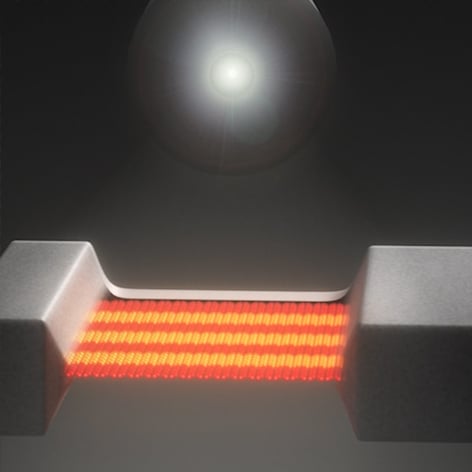
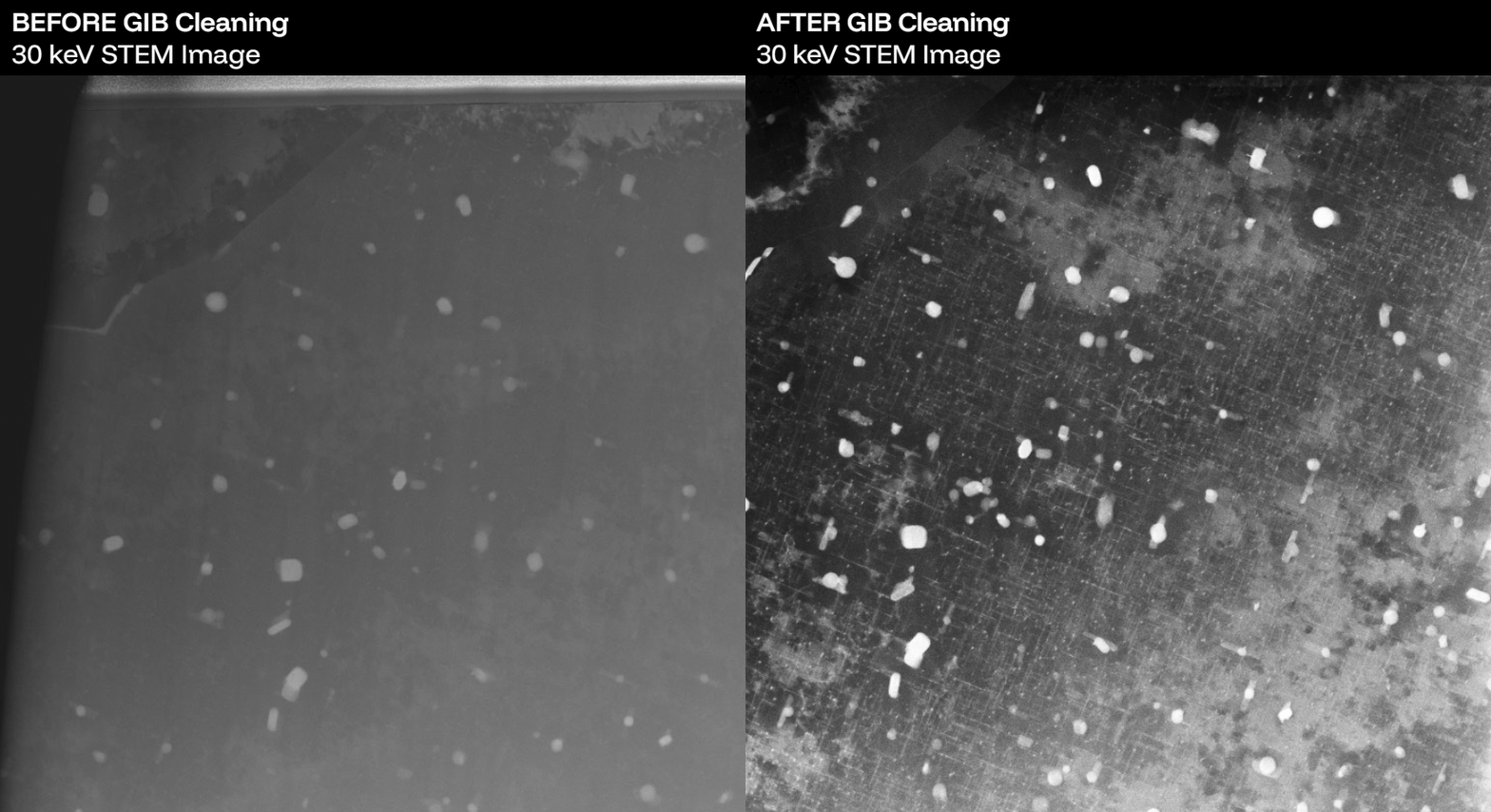
 Using inert broad Ar ion beam polishing at 200 eV, Aura™ significantly reduces FIB-induced damage in ultra-thin specimens and Ga+-sensitive materials such as Cu, Al, and GaN. The result is 2–3× fewer ion-induced defects than Ga+ finishing and more reliable preparation of sub-50 nm lamellae for high-resolution TEM analysis.

GIB-polishing

Automated final Ar⁺ polishing within the FIB-SEM workflow

Aura™ is fully embedded in the FIB-SEM operating software, allowing final 200 eV Ar⁺ polishing to be performed as part of the TEM lamella preparation workflow. Recipe-based automation executes predefined process steps, with customizable settings for voltage, sample movement, milling time, and step order. This helps users standardize specimen finishing across samples, operators, and labs.

GIB-in-chamber-03-description

Reduced transfer-related risks with in-chamber final polishing

Aura™ is integrated directly into the FIB-SEM chamber at the FIB and SEM coincidence point, enabling final polishing without the need to move the specimen to a separate tool. Because the sample stays on the microscope stage and holder, transfer-related risks such as damage, misalignment, oxidation, contamination, and sample loss are avoided, with precise alignment preserved for repeatable results.

STEM-imaging-02

In-chamber specimen quality verification before HR-STEM analysis

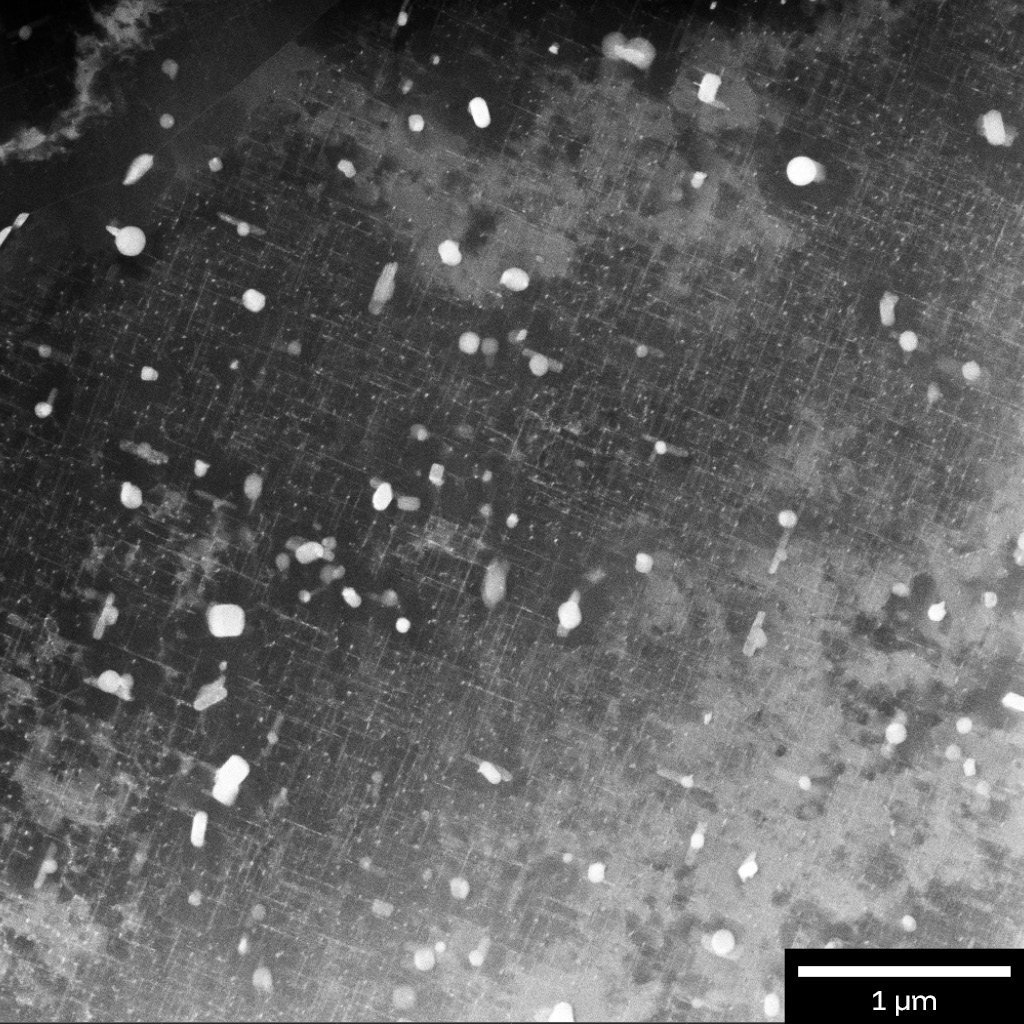
With final polishing completed inside the FIB-SEM chamber, users can perform an immediate STEM-in-SEM quality check before transferring the specimen for HR-STEM analysis. This gives operators faster feedback and greater confidence, helping them identify preparation issues earlier in the workflow and avoid costly rework.

.

Tescan Spectral CT Applications

_ Application area icon (3)
Tescan Spectral CT in Electronics and Semiconductors

Non-destructive spectral imaging for material verification and internal inspection of advanced electronic assemblies.

TrueContrast™ multi-energy imaging for differentiating polymers, metals, and encapsulants

  • K-edge detection for accurate identification of high-Z elements

  • Non-destructive visualization of interfaces and buried defects in electronic packages

  • Spectrum comparison tools for verifying material uniformity and contamination sources

Tescan Spectral CT delivers compositional insight where conventional micro-CT cannot. Engineers can distinguish packaging materials, solder alloys, and internal structures without sectioning or coating—supporting reliable failure analysis, design validation, and quality assurance across next-generation electronic devices.

_ Application area icon
Tescan Spectral CT in Materials Science

Multi-energy micro-CT for elemental and structural differentiation in complex, multi-phase materials.

  • Elemental mapping for identifying fillers, dopants, or additives in polymer composites

  • Spectral contrast for distinguishing polymers, ceramics, and metals with similar densities

  • Non-destructive 3D analysis of internal interfaces and phase boundaries

  • Integrated Spectral Suite for correlating elemental and structural data in one workflow

In materials research, Spectral CT enables scientists to explore the relationship between structure and composition without destroying samples. Researchers can visualize distribution of additives, analyze composite uniformity, and study degradation pathways—supporting more reliable material design and performance assessment.

Application area=GS
Tescan Spectral CT in Geoscience and Mining

Full-spectrum micro-CT for 3D elemental and structural insight into geological samples.

  • Non-destructive 3D elemental mapping of rocks, ores, and mineral inclusions

  • K-edge detection for locating and identifying high-value or trace elements like gold or rare earth elements

  • Enhanced contrast for complex mineral assemblages and pore networks

  • Large-volume spectral scanning for full-core or fragment-scale analysis

For geoscientists and mining professionals, Spectral CT provides simultaneous elemental and structural data from intact samples. It supports mineral identification, ore classification, and recovery assessment—reducing dependency on destructive assays while preserving geological material for further study.

TESCAN SPECTRAL SUITE

INTEGRATION THAT DRIVES INSIGHT

Tescan Spectral CT works seamlessly with SPECTRAL Suite and Acquila™ micro-CT control software to streamline spectral imaging from acquisition to analysis. Used as an add-on with the UniTOM XL platform, users can target volumes of interest, capture full-spectrum data, and visualize structural and elemental information in one workflow.

Researchers benefit from intuitive controls, guided reconstruction, and automated spectral processing. Spectral Suite handles spectrum matching, K-edge detection, and compositional mapping with minimal setup. This delivers consistent, reproducible results across samples and accelerates multi-energy micro-CT analysis.

UniTOM® HR 2

Technical specification

X-ray source 

 Source type

Open type transmission source 

Voltage 

30-160kV 

Power

 Up to 50W

 X-ray detectors 

Detector 

High-speed, medium field of view with multiple detector options (up to three) 

Resolution

Spatial resolution

500 nm (2D line pair resolution) 

Temporal resolution

<5 seconds 

Sample size and weight 

Maximum sample size (H x Ø) 

700 mm x 500 mm 

Weight 

45 kg 

Maximum imaging envelope (H x Ø)

400 mm x 300 mm 

System weight and dimensions 

Installed (L x W x H) 

2.06 m x 0.97 m x 1.9 m 

Installed weight

2750 kg

Rotation stage 

Stage

Continuous rotation with slip-ring technology for uninterrupted dynamic imaging 

Software and In Situ connectivity 

Imaging modes 

Continuous Dynamic CT, standard static CT, tiling, offset, stacked and merged integrated acquisition (STAMINA), multi-scale Volume of Interest Scanning (VOIS) 

In situ interface 

Optional connection panel for in situ testing stages and environmental experiments with radiation-safe feedthroughs 

Integrated workflow control and data reconstruction through Acquila and Panthera™ software 

X-ray source 

 Source type

Open type transmission source 

Voltage 

30-160kV 

Power

 Up to 50W

 X-ray detectors 

Detector 

High-speed, medium field of view with multiple detector options (up to three) 

Resolution

Spatial resolution

500 nm (2D line pair resolution) 

Temporal resolution

<5 seconds 

Sample size and weight 

Maximum sample size (H x Ø) 

700 mm x 500 mm 

Weight 

45 kg 

Maximum imaging envelope (H x Ø)

400 mm x 300 mm 

System weight and dimensions 

Installed (L x W x H) 

2.06 m x 0.97 m x 1.9 m 

Installed weight

2750 kg

Rotation stage 

Stage

Continuous rotation with slip-ring technology for uninterrupted dynamic imaging 

Software and In Situ connectivity 

Imaging modes 

Continuous Dynamic CT, standard static CT, tiling, offset, stacked and merged integrated acquisition (STAMINA), multi-scale Volume of Interest Scanning (VOIS) 

In situ interface 

Optional connection panel for in situ testing stages and environmental experiments with radiation-safe feedthroughs 

Integrated workflow control and data reconstruction through Acquila and Panthera™ software 

UniTOM-HR2-wood-laminate

GET IN Touch

with specialist

map

Where you can find us:

Tescan Brno
Libušina třída 21
623 00 Brno
Czech Republic


info@Tescan.com 

130405923 us US 37.09024 -95.712891 25.3575 29.349345 20.67957527 42.082797 39.91384763 -33.693421 13.93320106 3.039986586 31.997988 38.050985 47.579533 48.1485965 58.375799 54.663142 19.195447 56.975106 47.916997 50.493053 45.868592 10.79556993 44.35660598 43.2371604 55.536415 14.557577179752773 32.100937 -6.116829 -6.212299277967318 33.600194 -12.08688 23.7104 -33.471062 31.998740087 -23.69149395 43.462349 51.529848 49.1893523 49.197486 25.072375 31.075811 1.299027 40.676979 52.30150662 51.013813 35.684121 37.566531 52.246622 40.581349 39.911632 -26.1811371 41.818215 33.429928

No distributors found.