Integrating Argon Ions with a Ga+ FIB SEM Is Essential for Modern (S)TEM Specimen Preparation
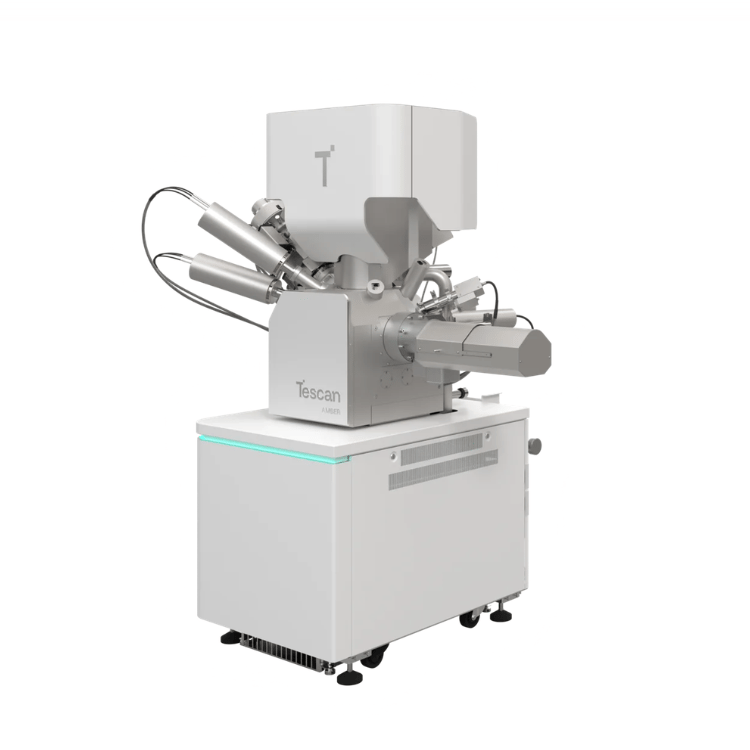
Enhancing Ga+ FIB-SEM Capabilities with Fully Integrated Low-Energy Argon Ion Beam Cleaning.
Deliver the best-quality sub-50 nm TEM specimen every time. Fully integrated Ar Gentle ion Beam in your FIB-SEM.
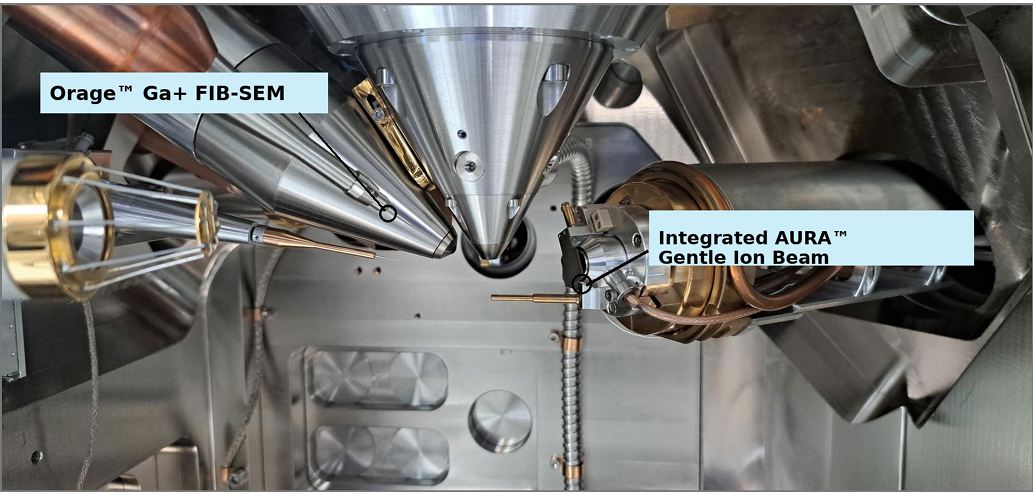
Prepare ultra-thin S/TEM specimens with negligible damage every time, using low-energy (<300 eV) Ar⁺ polishing directly inside your Tescan AMBER™ or Tescan SOLARIS™ FIB-SEM. Minimize amorphization of your specimen down to 2 nm and assure Ar+ cleaned S/TEM specimen quality before it reaches High Resolution S/TEM.
Ultra-thin S/TEM specimens with negligible damage for reliable TEM/STEM analysis
A TEM lamella can be thin and still contain preparation damage. Ga implantation, redeposition, oxidation, or amorphous layers affect high-resolution TEM/STEM results. When your analysis depends on layers interfaces, nanoscale precipitates or crystalline structures, final specimen quality is determined primarily by how much of the specimen interior remains unaffected by preparation, not by thickness alone.
Low-energy Ar⁺ finishing inside the FIB-SEM
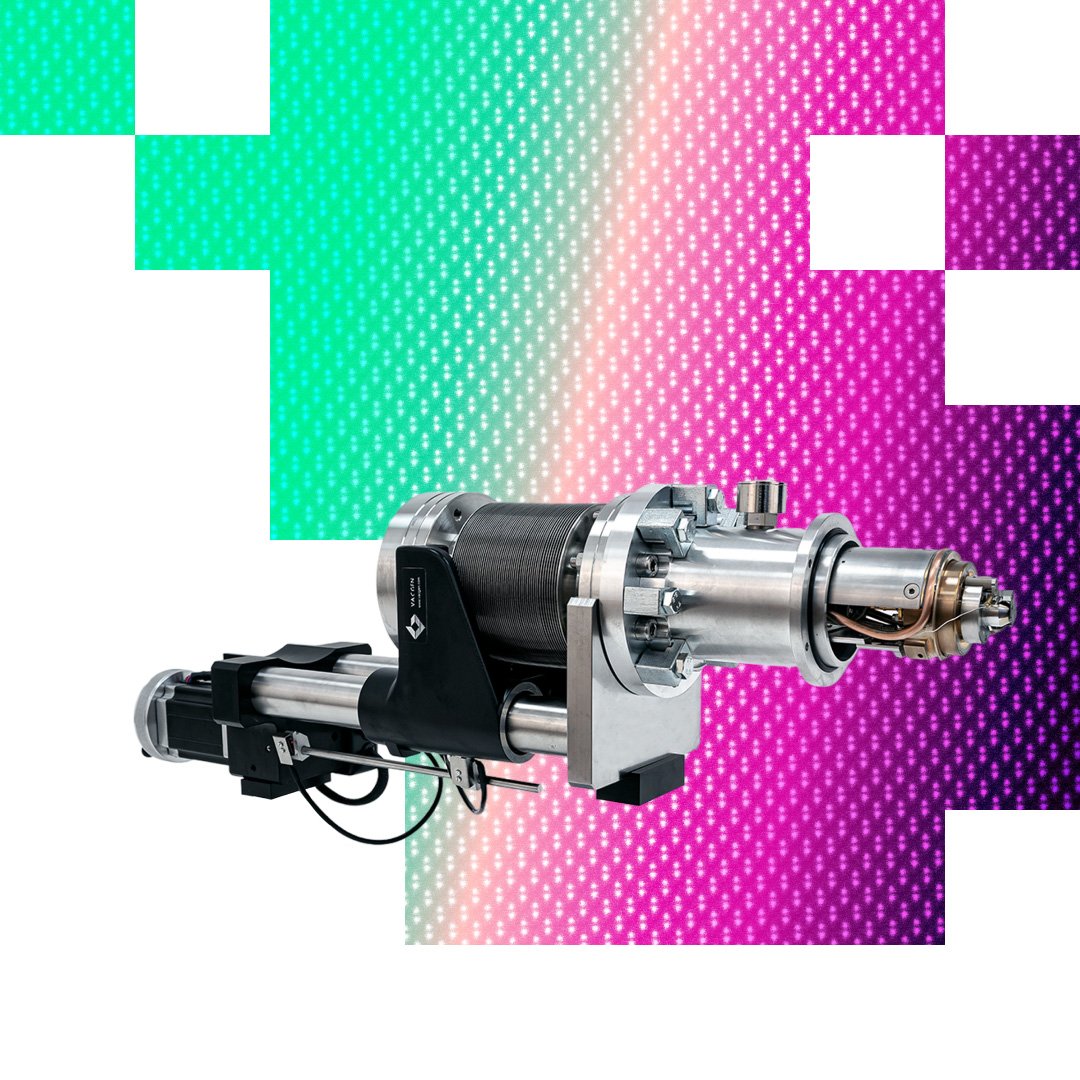
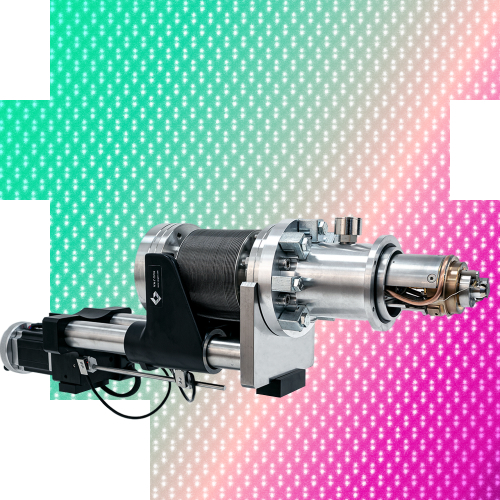
Tescan Aura™ Gentle Ion Beam adds integrated low-energy argon S/TEM specimen final cleaning into Tescan AMBER™ and Tescan SOLARIS™ FIB-SEMs. The specimen stays in the microscope chamber, the process is controlled through the FIB-SEM software, and STEM-in-SEM inspection supports quality endpointing before final TEM/STEM analysis.
In one glance
Pristine S/TEM specimen surfaces: Minimize amorphization, intermixing, surface contamination, oxidation, and Ga-implanted zones with gentle Ar⁺ polishing on your FIB-SEM.
Enhancing Ga+ FIB-SEM Capabilities with Fully Integrated Low-Energy Argon Ion Beam Cleaning.
Learn how Tescan AMBER™ 2 and Aura™ Gentle Ion Beam enable automated, high-quality TEM lamella preparation with improved consistency and reduced damage.
Contextual advertising can be profitable. It can either pay for your hosting and maintenance costs for you website or it can pay for a lot more.
Ultra-thin lamella below 50 nm from any material
GIB removes the amorphous surface layer more effectively than low-keV Ga polishing, increasing the undamaged volume of the S/TEM specimen.
Nanolayered thin film or multiphase material (layers, alloys)
Broad-beam polishing delivers more uniform surface removal across different phases, avoiding preferential milling effects seen in FIB and reducing uneven thinning and curtaining artefacts.
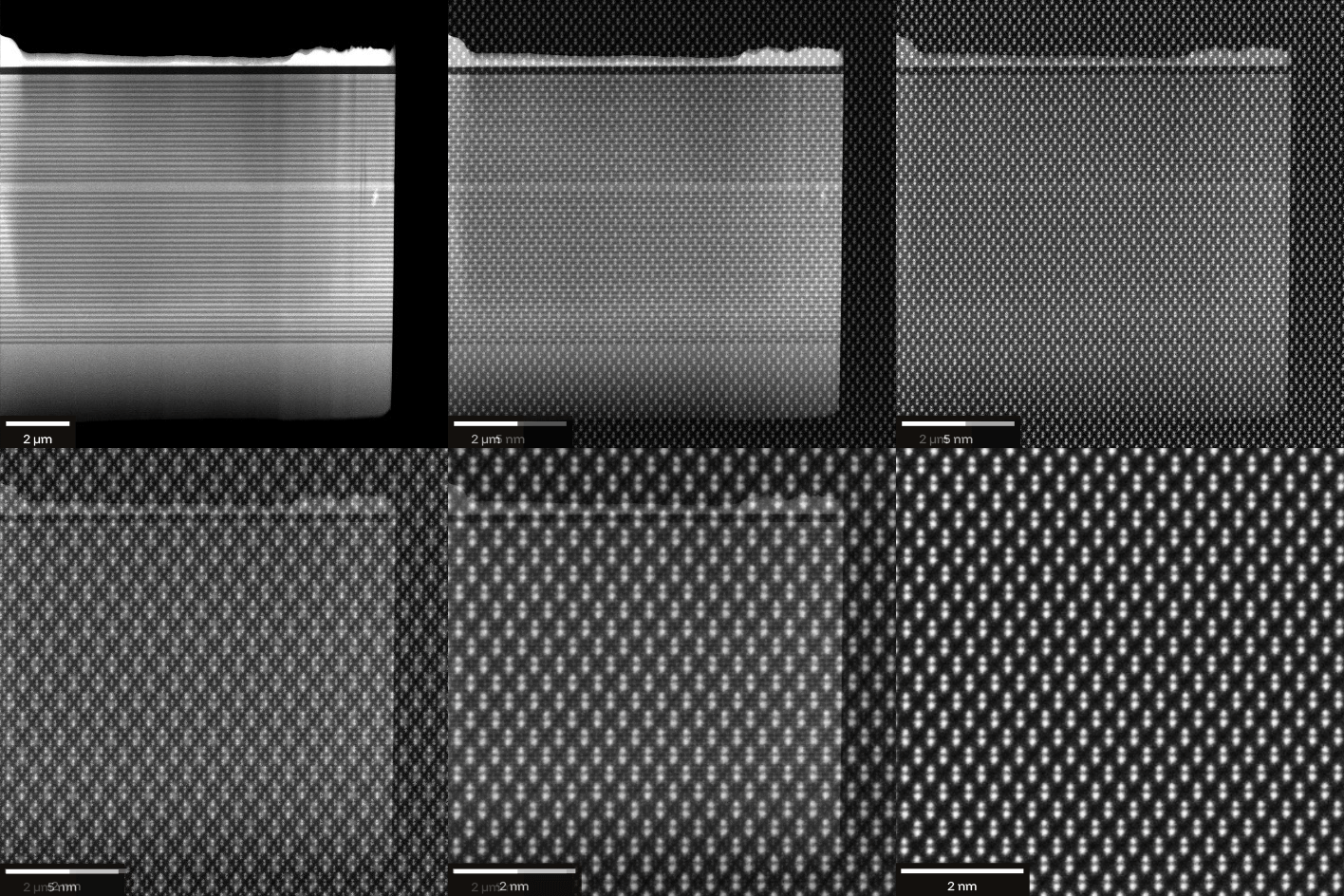
GaAs/AlGaAs multilayer
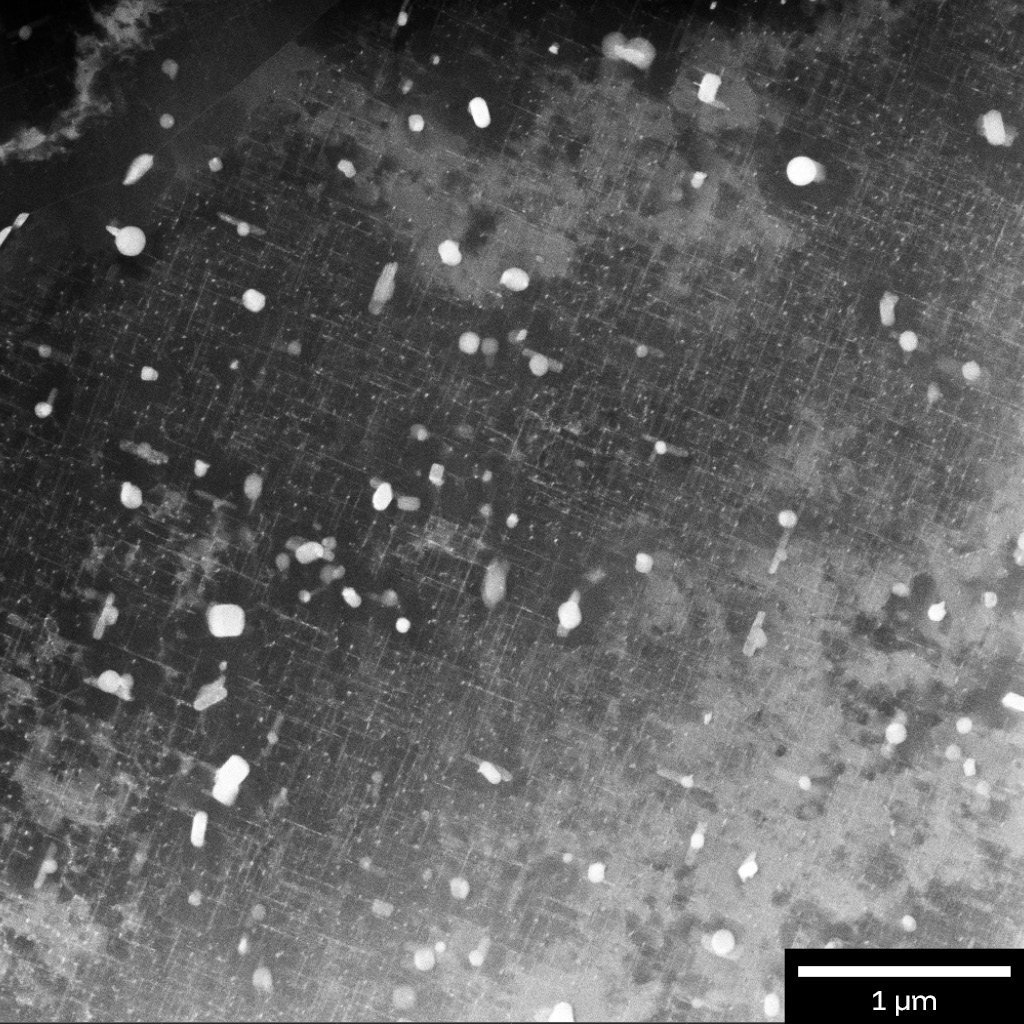
High-resolution HAADF STEM imaging after GIB finishing down to 300 eV reveals well-resolved atomic structure, with reduced surface damage and no observable Ga-related artefacts from prior FIB preparation.
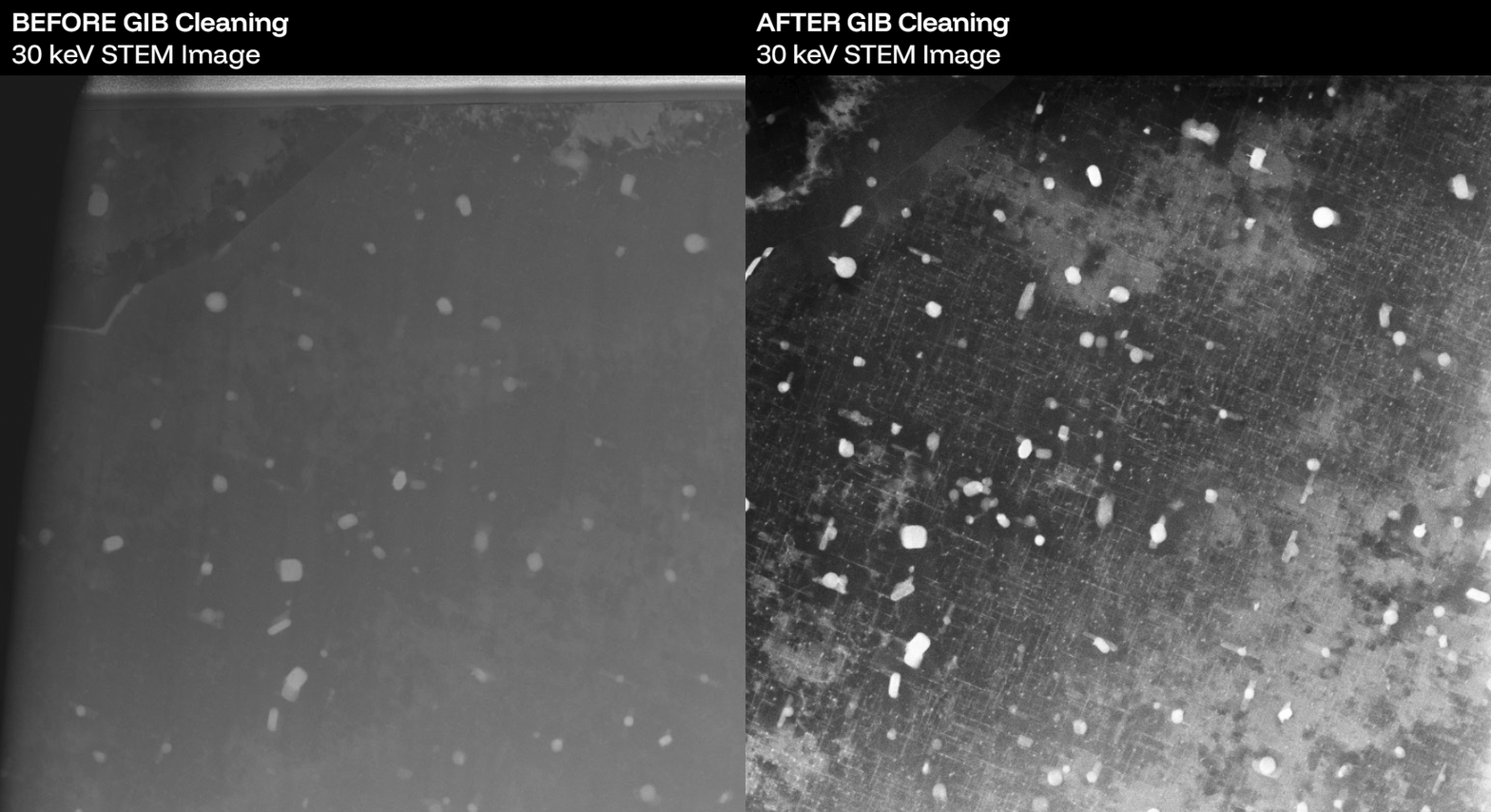
Al, Cu alloys and other Ga+ sensitive materials
Comparisons between low‑kV Ga polishing and GIB finishing show significantly improved phase contrast and clearer visibility of the finest precipitates and other features, enabled by reduced surface damage and more uniform final cleaning.
For advanced materials labs that need automated, high-quality TEM specimen preparation across materials and users.
For semicon labs that need precision, reproducibility, endpointing, and confidence in demanding TEM-prep R&D and FA TEM lamella preparations workflows.
Evaluate whether Aura™ GIB and TEM AutoPrep Pro can be added to your current system.
Non-destructive spectral imaging for material verification and internal inspection of advanced electronic assemblies.
TrueContrast™ multi-energy imaging for differentiating polymers, metals, and encapsulants
K-edge detection for accurate identification of high-Z elements
Non-destructive visualization of interfaces and buried defects in electronic packages
Spectrum comparison tools for verifying material uniformity and contamination sources
Tescan Spectral CT delivers compositional insight where conventional micro-CT cannot. Engineers can distinguish packaging materials, solder alloys, and internal structures without sectioning or coating—supporting reliable failure analysis, design validation, and quality assurance across next-generation electronic devices.
Multi-energy micro-CT for elemental and structural differentiation in complex, multi-phase materials.
Elemental mapping for identifying fillers, dopants, or additives in polymer composites
Spectral contrast for distinguishing polymers, ceramics, and metals with similar densities
Non-destructive 3D analysis of internal interfaces and phase boundaries
Integrated Spectral Suite for correlating elemental and structural data in one workflow
In materials research, Spectral CT enables scientists to explore the relationship between structure and composition without destroying samples. Researchers can visualize distribution of additives, analyze composite uniformity, and study degradation pathways—supporting more reliable material design and performance assessment.
Full-spectrum micro-CT for 3D elemental and structural insight into geological samples.
Non-destructive 3D elemental mapping of rocks, ores, and mineral inclusions
K-edge detection for locating and identifying high-value or trace elements like gold or rare earth elements
Enhanced contrast for complex mineral assemblages and pore networks
Large-volume spectral scanning for full-core or fragment-scale analysis
For geoscientists and mining professionals, Spectral CT provides simultaneous elemental and structural data from intact samples. It supports mineral identification, ore classification, and recovery assessment—reducing dependency on destructive assays while preserving geological material for further study.
Tescan Spectral CT works seamlessly with SPECTRAL Suite and Acquila™ micro-CT control software to streamline spectral imaging from acquisition to analysis. Used as an add-on with the UniTOM XL platform, users can target volumes of interest, capture full-spectrum data, and visualize structural and elemental information in one workflow.
Researchers benefit from intuitive controls, guided reconstruction, and automated spectral processing. Spectral Suite handles spectrum matching, K-edge detection, and compositional mapping with minimal setup. This delivers consistent, reproducible results across samples and accelerates multi-energy micro-CT analysis.
|
X-ray source |
|
|
Source type
|
Open type transmission source |
|
Voltage
|
30-160kV |
|
Power
|
Up to 50W |
|
X-ray detectors |
|
|
Detector |
High-speed, medium field of view with multiple detector options (up to three) |
|
Resolution
|
|
|
Spatial resolution |
500 nm (2D line pair resolution) |
|
Temporal resolution |
<5 seconds |
|
Sample size and weight |
|
|
Maximum sample size (H x Ø) |
700 mm x 500 mm |
|
Weight |
45 kg |
|
Maximum imaging envelope (H x Ø) |
400 mm x 300 mm |
|
System weight and dimensions |
|
|
Installed (L x W x H) |
2.06 m x 0.97 m x 1.9 m |
|
Installed weight |
2750 kg |
|
Rotation stage
|
|
|
Stage |
Continuous rotation with slip-ring technology for uninterrupted dynamic imaging |
|
Software and In Situ connectivity |
|
|
Imaging modes |
Continuous Dynamic CT, standard static CT, tiling, offset, stacked and merged integrated acquisition (STAMINA), multi-scale Volume of Interest Scanning (VOIS) |
|
In situ interface |
Optional connection panel for in situ testing stages and environmental experiments with radiation-safe feedthroughs |
|
Integrated workflow control and data reconstruction through Acquila™ and Panthera™ software |
|
X-ray source | |
|
Source type
|
Open type transmission source |
|
Voltage
|
30-160kV |
|
Power
|
Up to 50W |
|
X-ray detectors | |
|
Detector |
High-speed, medium field of view with multiple detector options (up to three) |
|
Resolution
| |
|
Spatial resolution |
500 nm (2D line pair resolution) |
|
Temporal resolution |
<5 seconds |
|
Sample size and weight | |
|
Maximum sample size (H x Ø) |
700 mm x 500 mm |
|
Weight |
45 kg |
|
Maximum imaging envelope (H x Ø) |
400 mm x 300 mm |
|
System weight and dimensions | |
|
Installed (L x W x H) |
2.06 m x 0.97 m x 1.9 m |
|
Installed weight |
2750 kg |
|
Rotation stage
| |
|
Stage |
Continuous rotation with slip-ring technology for uninterrupted dynamic imaging |
|
Software and In Situ connectivity | |
|
Imaging modes |
Continuous Dynamic CT, standard static CT, tiling, offset, stacked and merged integrated acquisition (STAMINA), multi-scale Volume of Interest Scanning (VOIS) |
|
In situ interface |
Optional connection panel for in situ testing stages and environmental experiments with radiation-safe feedthroughs |
|
Integrated workflow control and data reconstruction through Acquila™ and Panthera™ software |
No distributors found.