Back to the webinars

WEBINAR | Influence of In-Situ Heat Treatment on the Microstructure of Laser Powder Bed Fusion (LPBF) Processed PM23 

Understanding crack formation, porosity, and microstructural evolution in additively manufactured high-speed steel

Sep 2, 2026

Morning: 9:00 CEST / 3:00 EDT / 12:00 PDT

Afternoon: 19:00 CEST / 13:00 EDT / 10:00 PDT

High-speed steel PM23 (1.3344) is widely used in cold-working applications due to its excellent combination of wear resistance, toughness, and machinability. Despite its attractive properties, Laser Powder Bed Fusion (LPBF) processing of PM23 remains challenging because rapid solidification and steep thermal gradients promote crack formation and porosity. 

In-situ heat treatment during  Laser Powder Bed Fusion (LPBF) has emerged as a promising strategy to reduce thermal stresses and improve part integrity. However, the effectiveness of this approach varies throughout the build volume, particularly as component height increases and thermal resistance changes. 

This webinar presents a detailed investigation into the resulting microstructures and the factors influencing their development. Particular attention will be given to the impact of in-situ heat treatment on crack susceptibility, porosity, and microstructural variations across different regions of the test specimen. 

Attendees will gain valuable insights into the complex interactions between LPBF process parameters, thermal history, and final material performance.


Register now to learn:

  • Why PM23 remains a challenging material for LPBF manufacturing 

  • How in-situ heat treatment influences crack formation and porosity

  • The relationship between thermal gradients and microstructural evolution

  • Why component height affects defect formation despite optimized processing conditions

  • How advanced microscopy and materials characterization reveal process-structure relationships

  • Practical insights for researchers and engineers working with additively manufactured tool steels

This webinar is particularly relevant for:

  • Additive manufacturing researchers

  • Materials scientists

  • Metallurgists

  • Tool steel developers

  • LPBF process engineers

  • Manufacturing R&D specialists

  • Failure analysis professionals

  • Academic researchers studying process-microstructure relationships

Why Attend?


Successfully processing high-performance tool steels by Laser Powder Bed Fusion (LPBF) requires more than optimized machine parameters. Understanding how thermal conditions influence microstructural development is essential for reducing defects and improving component performance. 

This webinar combines real-world additive manufacturing challenges with advanced materials characterization, providing attendees with actionable insights into one of the most important topics in metal additive manufacturing today. 

Register now to secure your place. 

Speakers

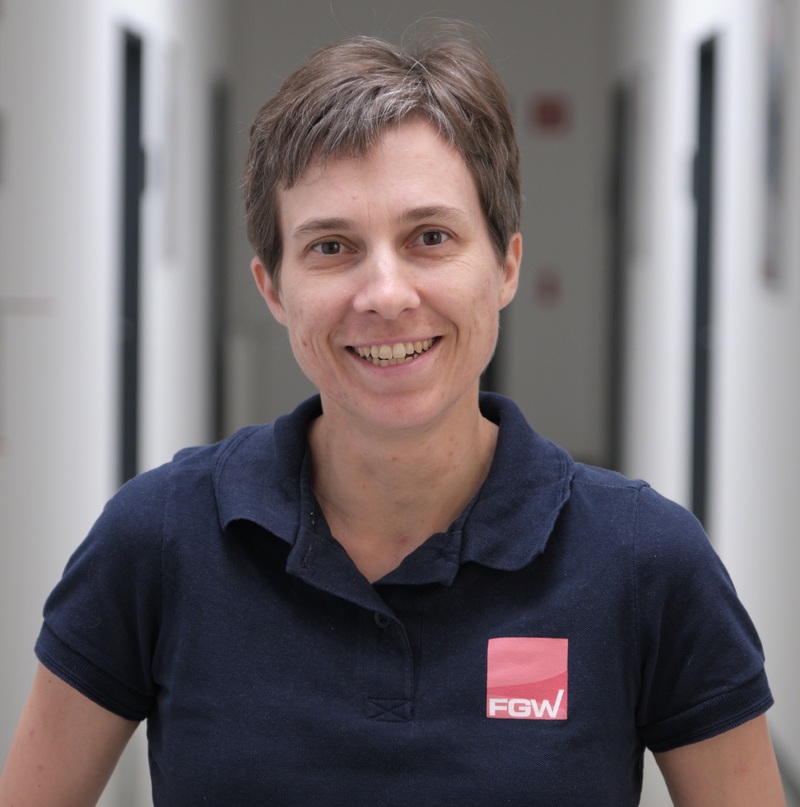
Dr. Romina Krieg
Dr. Romina Krieg

Leader of the Materials Department at FGW - Forschungsgemeinschaft Werkzeuge und Werkstoffe e. V.


Several years of expertise in industrial research and development: Metals, Degradation mechanisms, Approval procedures in the nuclear sector, Standardization.

The work in the department spans from shape memory alloys to tool steel and copper based alloys for corrosion protection applications. Several production processes from melting and forging over atomization to L-PBF.

Also responsible for the analytic department as well, which holds focused ion beam – scanning electron microscopy (FIB-SEM), and associated microanalytical techniques (EDS, EBSD), X-ray CT with spectral capability, and XRD.

FGW Logo ROT 2400dpi
About the Organization

 FGW - Forschungsgemeinschaft Werkzeuge und Werkstoffe e. V.  is an independent materials testing and characterization center serving industrial and research customers across Europe.

Through advanced materials analysis, failure investigations, metallography, and microstructural characterization, the laboratory supports the development and optimization of manufacturing processes and advanced materials.

Independent testing laboratories play a critical role in translating microscopy and analytical data into practical engineering decisions, helping manufacturers improve product quality, reliability, and process understanding.

Don't miss out - register now.


Register for the webinar