

WEBINAR | Up to 40% Faster Automated TEM Lamella Preparation with new Ga⁺ FIB Column

Nanoscale Orientation Mapping in Deformed Ni-Based Superalloys

Crystallographic analysis of deformation cells and kink bands using Tescan TENSOR.

hero
hero
Unlocked content

Revealing Crystallographic Response to Local Mechanical Stress

Ni-based superalloys are essential in high-performance applications such as turbine engines and energy systems, where they must endure extreme temperatures and complex mechanical loads. Understanding how these materials deform, especially at the nanoscale, is critical for improving reliability and extending service life.

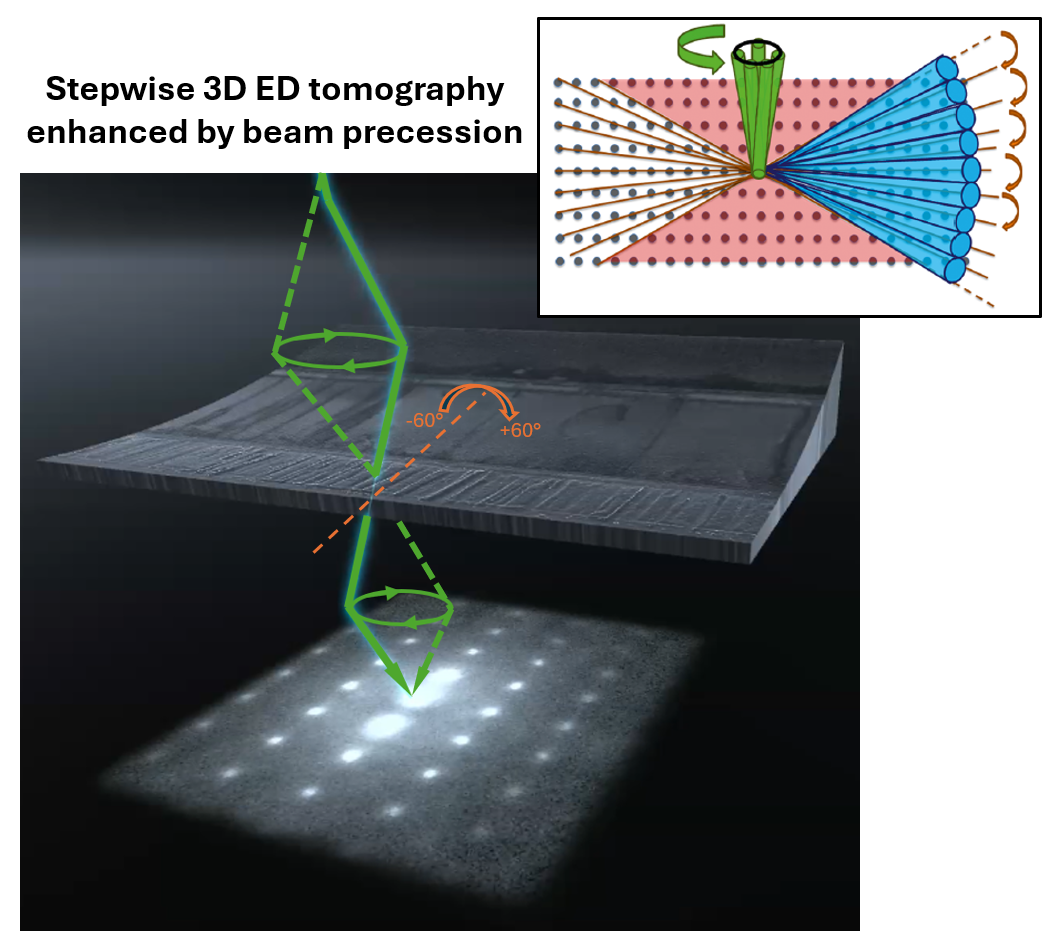
This study demonstrates how Tescan TENSOR’s precession-assisted 4D-STEM is used to analyze local orientation gradients and kink band formation in a single-crystal Ni-based superalloy deformed by Vickers indentation.

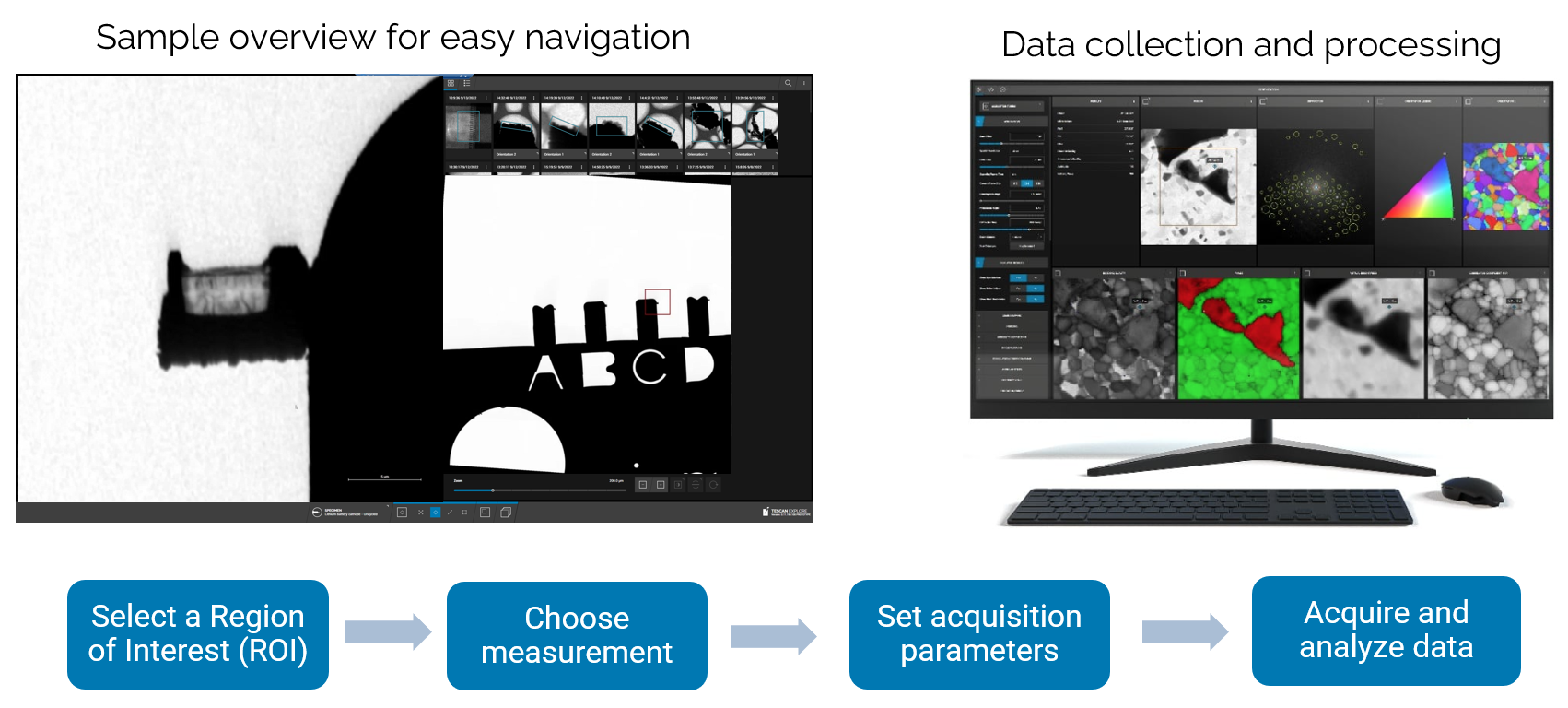
Fully integrated automated crystal orientation analysis obtained within minutes during the microscope measurement session allows researchers to correlate slip features observed in STEM images with precise changes in lattice orientation, revealing the local mechanics of plastic deformation.

Why Choose TENSOR

for 4D-STEM Research?

01
Root of the Problem

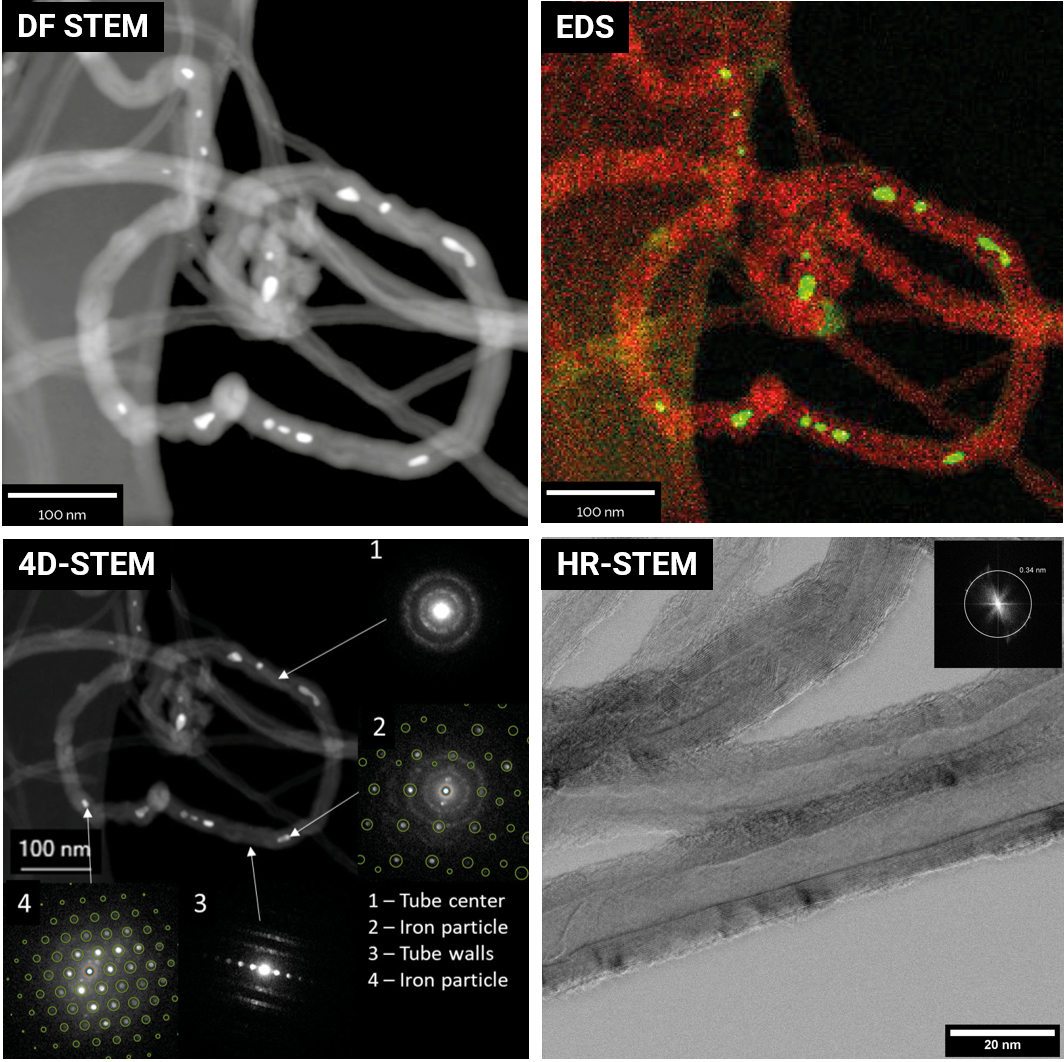
Deformation in superalloys initiates at the atomic level through dislocation motion, lattice rotation, and slip activation. Yet conventional TEM/STEM imaging is limited to morphology visualization based on the scattering contrast, offering no direct information on crystal orientation or rotation gradients.

To understand how materials respond to applied force, researchers need methods that link mechanical features like slip planes and indentations to precise crystallographic changes. This is especially relevant in γ/γ′ superalloys, where the interaction between phases influences strength, creep resistance, and failure mechanisms.

02
Materials and Methods

A single-crystal Ni-based superalloy with complex alloying elements was subjected to Vickers indentation along the [001] axis. FIB-prepared lamellae were extracted from beneath the indent for STEM and 4D-STEM analysis.

STEM imaging was performed using a 6.5 mrad convergence angle and a 100 pA probe current. For 4D-STEM orientation mapping, the convergence angle was reduced to 2 mrad with a 50 pA probe. A 14 mrad precession angle was applied, and data were collected at 1000 frames per second with 1 ms dwell time.

Two 4D-STEM scan regimes were used:

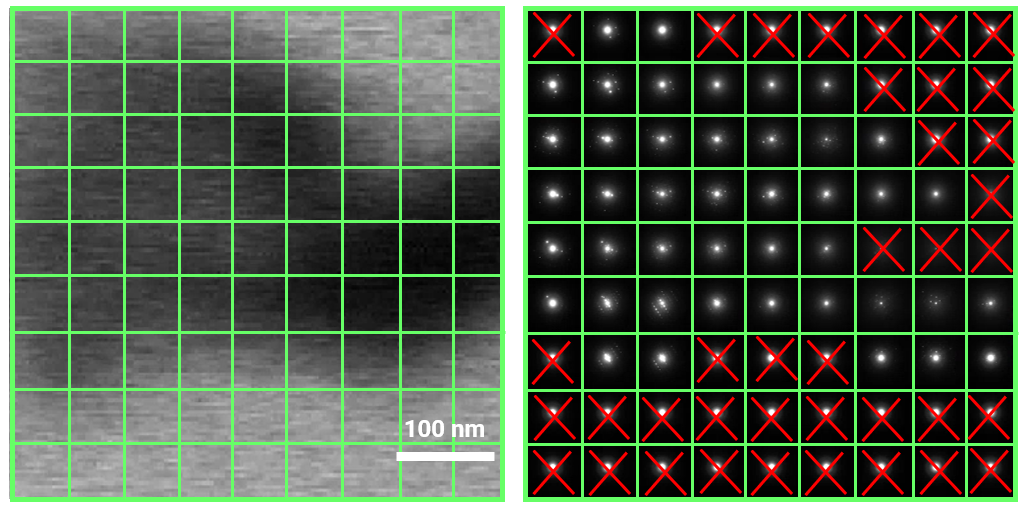
  • Overview scan: 55 nm pixel size to survey the deformed region

  • High-resolution scan: 6.5 nm pixel size to examine the zone of interest

Diffraction patterns were matched against kinematic templates of Ni₃Al (a = 3.56 Å, space group Pm-3m), using TENSOR’s automated orientation analysis workflow.

03
Results and Discussion

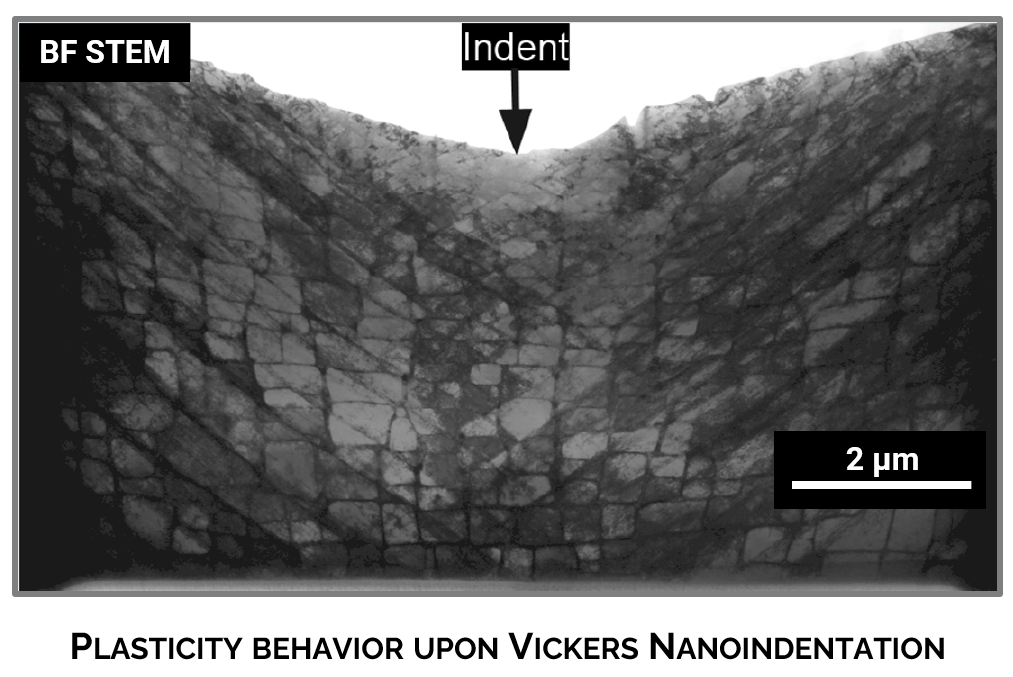
STEM images revealed prominent slip planes beneath the indentation, consistent with heavy plastic deformation. The γ and γ′ phases were clearly distinguishable in the lamella, appearing as channels and deformation cells respectively. These regions maintained a cube–cube orientation relationship before deformation.

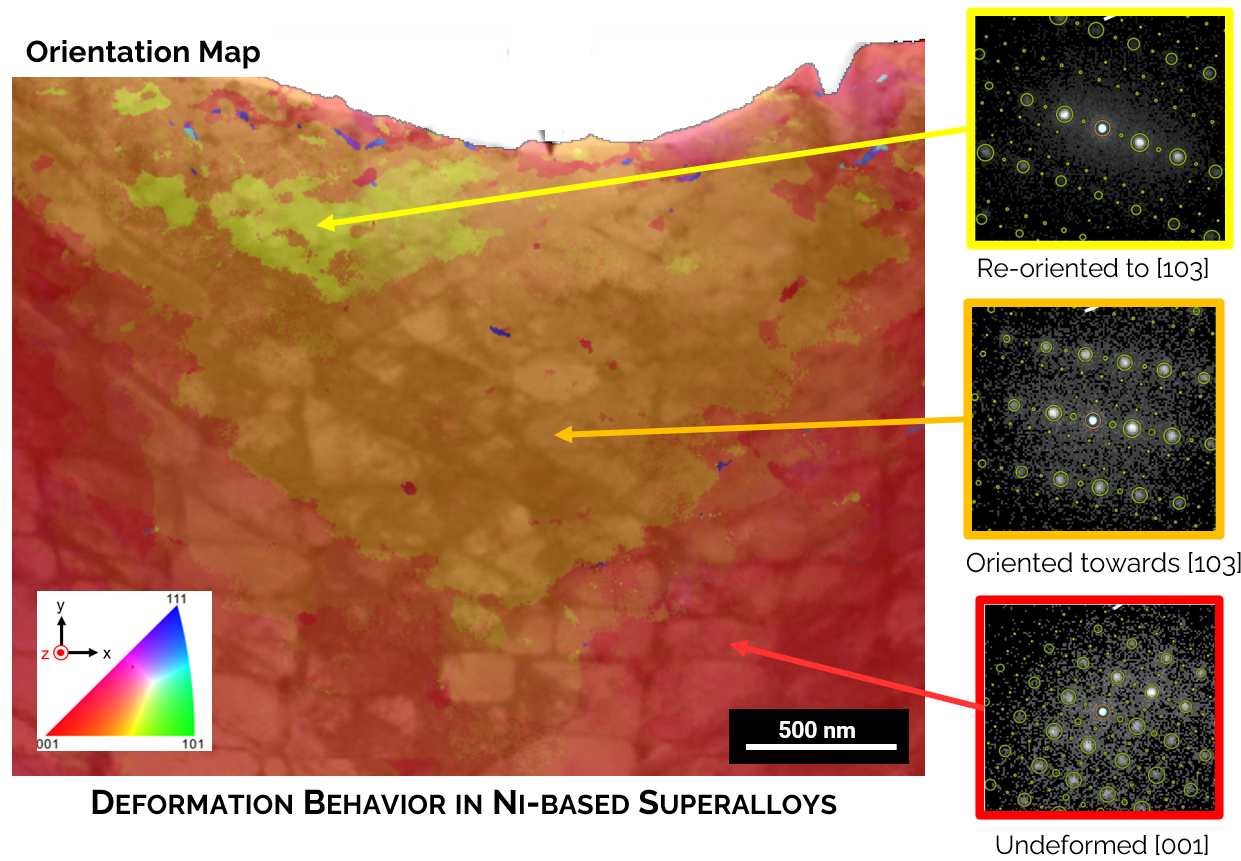
The 4D-STEM overview map showed increased reorientation of the original cubic lattice beneath the nanoindentation trough. These areas with a high gradient of lattice reorientation correspond to dense slip plane intersections and were selected for high-resolution mapping.

In the detailed scan, a distinct zone displayed lattice rotation from [001] toward [103], with high indexing confidence across most of the region. Smaller subzones near the indent tip showed larger orientation shifts and slightly reduced pattern quality, indicating severe local deformation.

These findings confirm that kink bands and lattice rotations form within deformation cells bounded by slip planes and demonstrate the ability of TENSOR to resolve these features with the nanometer precision required for the elucidation of plastic deformation in metals and alloys.

GET IN Touch

Contact us

Get the most out of Tescan

This is more than information; it's an advantage. We've compiled our technical whitepapers, detailed product flyers, and on-demand webinars to provide you with the knowledge that makes a real difference. Sign up now to access the insights you need to make an impact.

Tescan Instruments & Technology

Used in This Workflow

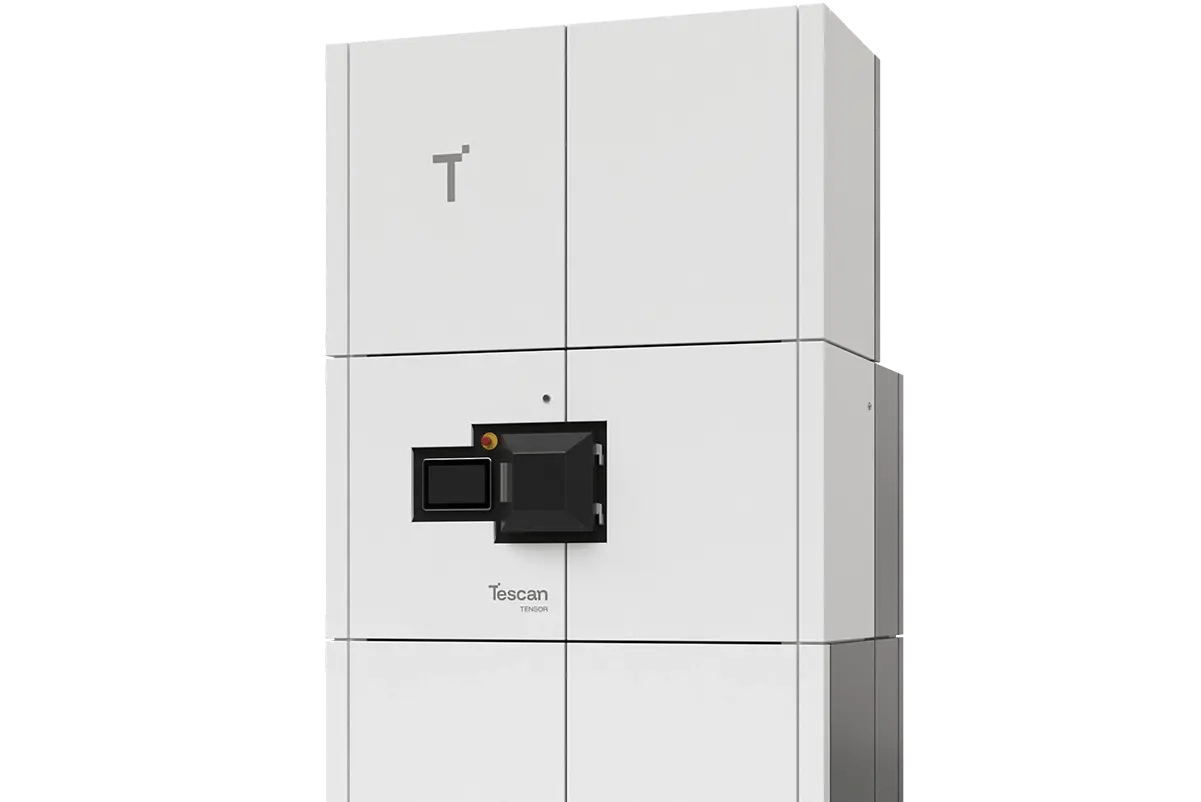
TESCAN TENSOR

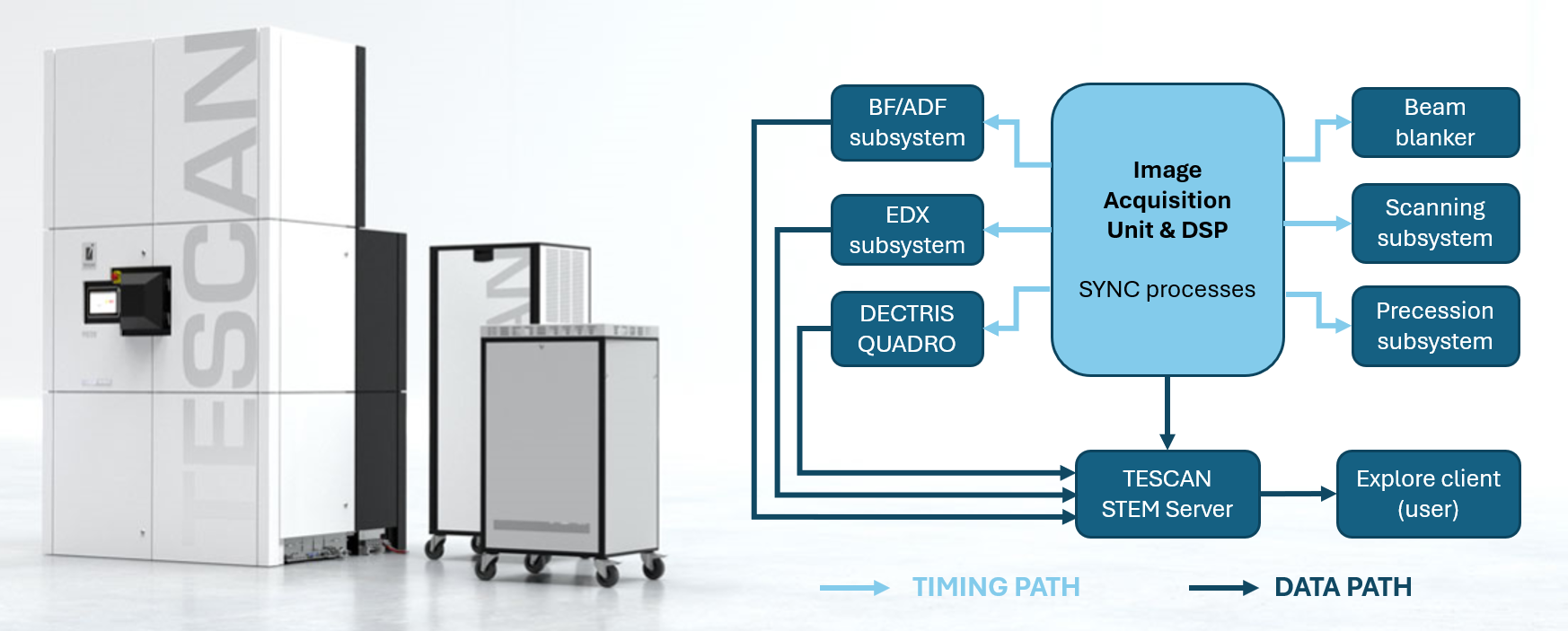
A fully integrated analytical STEM system optimized for high-resolution crystallographic and structural analysis.

  • Precession-assisted diffraction imaging for accurate orientation mapping

  • Automated optical alignments and fast, hybrid-pixel, direct detector for high yield, high-quality data

  • On-the-fly processing of diffraction data for interactive 4D-STEM analysis with meaningful results

  • Ideal for structural studies of deformation and grain boundary behavior over large regions of interest.
TENSOR_1

GET IN Touch

Contact us

map

Where can you find us:

Tescan Brno
Libušina třída 21
623 00 Brno
Czech Republic

info@Tescan.com