

WEBINAR | From Infrastructure to Impact: EM & Micro-CT in Materials Core Facilities

Visualize Electrolyte Dynamics in Lithium-ion Battery Heating Testing Without Sectioning 

Track thermal effects, gas evolution, and electrolyte movement in lithium-ion battery heating using non-destructive 4D imaging with Tescan UniTOM XL.

hero
hero
Unlocked content

Analyze Changes in Lithium-Ion Cells Under Thermal Stress with Non-Destructive Micro-CT 

Thermal cycling in lithium-ion cells often leads to gas formation, electrolyte redistribution, or material delamination. But these changes are easily missed or distorted when using destructive cross-sectioning techniques to facilitate analysis. Even minor intervention can shift internal components, obscure cause–effect relationships, or eliminate the ability to monitor change over time.

Tescan UniTOM XL provides a non-destructive, in situ workflow that captures structural evolution as it happens. Maintain geometry, perform electrolyte dynamics visualization, and assess thermal behavior using high-resolution, time-lapse 3D imaging while keeping the cell fully intact.

Why Analyze Lithium-ion Battery Heating Behavior

with Tescan UniTOM XL?

01
Root of the Problem

Why Traditional Methods Present Limitations for Analyzing Lithium-Ion Battery Heating Behavior

Thermal behavior inside lithium-ion batteries involves changes in electrolyte distribution, internal pressure, and material interfaces. These shifts occur throughout the cell volume, but traditional techniques rely on destructive sectioning that distorts structure and misses key transitions.

Mechanical preparation can displace components or release gases, making it difficult to track thermal effects like electrolyte redistribution and gas pocket formation. Early-stage internal changes often go undetected, despite their importance for understanding degradation and thermal runaway.

Tescan UniTOM XL delivers a non-destructive workflow for in situ battery heating analysis. Structural changes are captured in real time while the cell remains sealed and fully intact, enabling accurate interpretation of battery behavior under thermal stress.

  • Time-lapse 3D imaging during controlled heating
  • Full-volume visualization of electrolyte and electrode shifts
  • Automated scan routines synchronized with temperature input
  • Non-destructive analysis with preserved internal geometry
  • Clear detection of gas pockets and material movement
  • Scalable for pouch cells, cylindrical formats, and wearables

Investigate thermal behavior in lithium-ion batteries with Tescan UniTOM XL while maintaining internal geometry and consistent results.

02
Materials and Methods

How Lithium-Ion Battery Heating Behavior Is Analyzed Using Tescan UniTOM XL

Battery cells were scanned in their intact state, with no cutting, disassembly, or coating required. Samples were mounted inside a custom in situ heating stage, which was then placed on the experimental table of the Tescan UniTOM XL battery analysis system.

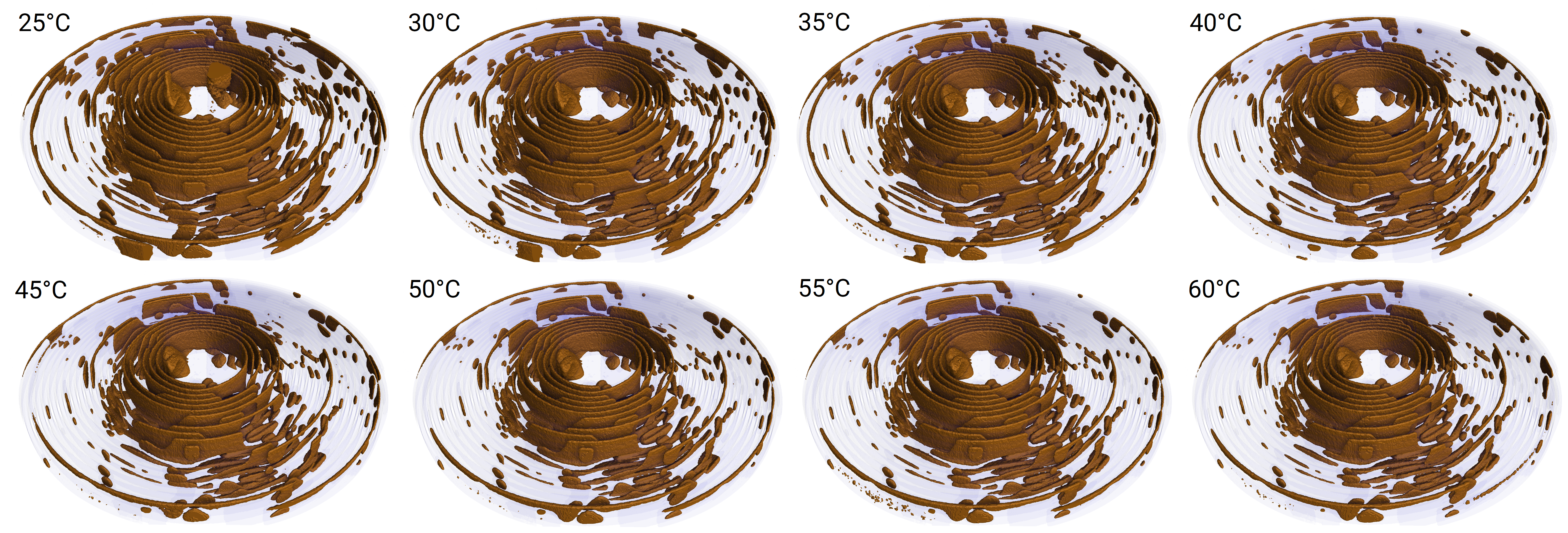
Heating and imaging were fully synchronized through automated protocols, allowing structural changes to be tracked under controlled conditions without introducing motion or distortion. Time-lapse datasets were acquired at multiple temperatures to monitor electrolyte shifts and gas formation across full volume.

3D reconstruction and analysis were carried out using Tescan’s volumetric imaging software. Researchers evaluated internal pressure buildup, electrode displacement, and performed electrolyte dynamics visualization while maintaining cell integrity.

As a result, this non-destructive workflow supports consistent thermal analysis across pouch cells, cylindrical formats, and wearable batteries.

03
Results and Discussion

Clear Structural Evidence of Heat-Driven Changes in Lithium-ion Cells

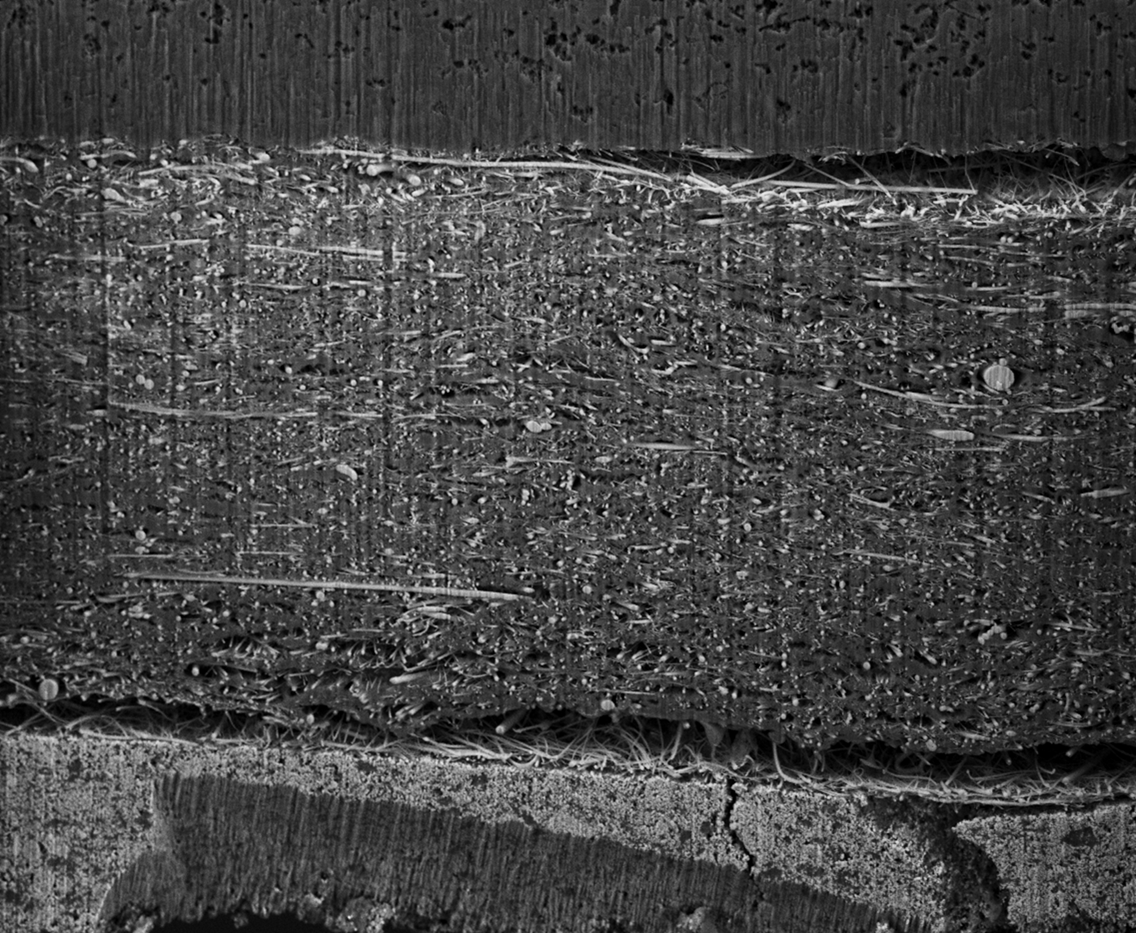
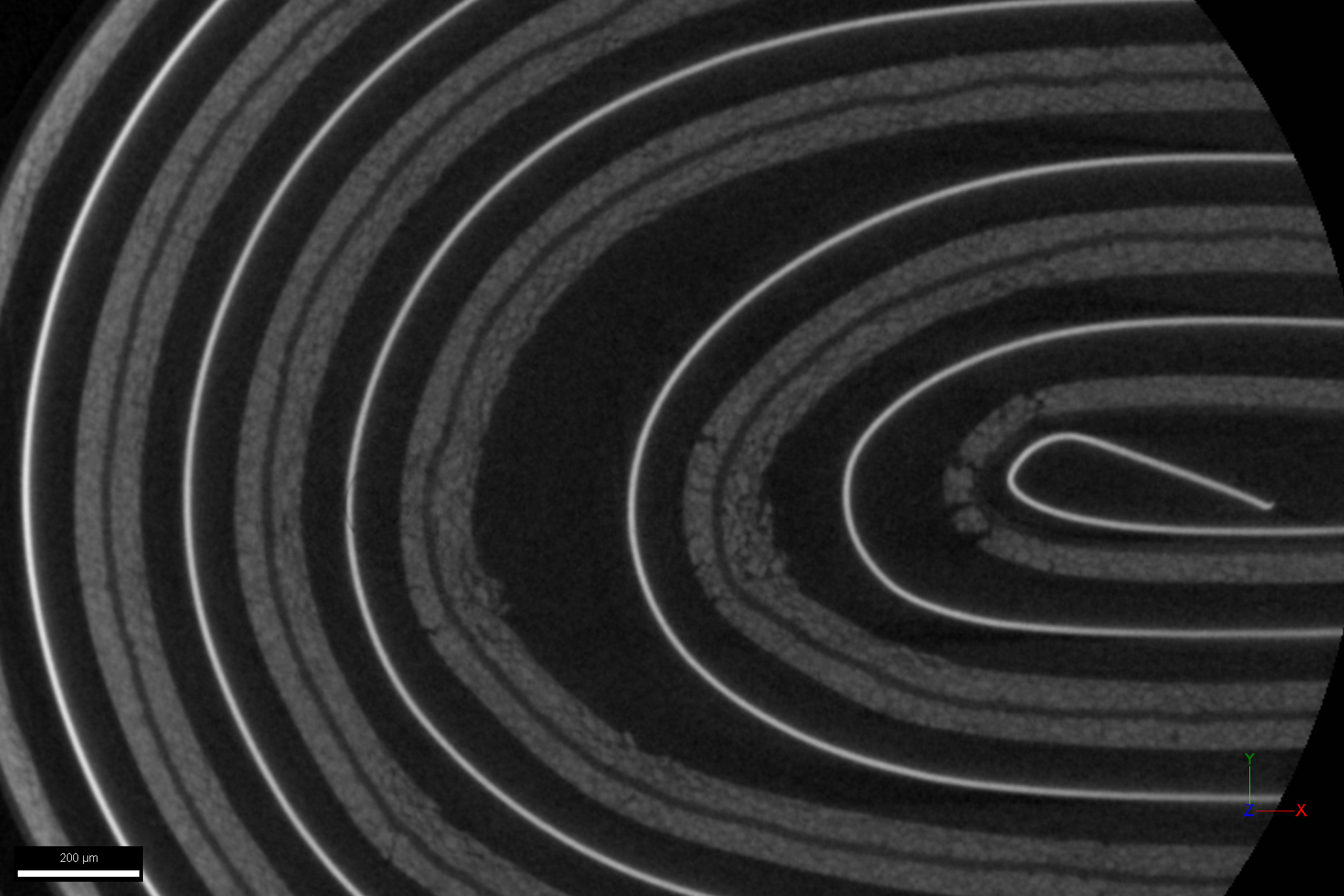
Tescan UniTOM XL enabled researchers to capture high-resolution 3D datasets from intact cells during micro-CT battery heating experiments. Non-destructive imaging combined with synchronized thermal protocols revealed internal changes—without altering geometry or compromising repeatability.

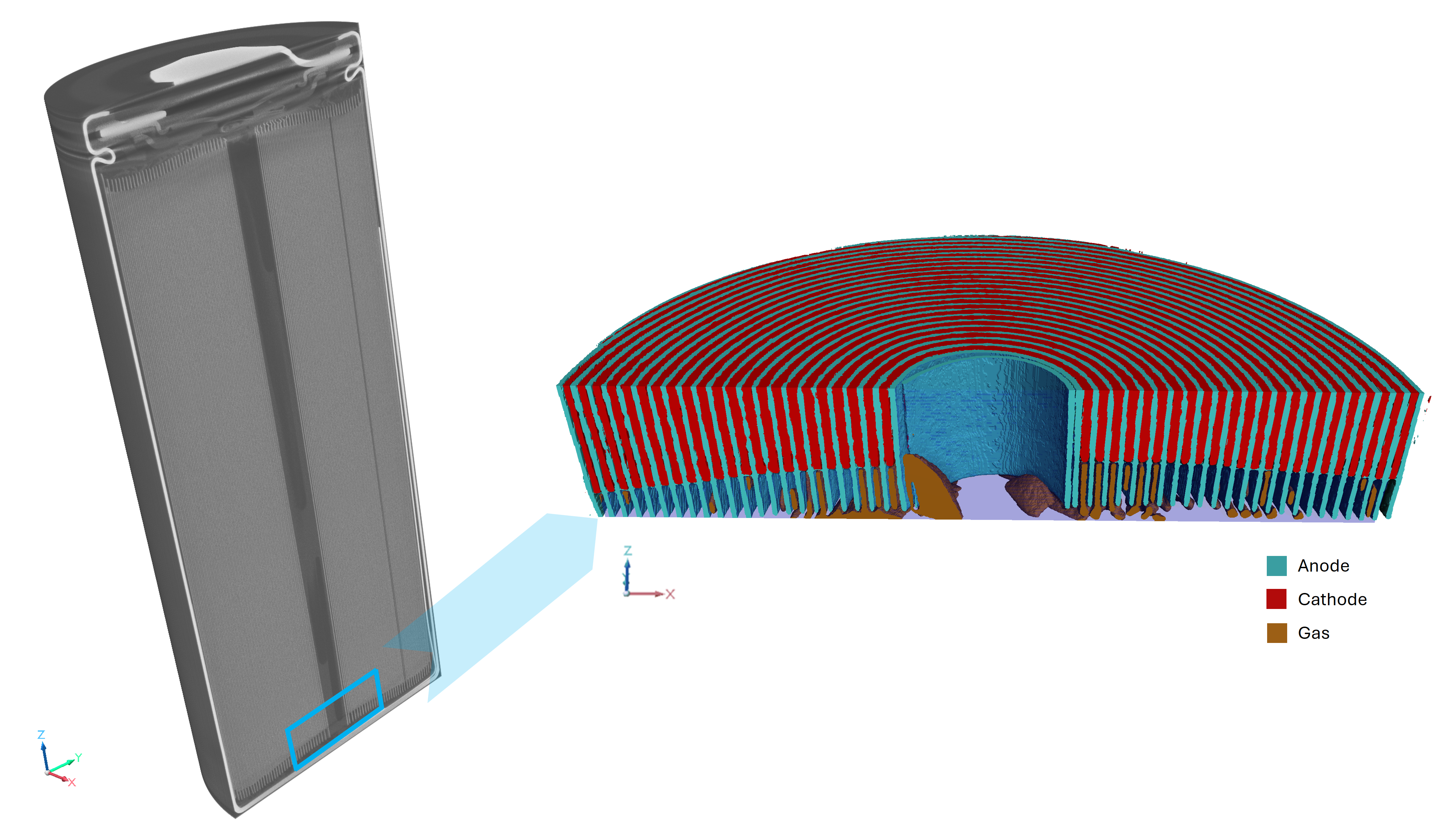
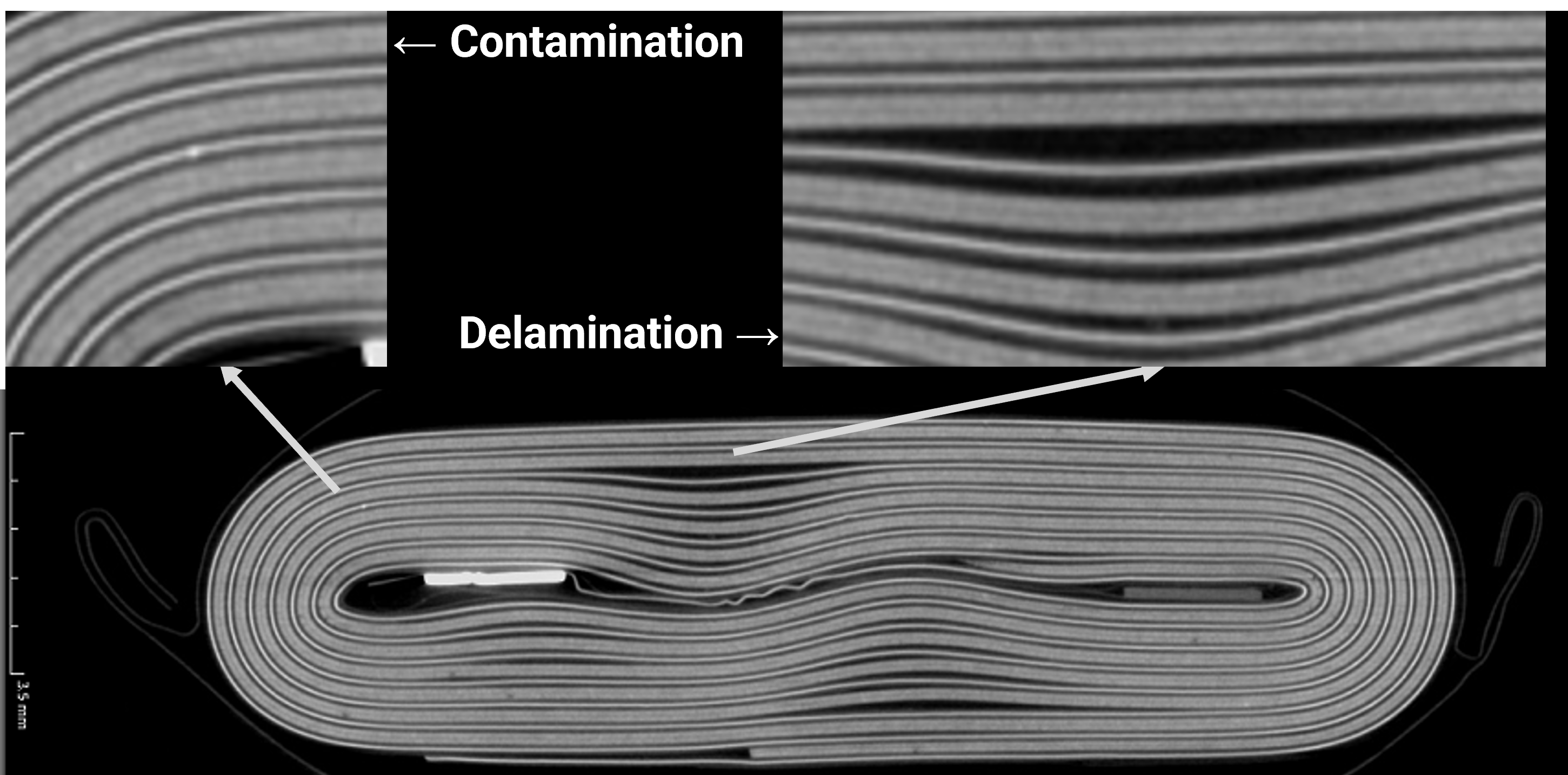
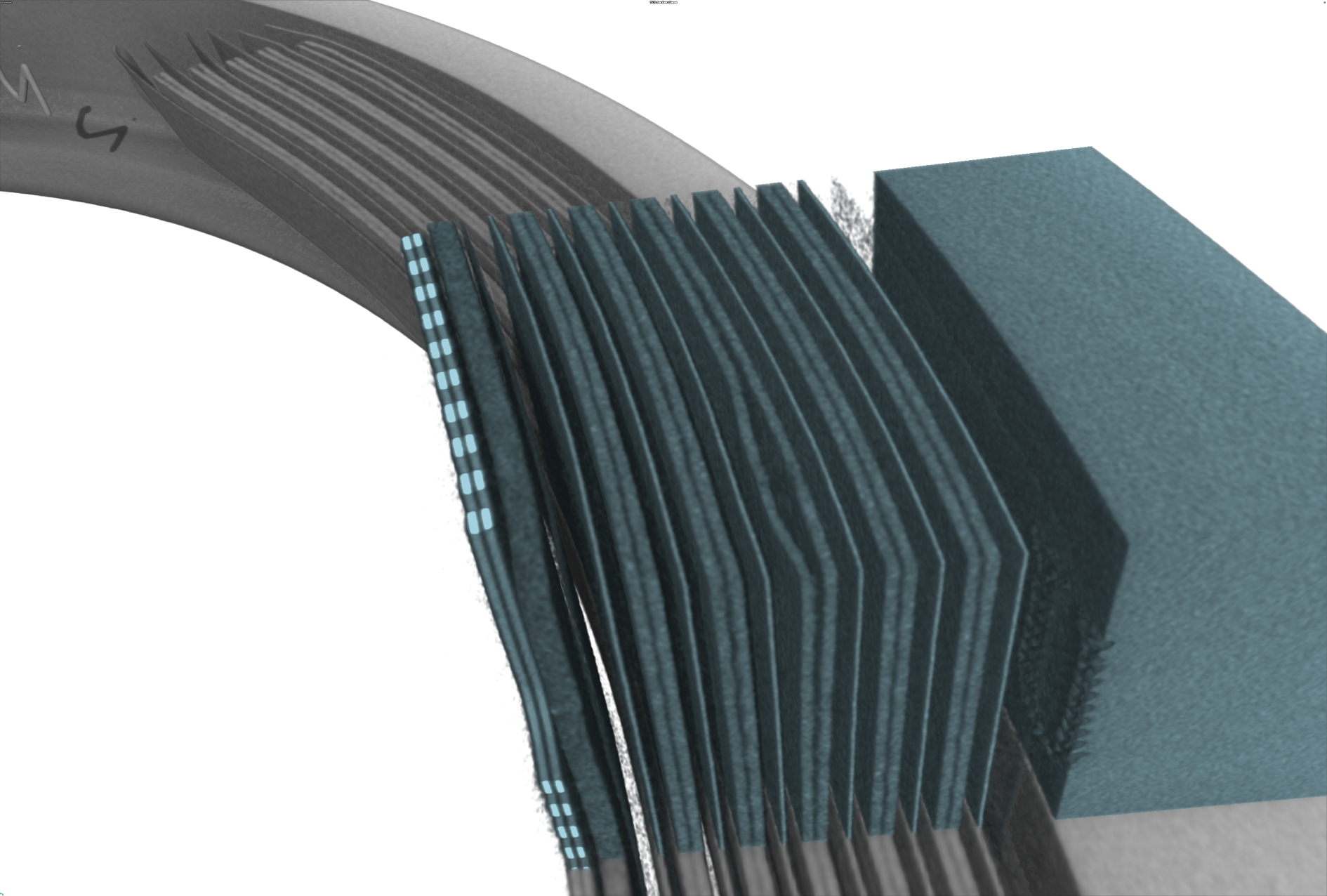
Electrolyte redistribution, gas formation, and electrode displacement were visualized across the full cell volume. These features remained detectable even in compact formats such as wearables, where structural tolerances are tight.

Time-lapse micro-CT provided stepwise imaging throughout the heating cycle, offering detailed insight into how thermal stress affects internal structure.

With this approach, researchers obtained consistent, high-fidelity data across battery formats. This supported evaluation of failure risks, observation of heat-driven shifts, and a clearer understanding of how structural changes affect performance and safety.

GET IN Touch

Contact us

Get the most out of Tescan

This is more than information; it's an advantage. We've compiled our technical whitepapers, detailed product flyers, and on-demand webinars to provide you with the knowledge that makes a real difference. Sign up now to access the insights you need to make an impact.

Tescan Instruments & Technology

Used in This Workflow

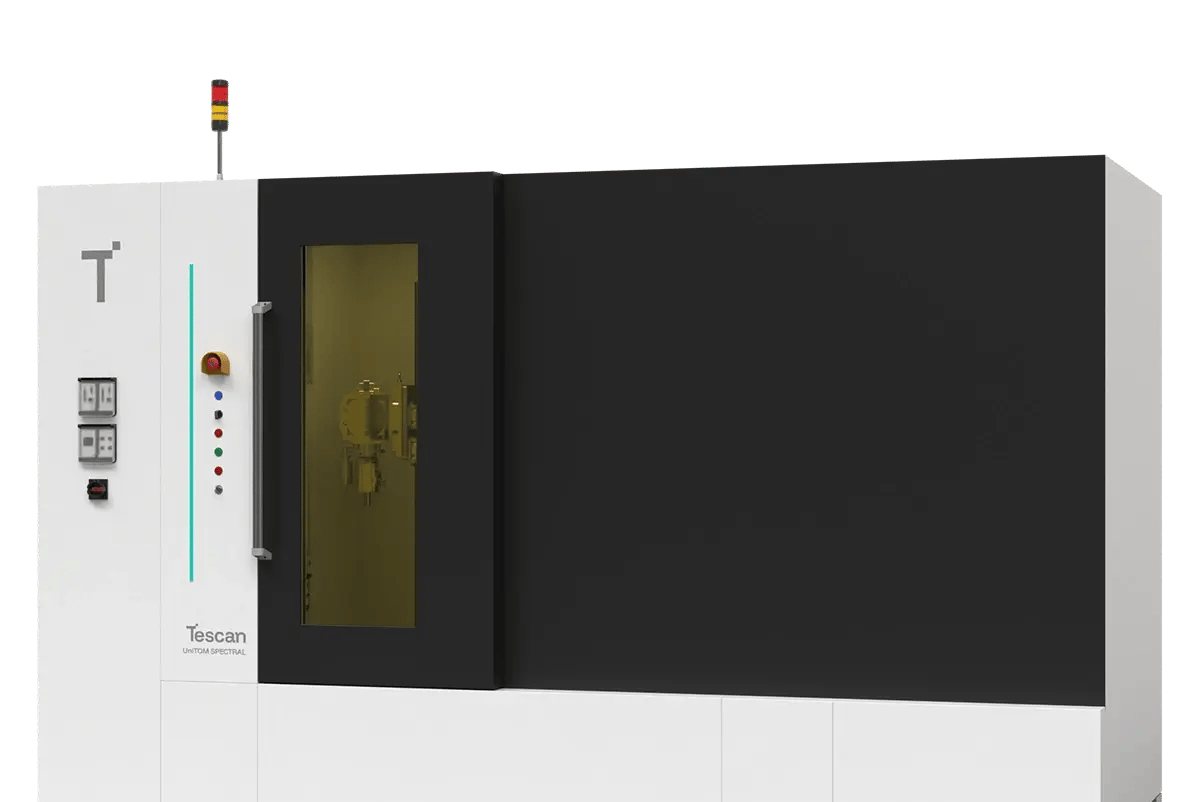
Tescan UniTOM XL 

Tescan UniTOM XL combines in situ thermal control with high-resolution micro-CT to visualize internal battery behavior as it unfolds. Its advanced imaging workflow captures structural changes in intact cells across temperature cycles, making it a powerful tool for investigating failure mechanisms in lithium-ion batteries.

  • In situ heating integration: enables synchronized temperature control during scanning

  • Time-lapse micro-CT: allows electrolyte dynamics visualization and reveals shifts in gas and electrode structure

  • Non-destructive acquisition: preserves cell integrity for repeatable testing

  • Flexible voxel resolution: captures both macrostructure and fine internal features

  • Stable imaging platform: reduces motion artifacts during lengthy or high-temperature scans

  • Advanced reconstruction tools: supports full-volume analysis across formats and time points 


MICRO_UniTOM_XL_1-2

GET IN Touch

Contact us

map

Where can you find us: 

Tescan Brno
Libušina třída 21
623 00 Brno
Czech Republic

info@Tescan.com 

130405923 us US 37.09024 -95.712891 25.3575 29.349345 20.67957527 42.082797 39.91384763 -33.693421 13.93320106 3.039986586 31.997988 38.050985 47.579533 48.1485965 58.375799 54.663142 19.195447 56.975106 50.493053 45.868592 10.79556993 44.35660598 43.2371604 55.536415 14.557577179752773 32.100937 -6.116829 -6.212299277967318 23.7104 -33.471062 31.998740087 -23.69149395 43.462349 51.529848 49.1893523 49.197486 25.072375 31.075811 1.299027 40.676979 52.30150662 51.013813 35.684121 37.479653 52.246622 40.581349 39.911632 -26.1811371 41.818215 33.429928

No distributors found.