WEBINAR | Up to 40% Faster Automated TEM Lamella Preparation with new Ga⁺ FIB Column

Quantify Porosity Across Scales in Composite Wind Blade Engineering with Tescan UniTOM XL

Capture internal porosity in full-scale components for composite wind blade engineering without cutting, repositioning, or compromising resolution.

hero
hero
Unlocked content

Identify Internal Voids and Fiber Architecture in Composite Wind Blade Engineering Without Sample Sectioning

Sectioning and surface prep can alter internal features. This can distort critical features like fiber alignment, interfacial cracks, and coating porosity—resulting in inconsistent measurements between samples.

Tescan UniTOM XL provides a proven, non-destructive workflow for imaging composite materials. It delivers consistent 3D data, from full-scale components to targeted subsamples. You can preserve structural context, minimize preparation artifacts, and generate accurate measurements of internal features. 

Why Use Tescan UniTOM XL

for Composite Imaging?

01
Root of the Problem

Why Conventional Techniques Compromise Accuracy in Composite Materials Analysis

The mechanical behavior of composite materials is shaped by their internal fiber structure, resin flow, and porosity across layers. However, most analysis relies on destructive sectioning and 2D inspection methods that disrupt internal structure and overlook critical features.

Cutting or polishing introduces artifacts, shifts cracks, and flattens pores. These distortions make it difficult to measure voids, identify delamination, or assess coating quality accurately. This is especially true for thick or multi-layered structures.

These challenges are amplified in wind blades, aerospace panels, and other high-performance composites where internal variability drives failure. Tescan UniTOM XL offers a dependable, non-destructive workflow for full-volume composite analysis, providing:

  • Multiscale imaging from full part to fiber level
  • Consistent 3D data across samples
  • Accurate pore and crack segmentation
  • Structural context preserved across scans

Tescan UniTOM XL delivers complete volumetric data on internal defects and microstructure, while preserving sample integrity.

02
Materials and Methods

How Composite Materials Are Analyzed Using Tescan UniTOM XL

Composite components were scanned in their original form, with no sectioning, polishing, or coating required. Samples were placed directly into the Tescan UniTOM XL, which features a high-stability stage and optional in-situ loading capabilities for mechanical response analysis in composites.

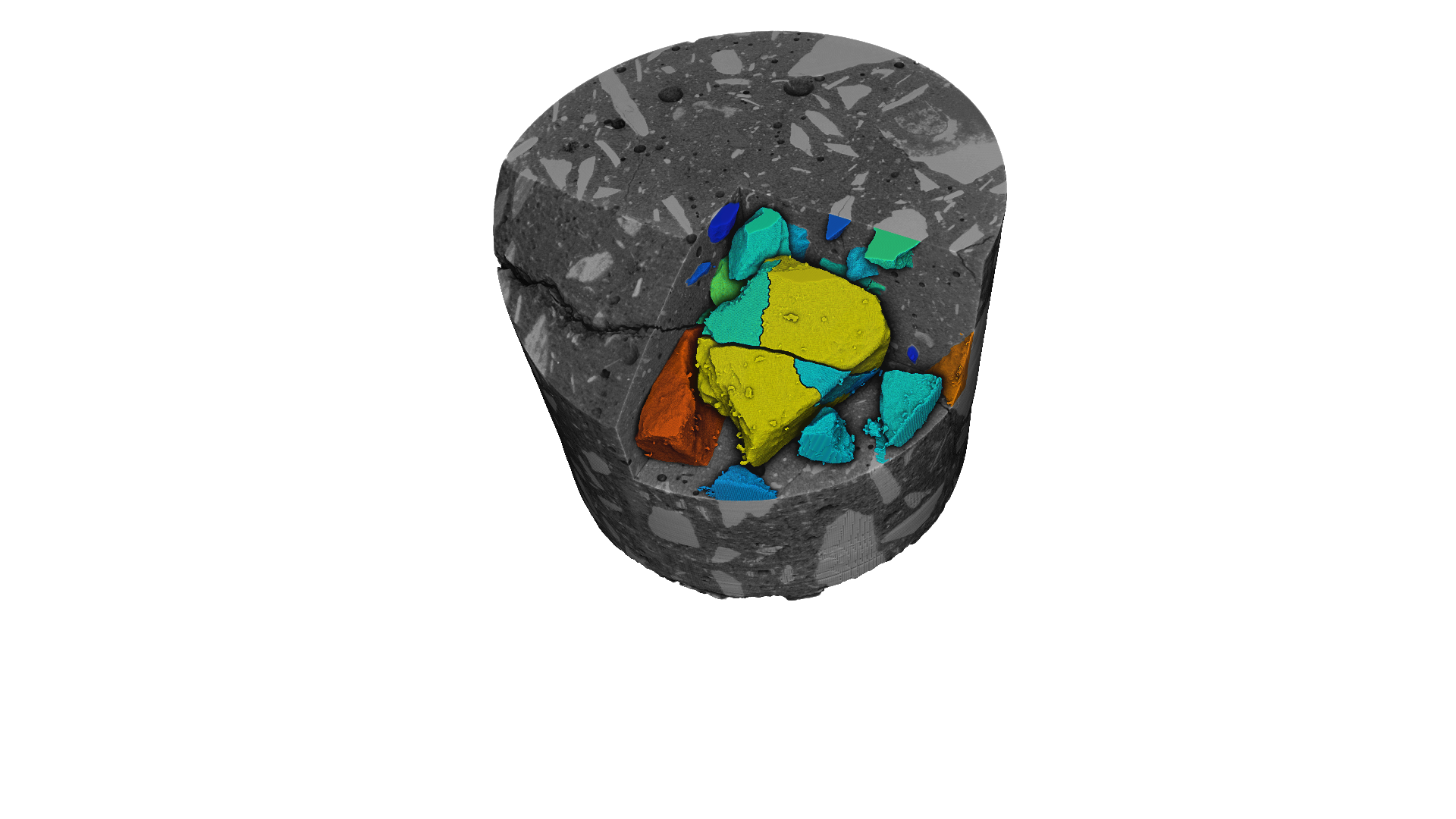
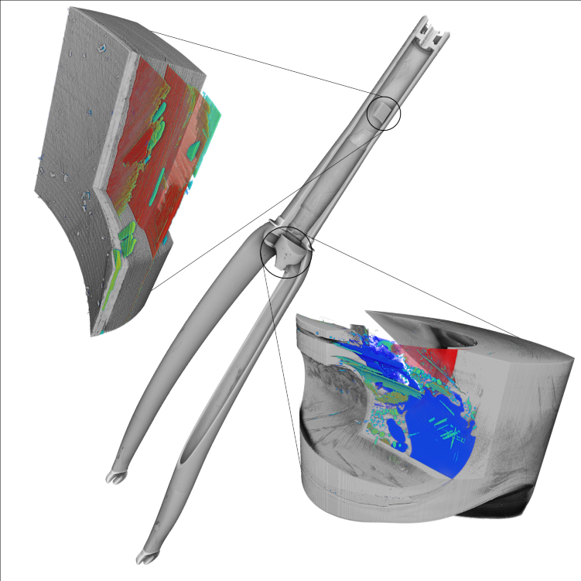
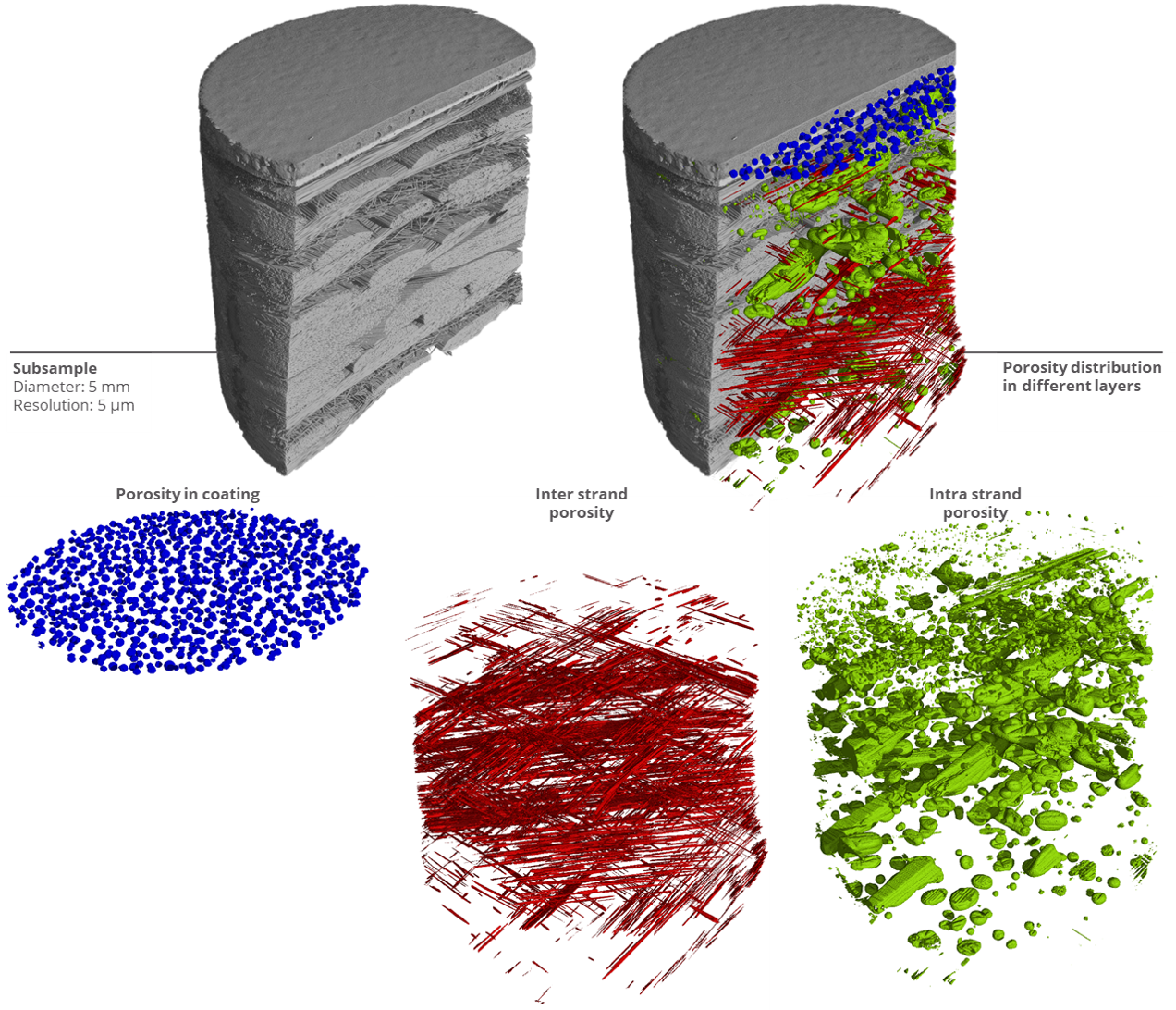
Scans were acquired using multiscale micro-CT imaging, capturing both full structural context and internal microstructure. Composited zoom scans and volume of interest scans enabled precise targeting of regions affected by voids, cracks, or delamination.

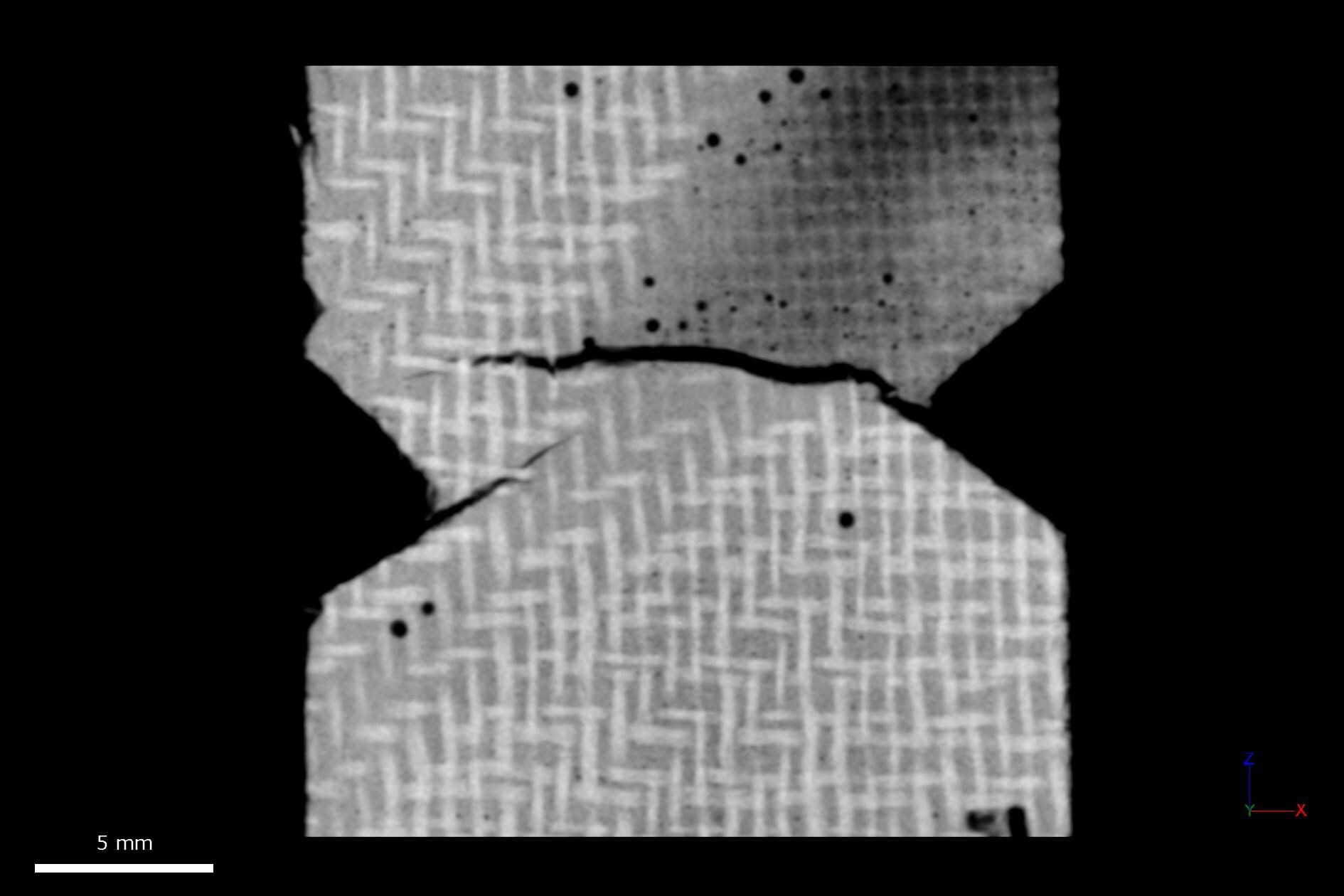
Using dynamic micro-CT imaging, internal material behavior was monitored in real time under load. Tescan’s advanced reconstruction tools supported full-volume 3D X-ray CT investigation of porosity, fiber alignment, crack propagation, and coating characterization in wind blades. All measurements were made from a single, intact sample without the need for cutting or surface preparation.

With no need for sectioning, this non-destructive workflow reveals internal defects and structural features exactly as they exist. Researchers gain accurate and artifact-free data they can trust for every sample at every scale.

03
Results and Discussion

Accurate 3D Imaging for Composite Wind Blade Engineering

Tescan UniTOM XL allowed researchers to generate high-resolution, artifact-free 3D datasets from intact composite components. Its non-destructive workflow and multiscale micro-CT imaging revealed internal structure without altering sample geometry.

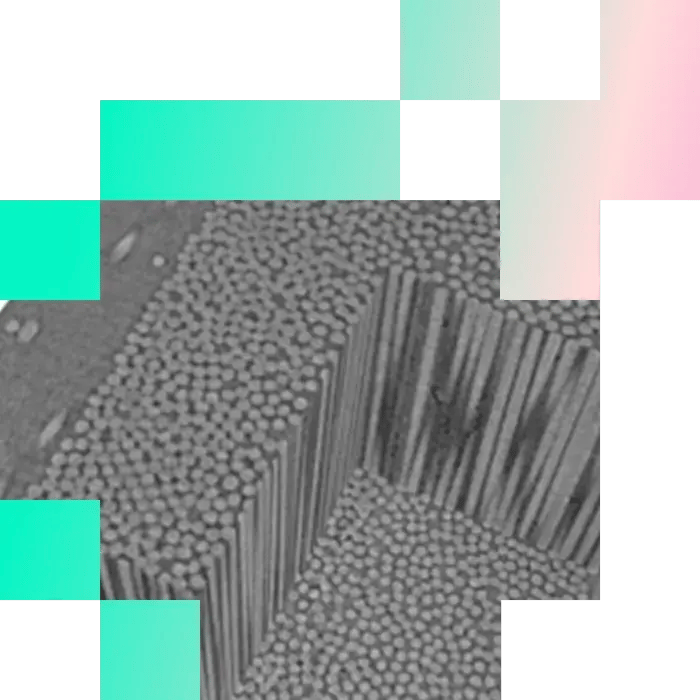
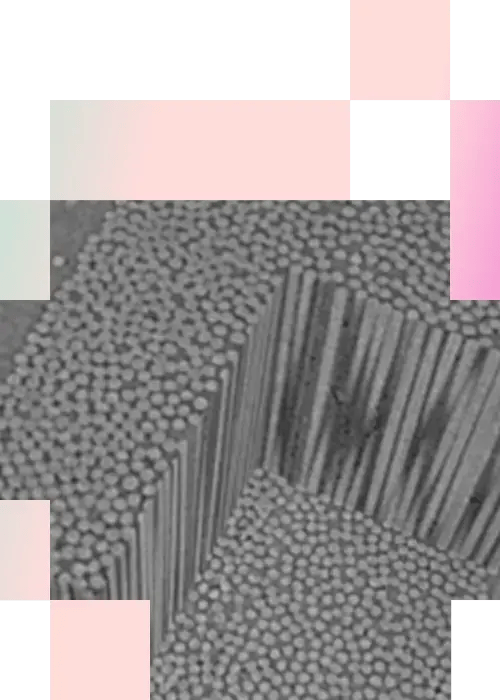
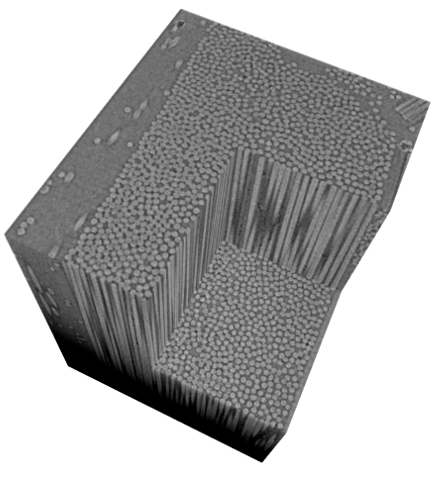
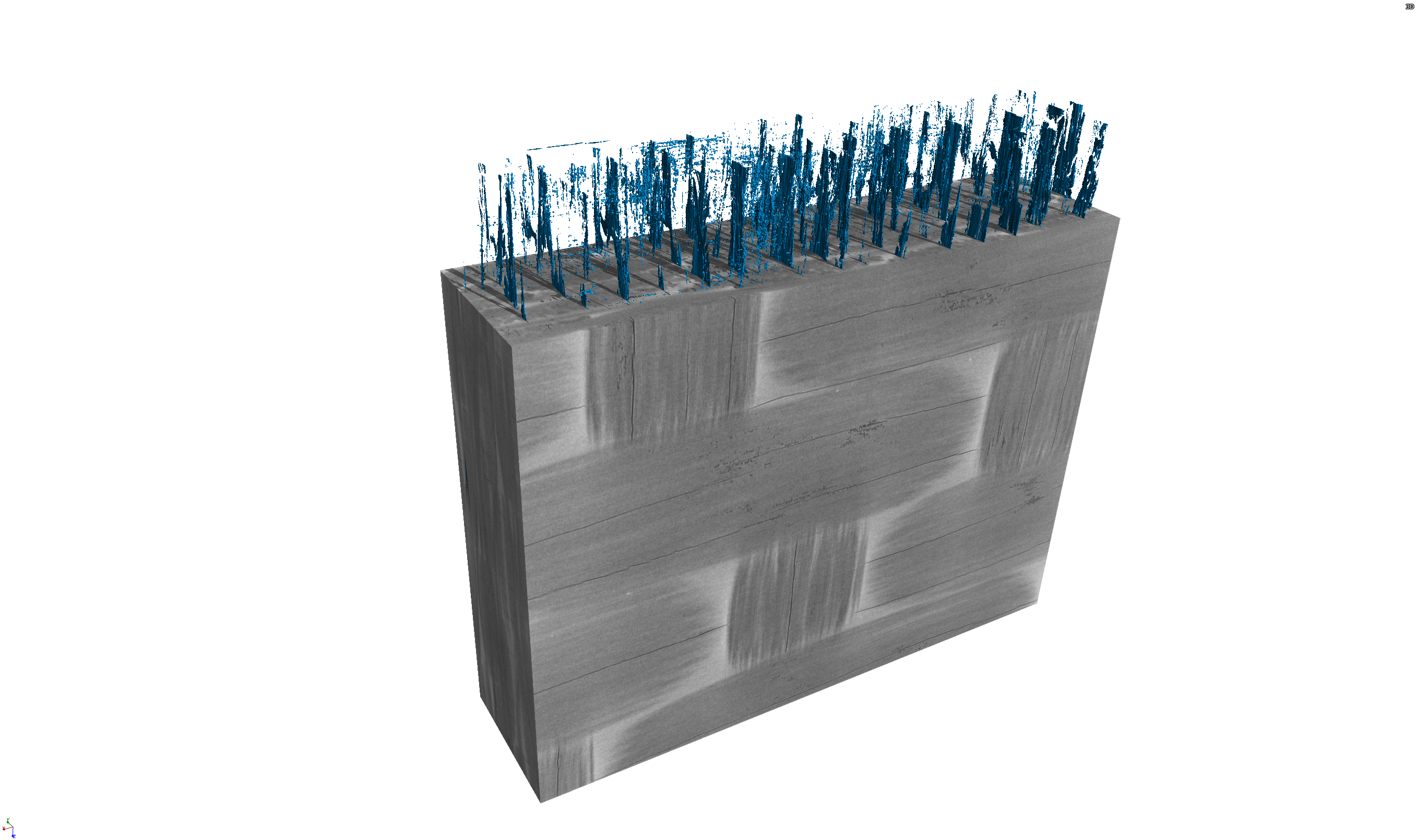
Porosity, fiber architecture, interfacial cracks, and coating layers were clearly visualized across full volumes, including large wind blade sections and layered composites.

Through dynamic micro-CT imaging, researchers observed how internal defects evolved under load, gaining real-time insight into composite damage mechanisms.

The result was consistent structural data across composite types. This supported accurate failure analysis, coating characterization, and structural integrity assessment from a single scan.

GET IN Touch

Contact us

Get the most out of Tescan

This is more than information; it's an advantage. We've compiled our technical whitepapers, detailed product flyers, and on-demand webinars to provide you with the knowledge that makes a real difference. Sign up now to access the insights you need to make an impact.

Tescan Instruments & Technology

Used in This Workflow

Tescan UniTOM XL

Tescan UniTOM XL is a high-resolution, multiscale X-ray micro-CT system designed for non-destructive 3D imaging of advanced composite materials. It enables full-volume analysis of wind blade sections, fiber-reinforced components, and layered structures. Users can capture both macro scale geometry and sub-micron detail without altering the sample.

  • Non-destructive volumetric imaging: captures internal structure without cutting or coating

  • Multi-resolution CT acquisition: resolves features from full assemblies to individual fibers

  • Dynamic micro-CT mode: supports in situ mechanical testing and real-time damage monitoring

  • Stable imaging stage: minimizes motion artifacts for consistent, high-fidelity datasets

  • Integrated software platform: provides 3D reconstruction, segmentation, and quantitative analysis
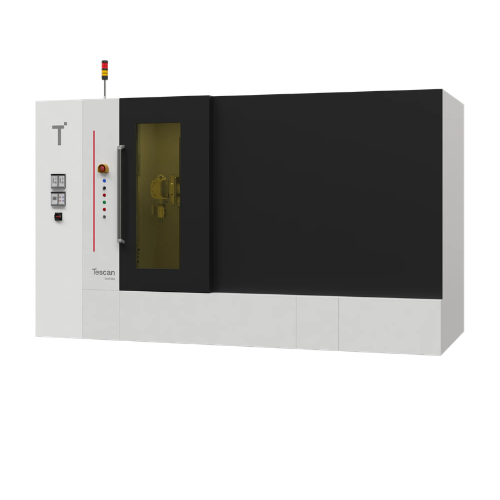
MICRO_UniTOM_XL_1-2

GET IN Touch

Contact us

map

Where can you find us:

Tescan Brno
Libušina třída 21
623 00 Brno
Czech Republic

info@Tescan.com