
WEBINAR | Up to 40% Faster Automated TEM Lamella Preparation with new Ga⁺ FIB Column

Quantify Internal Defects in Asphalt and Concrete without Sectioning using Tescan UniTOM XL and CoreTOM

Perform non-destructive asphalt and concrete analysis at multiple scales without sacrificing context, resolution, or sample integrity.

hero
hero
Unlocked content

Identify Internal Defects and Microstructure with Reproducible 3D Data

Using sectioning-based methods will create even small defects during sample prep. Each cut, grind, or polish step introduces variability that skews analysis. This can distort measurements of porosity, crack propagation, or aggregate distribution.

Tescan UniTOM XL and CoreTOM provide a stable, non-destructive workflow for asphalt and concrete analysis, producing consistent 3D data from core to core. Maintain geometry, reduce artifacts, and generate reliable data for quantification.

Why Perform Asphalt and Concrete Analysis

with Tescan UniTOM XL and CoreTOM?

01
Root of the Problem

Why Traditional Analysis Methods Compromise the Accuracy of Asphalt and Concrete Research

Asphalt and concrete performance depend on internal cohesion, porosity, and material distribution — all inherently 3D. Yet most analysis relies on destructive 2D cross sections that distort structure and miss critical features.

Each cut introduces artifacts, flattens pores, and misrepresents aggregates. This leads to sampling bias and unreliable conclusions about durability and permeability.

These challenges are amplified in large or weathered samples where internal defects and heterogeneity impact performance. Tescan UniTOM XL and CoreTOM deliver a stable, non-destructive workflow for full-volume asphalt and concrete analysis, preserving microstructure and reducing preparation errors through:

  • Non-destructive imaging that preserves geometry
  • High-resolution 3D data on pores, cracks, and aggregates
  • Multiscale acquisition from mm to sub-micron
  • Reproducible results across cores and sessions
  • Artifact-free analysis without sectioning
  • Stable workflows for structural assessment

Leverage Tescan UniTOM XL and CoreTOM to capture full-volume data without compromise on performance-critical features. 

02
Materials and Methods

How Asphalt and Concrete Cores Are Analyzed Using Tescan UniTOM XL and CoreTOM

Concrete and asphalt cores were prepared using standard sampling protocols, without the need for sectioning, polishing, or coating prior to scanning.

Samples were loaded directly into Tescan UniTOM XL and CoreTOM, which featured a high-stability rotary stage and an optional in situ compression platform for dynamic testing. Scanning was performed under stable conditions to preserve core geometry and avoid motion artifacts.

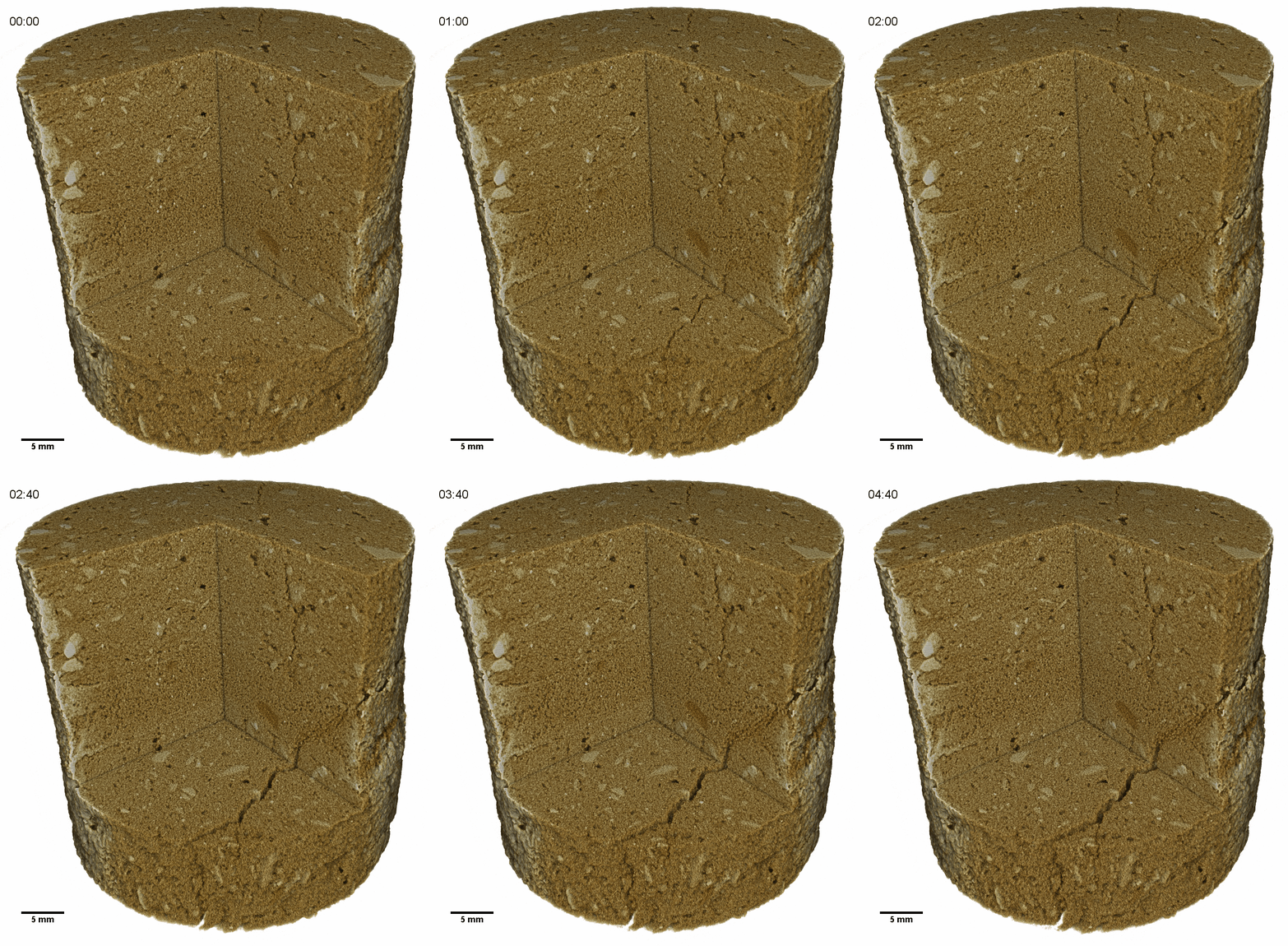
Multiscale datasets were acquired using UniTOM XL and CoreTOM’s flexible voxel resolution, capturing structural context at the millimeter scale and fine detail down to the sub-micron level. For fracture analysis, controlled compression was applied while continuous micro-CT imaging recorded internal changes in real time.

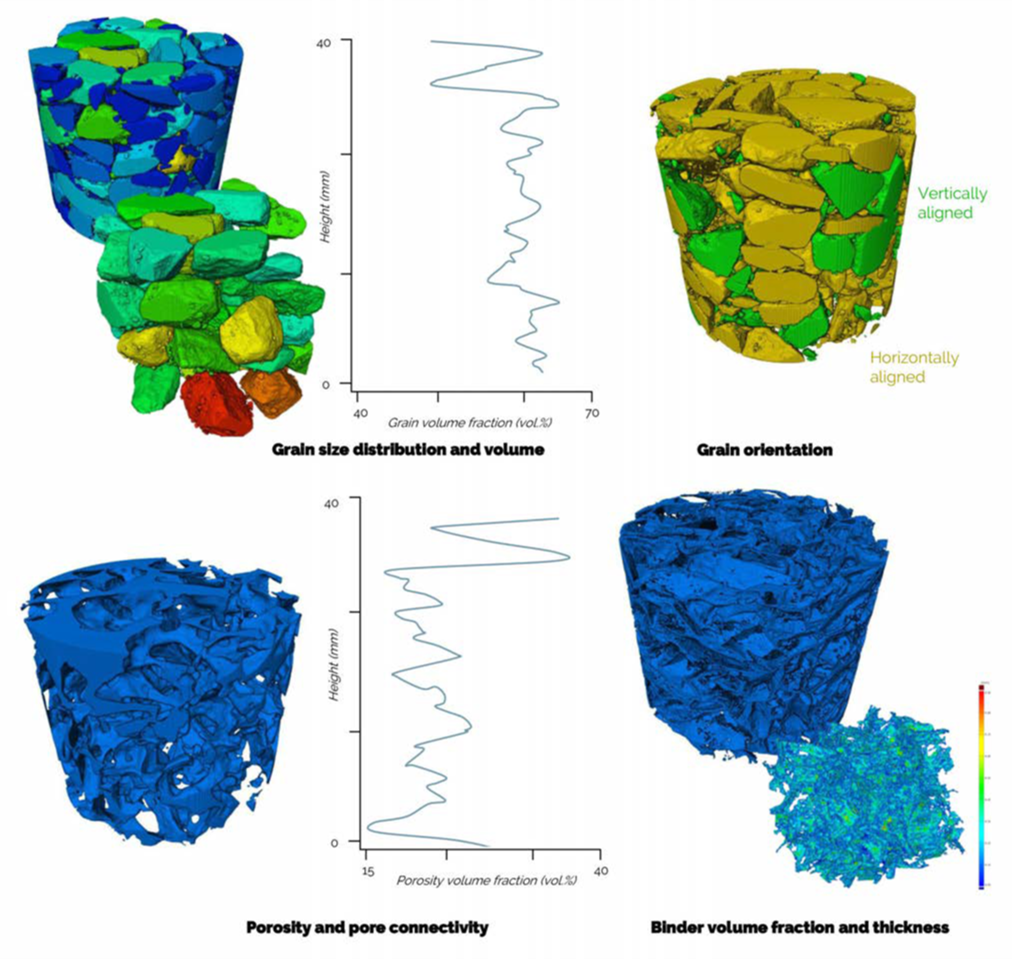
3D reconstruction and quantitative analysis were performed using Tescan’s advanced volumetric imaging software. Researchers assessed pore geometry, aggregate distribution, crack propagation, and reinforcement orientation, all from a single, intact sample.
This non-destructive workflow provided reliable, full-volume 3D insight for consistent asphalt and concrete characterization.

03
Results and Discussion

Reliable 3D Data for Accurate Asphalt and Concrete Characterization

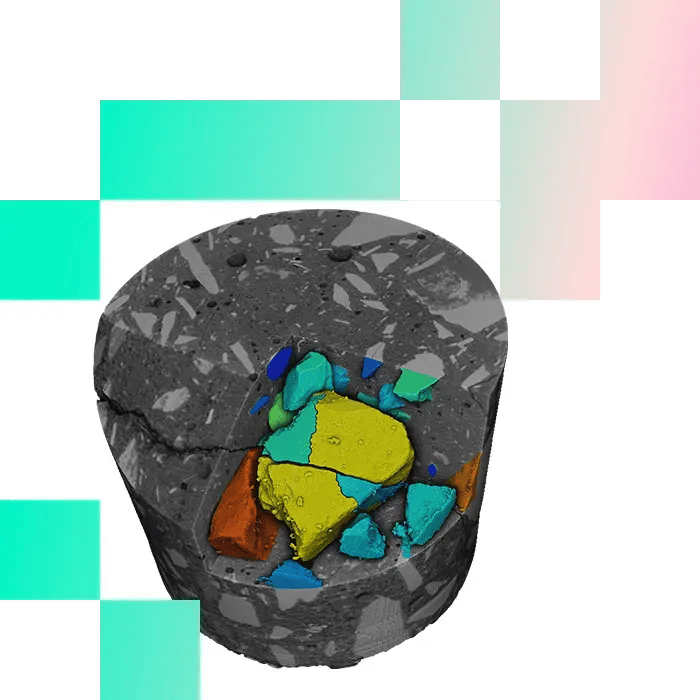
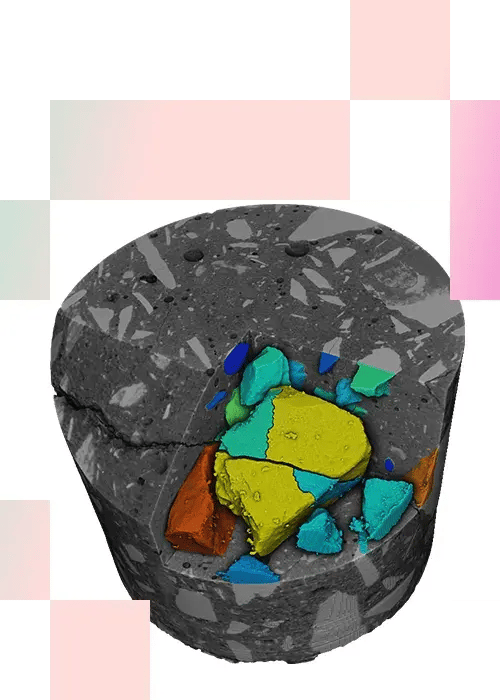
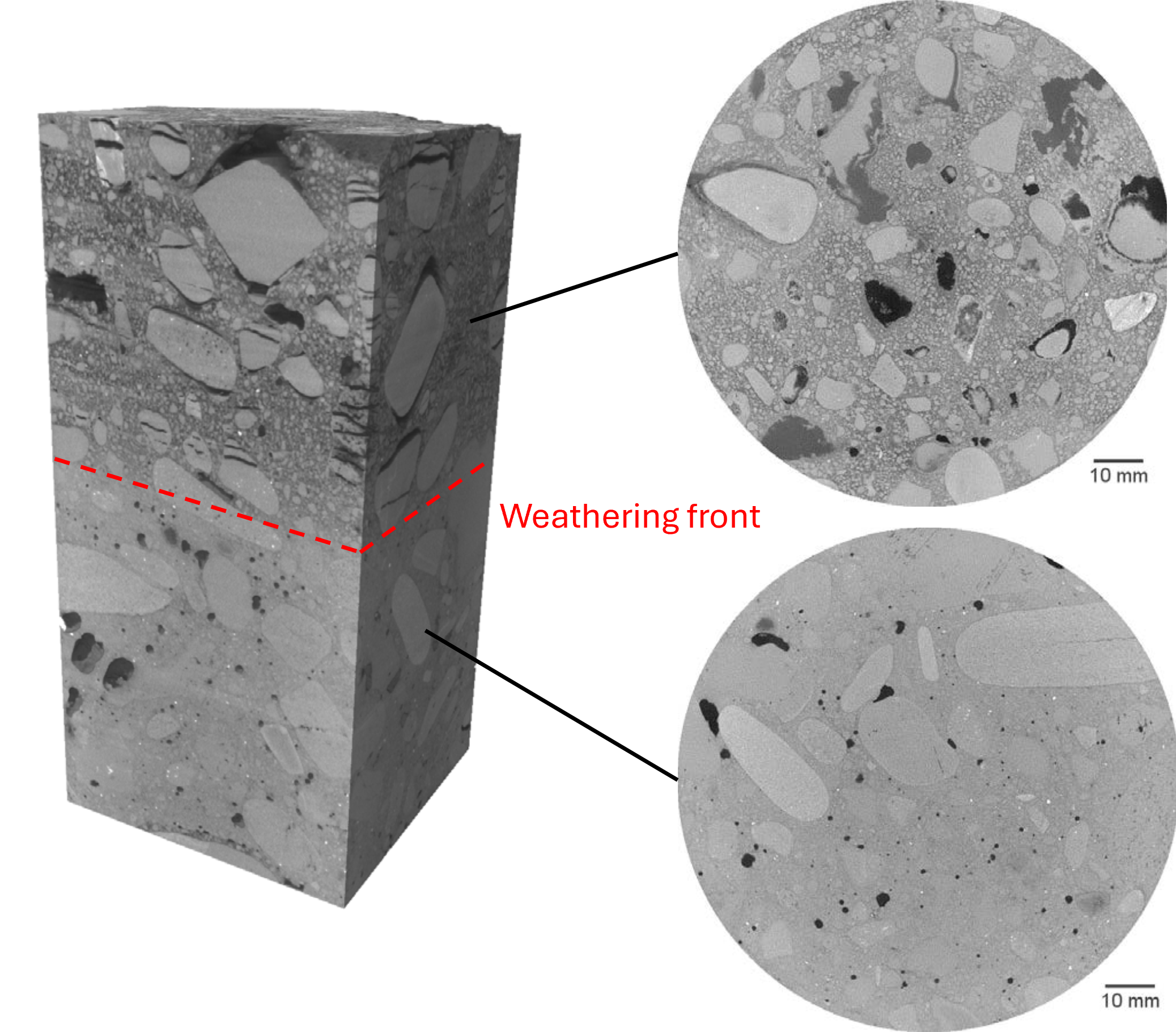
Tescan UniTOM XL and CoreTOM enabled researchers to generate high-resolution, artifact-free 3D datasets from intact asphalt and concrete cores. The combination of non-destructive imaging with multiscale acquisition provided detailed visualization of internal features without compromising sample geometry.

Pores, cracks, aggregates, and reinforcement elements were clearly resolved across full volumes. This was true even in weathered or mechanically loaded samples.

Dynamic micro-CT enabled in situ compression testing, providing real-time insights into fracture development and structural response.

As a result, researchers achieved reproducible structural data for a range of core types. This enabled confident assessments of durability, permeability, and mixed performance. These insights were made possible by integrating stable acquisition, volumetric precision, and true full-volume context.

GET IN Touch

Contact us

Get the most out of Tescan

This is more than information; it's an advantage. We've compiled our technical whitepapers, detailed product flyers, and on-demand webinars to provide you with the knowledge that makes a real difference. Sign up now to access the insights you need to make an impact.

Tescan Instruments & Technology

Used in This Workflow

Tescan UniTOM XL and CoreTOM

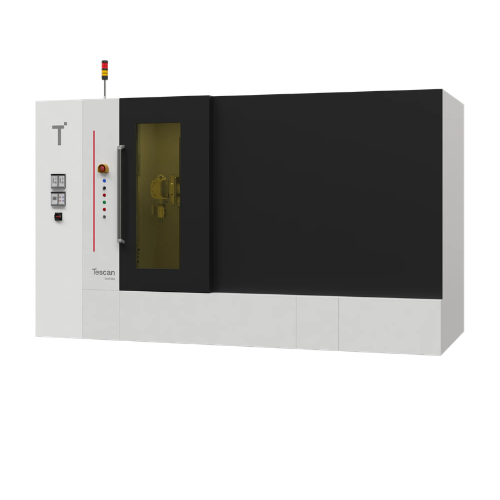
Tescan UniTOM XL and CoreTOM are high-resolution, multiscale X-ray micro-CT systems designed for non-destructive 3D imaging of large geological and construction materials. They enable full-volume analysis of asphalt and concrete cores — from macroscopic structure to microstructural detail — with reproducible results and zero sample disruption.

  • Non-destructive volumetric imaging: preserves geometry and internal structure

  • Flexible voxel resolution: captures features from millimeter to sub-micron scale

  • Dynamic micro-CT mode: supports in situ compression testing and time-resolved imaging

  • High-stability rotary stage: ensures artifact-free acquisition across full cores

  • Integrated software platform: delivers advanced 3D reconstruction and quantitative analysis 
MICRO_UniTOM_XL_1-2

GET IN Touch

Contact us

map

Where can you find us:

Tescan Brno
Libušina třída 21
623 00 Brno
Czech Republic

info@Tescan.com