WEBINAR | Up to 40% Faster Automated TEM Lamella Preparation with new Ga⁺ FIB Column

Avalanche detector - single photon detector for plasmonics research

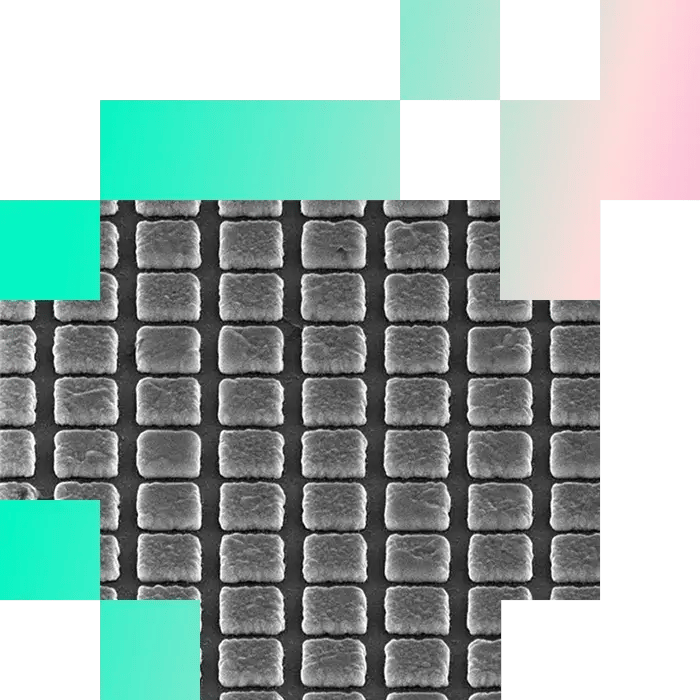
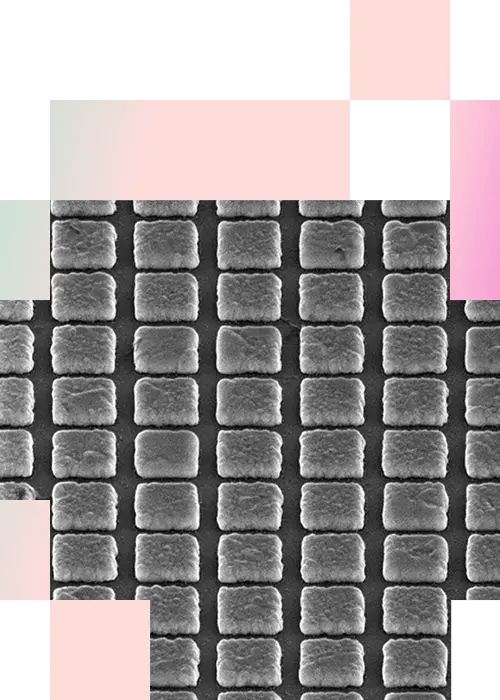
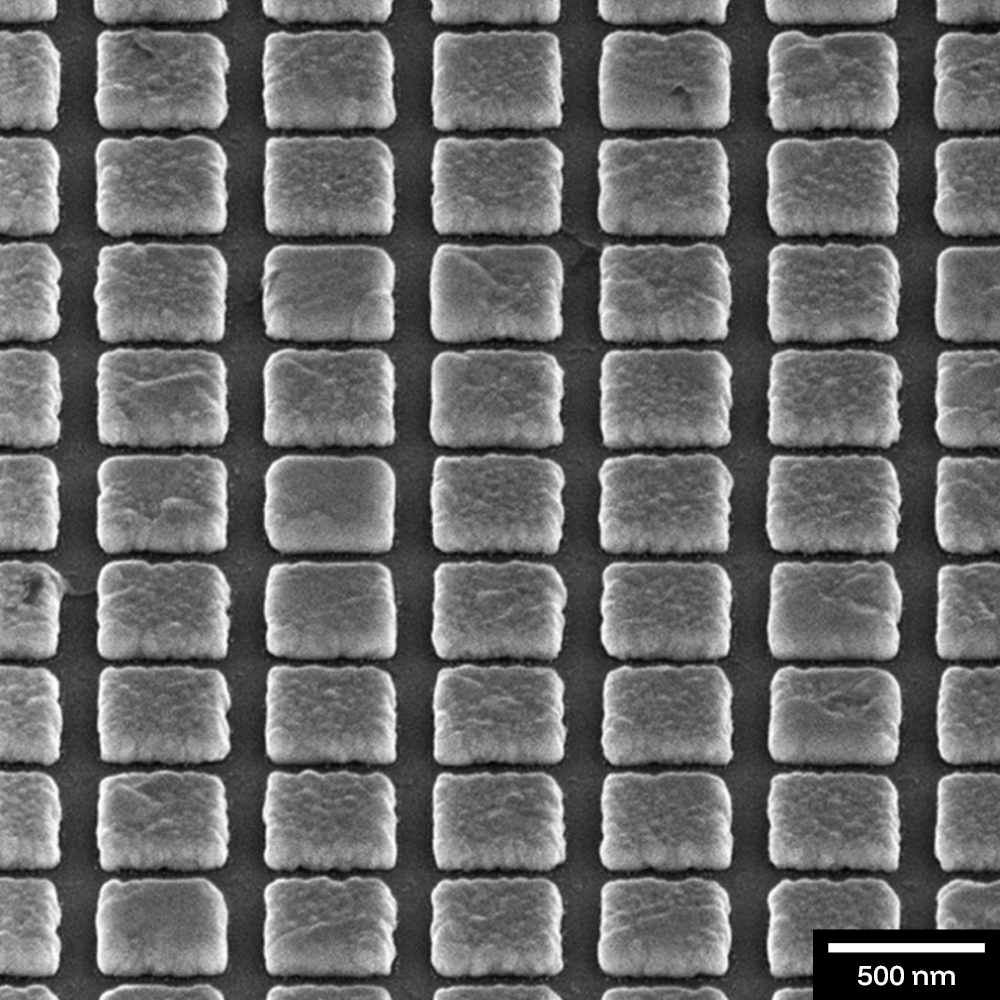
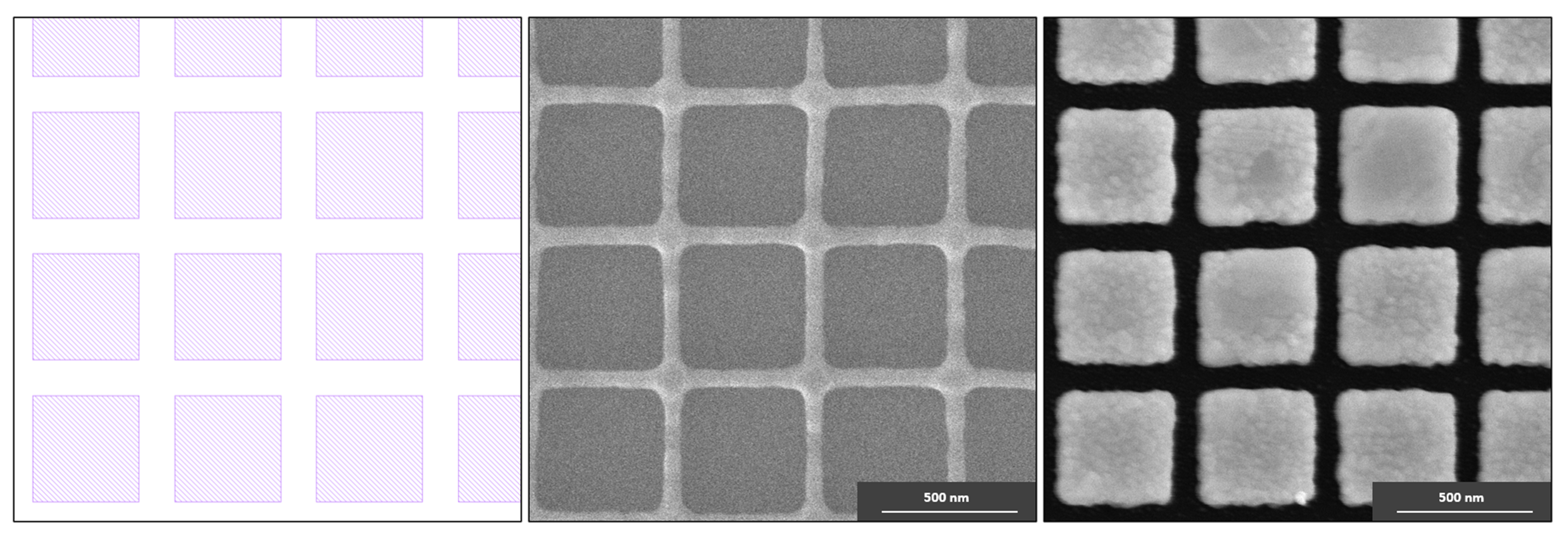
Direct-write fabrication of silver nanoarrays using Tescan’s integrated EBL solution. 

hero
hero
Unlocked content

Tailored Nanostructures for Targeted Optical Performance

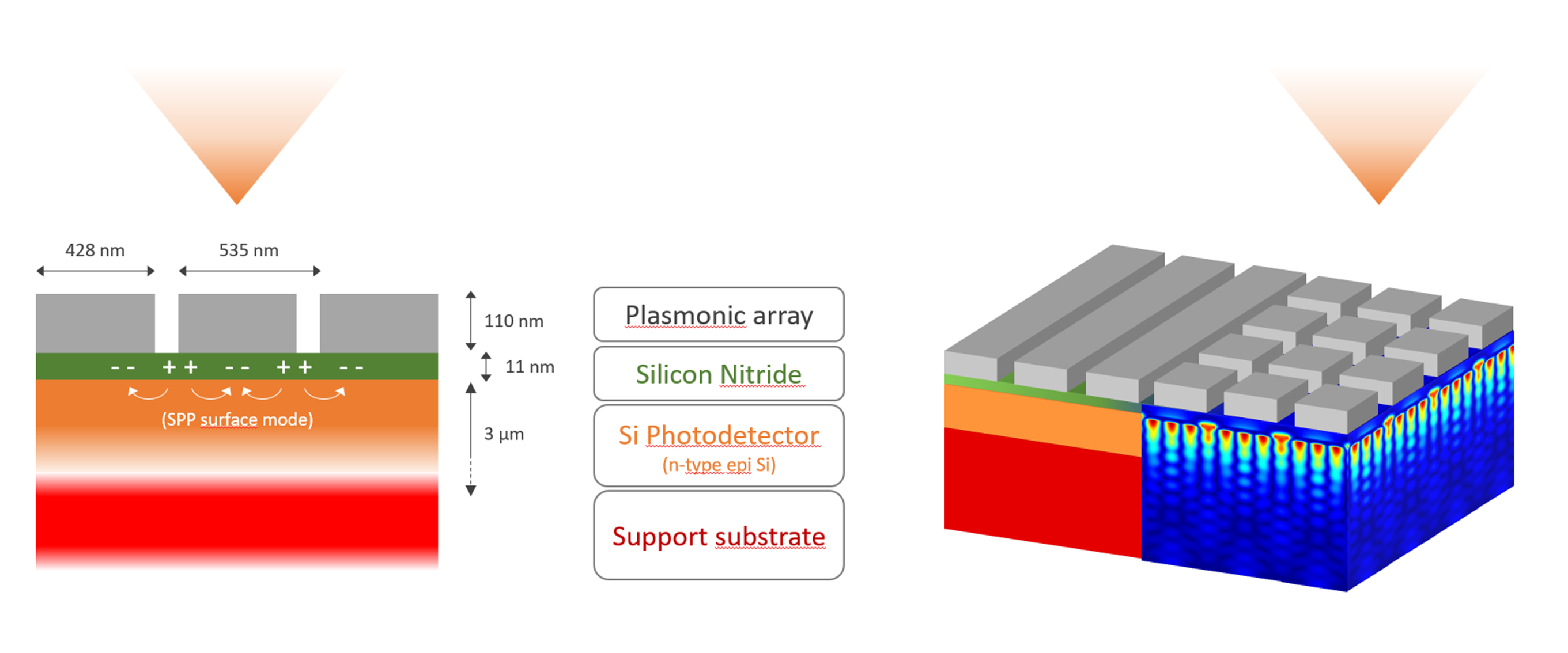
Enhancing photodetector efficiency isn’t just about materials; it’s also about structure. At longer wavelengths, silicon becomes inefficient at absorbing light. To overcome this, engineers are turning to nanoscale surface structuring that supports surface plasmon resonances, enabling light–matter interactions that enhance absorption in silicon.

In this example, researchers used Tescan systems equipped with electron beam lithography — including both FIB-SEM and SEM platforms — to fabricate plasmonic silver nanoarrays directly onto the active regions of CMOS-compatible silicon photodetectors. The result: well-aligned, reproducible nanostructures that boosted quantum efficiency in the near infrared, without compromising device integrity. 

01
Root of the Problem

Improving NIR Sensitivity with Nanoscale Precision

Near-infrared photons are difficult to capture with silicon-based detectors due to low absorption efficiency. Plasmonic structures offer a solution: when a photon excites surface plasmon polaritons on the device surface, the interaction can be tailored to enhance the plasmonic effect. This increases the CMOS detector’s capability to detect even single photons in the NIR.

But implementing these enhancements requires accurate placement of nanoscale features on top of prefabricated devices. That means alignment must be precise, and the resist stack must support clean lift-off, without compromising electrical performance.

This application meets all those requirements using a streamlined, integrated workflow.

02
Materials and Methods

Direct-write lithography of plasmonic patterns on CMOS photodiodes—with precise overlay alignment

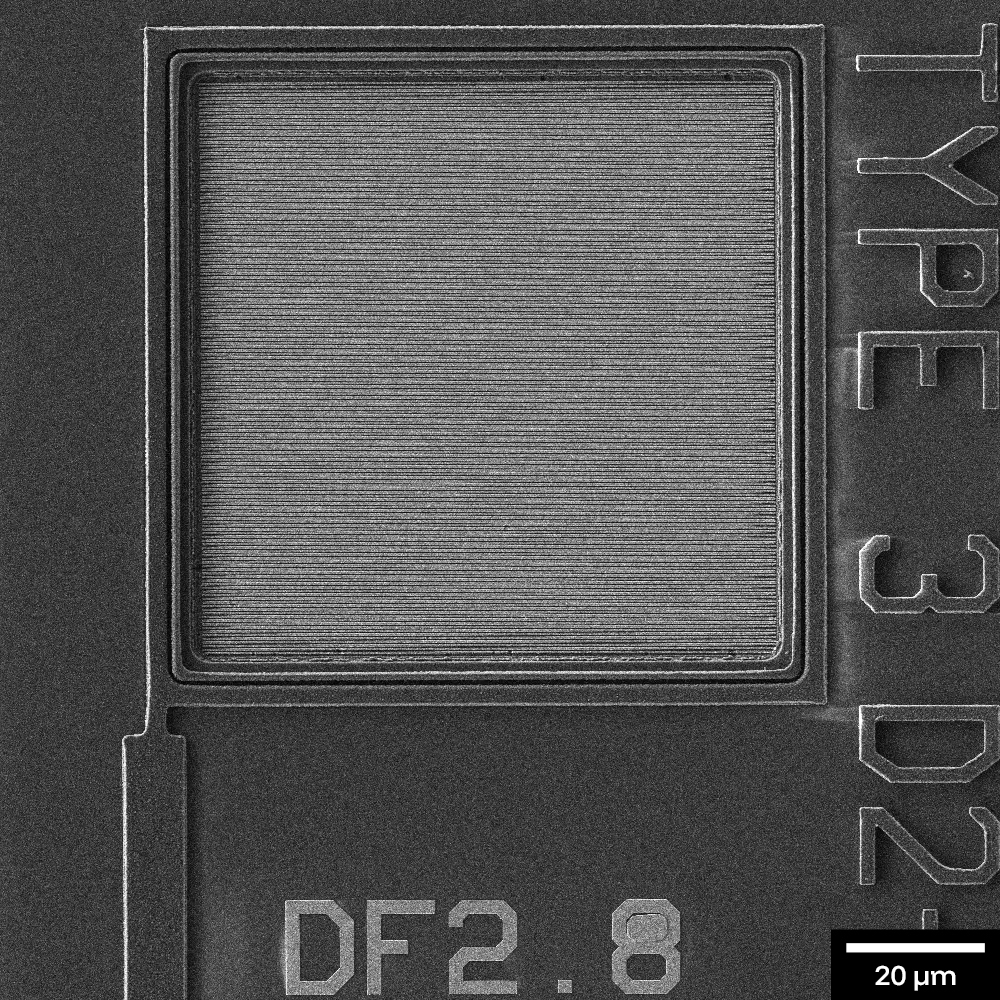
The process began with using a Si substrate with prefabricated structures surrounding a 100 × 100 µm active area. This active area was then coated with PMMA resist and loaded into a Tescan FIB-SEM or SEM system equipped with a fast electrostatic Beam Blanker and Essence™ EBL Kit.

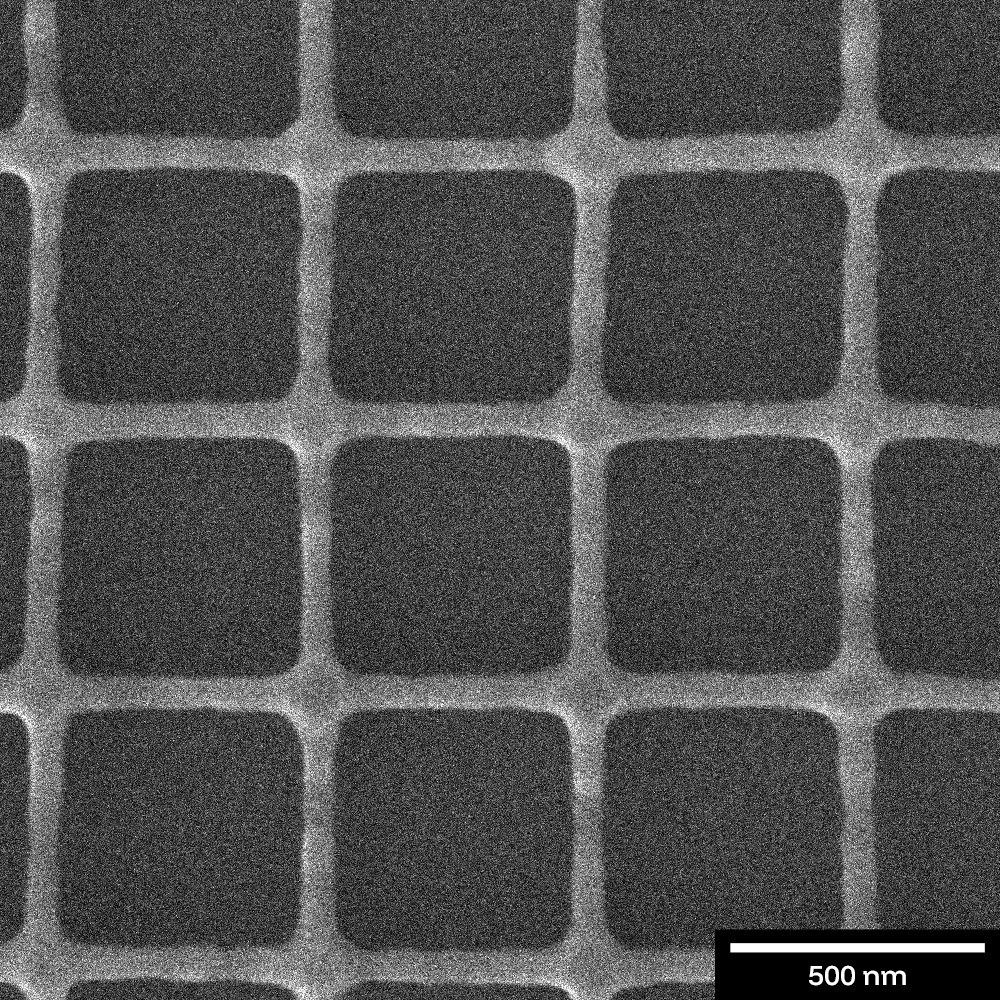
Nanosquares were exposed with the following parameters: 10 keV beam energy and a dose of 120 μC/cm². Taking the proximity effect into account ensured precise square widths and feature fidelity. After electron beam evaporation of 110 nm Ag, patterns were lifted off in acetone. A second EBL step opened electrical contacts in a top-passivating PMMA layer.

All exposures were aligned using device-side markers, enabling accurate overlay within microns of the active region without stitching artifacts or cumulative drift.

03
Results and Discussion

Functional Gain from Structural Integration

The fabricated arrays matched design targets across multiple devices, with no visible defects or misalignment. Notably, the quantum efficiency at 950 nm improved by over 45%, reaching nearly three times the baseline value of unstructured detectors.

This performance increase was achieved without introducing new noise or degrading the photodiode’s baseline characteristics. The entire process, including lithography, metal deposition, lift-off, and passivation, proved compatible with CMOS-compatible detectors.

By enabling rapid, direct‑write structuring on operational devices, Tescan’s EBL capability bridges the gap between prototyping and production‑scale tuning of photonic functionality. It also supports rapid nanoprototyping, allowing customers to easily modify designs and expose different structures to determine the optimal conditions for final device production.

GET IN Touch

Contact us

Get the most out of Tescan

This is more than information; it's an advantage. We've compiled our technical whitepapers, detailed product flyers, and on-demand webinars to provide you with the knowledge that makes a real difference. Sign up now to access the insights you need to make an impact.

Tescan Instruments & Technology

Used in This Workflow

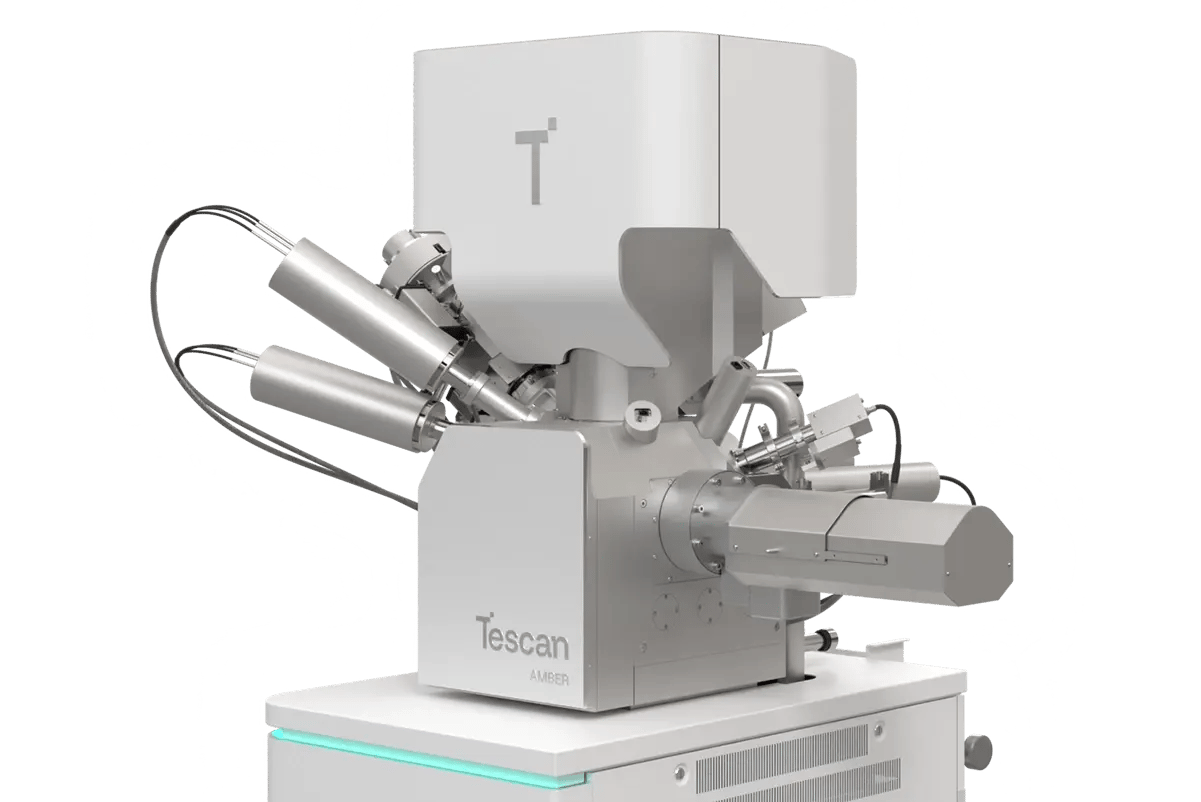
Tescan AMBER

Combining high‑precision milling, ultra‑high‑resolution imaging, and advanced automation for materials research and TEM sample preparation, Tescan AMBER enables researchers to perform site‑specific cross‑sectioning, 3D tomography, and correlative imaging workflows with exceptional accuracy and repeatability.

  • Gallium FIB: High‑precision nanofabrication,cross‑sectioning and TEM prep
  • Ultra‑high‑resolution SEM: Detailed imaging, structural analysis and electron beam lithography
  • Nanoprototyping Toolbox™: Extends AMBER’s capabilities into advanced nanostructuring and prototyping workflows
  • Advanced automation: Streamlined repetitive tasks and enable complex workflows or prototyping
  • Gas Injection System (GIS): Enables in-situ deposition, etching, and enhanced milling strategies
  • Application focus: Nanophotonics, plasmonics, surface modification, and novel material research including 2D materials and magnonics.
AMBER 2

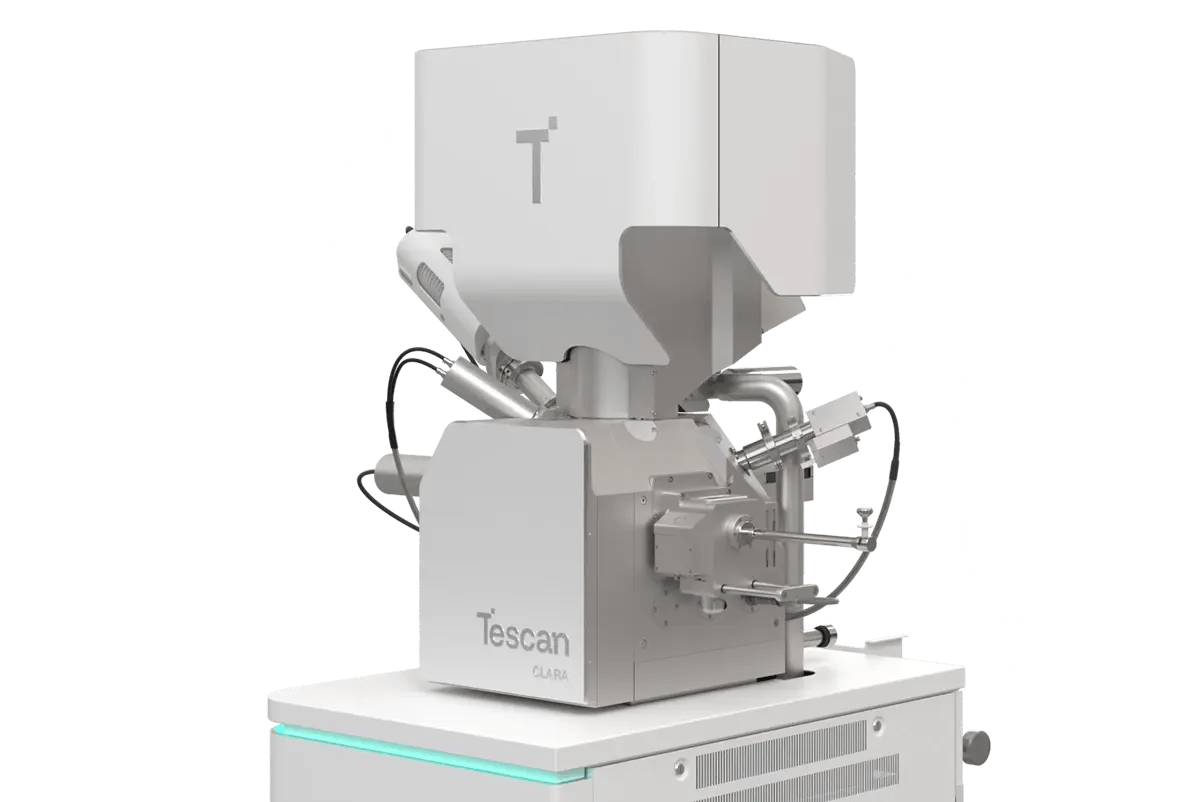
Tescan CLARA

Designed for uncompromised surface imaging on all material types, including magnetic and beam-sensitive samples, Tescan CLARA extends its capabilities into advanced nanostructuring and prototyping workflows when used with the Nanoprototyping™ toolbox. With exceptional contrast control, it is ideal for revealing fine details at low accelerating voltages without damaging the sample.

  • Field‑free objective lens: Imaging of magnetic and sensitive materials
  • High‑resolution surface imaging: Optimized for low kV operation
  • Advanced detector configurations: Tailored contrast and signal collection
  • Nanoprototyping Toolbox™: Extends CLARA’s capabilities into advanced nanostructuring and prototyping workflows
  • Electron beam lithography: Full support of GDSII for a quick design to prototype validation route
  • Gas Injection System (GIS) – Supports in-situ deposition, etching, and patterning for research and prototyping
  • Advanced automation: Streamlined repetitive tasks and enable complex workflows or prototyping
  • Application focus: Nanophotonics, plasmonics, surface modification, and novel material research including 2D materials and magnonics.
CLARA GM Mat. Science

GET IN Touch

Contact us

map

Where can you find us:

Tescan Brno
Libušina třída 21
623 00 Brno
Czech Republic

info@Tescan.com