
WEBINAR | Up to 40% Faster Automated TEM Lamella Preparation with new Ga⁺ FIB Column

3D Nanoprinting for the next generation of devices

Deposit complex 3D structures via standard FIB-SEM

hero
hero
Unlocked content

A Practical Approach to 3D Nanofabrication in Standard FIB-SEM Tools

Creating three-dimensional nanostructures with precise geometry has traditionally required highly specialized hardware or manual programming. But there is a more accessible path.

By combining open-source slicing software with the Tescan FIB-SEM Expert PI™ API – part of the Nanoprototyping Toolbox™ –  researchers achieved fully scripted deposition of freestanding 3D nanostructures using Focused Electron Beam-Induced Deposition (FEBID).

No complex multistep setup was required, just a standard Tescan FIB-SEM or SEM equipped with a gas injection system, FIB-SEM Expert PI, open-source f3ast slicing program, and a well-calibrated workflow.

This method opens the door to reproducible, high-fidelity nanostructures such as spirals, helices, and bridges – directly written from CAD designs using a practical, lab-ready toolchain.

Why Automate 3D FEBID

with Tescan?

01
Root of the Problem

Turning Concepts into Structures

Direct-write nanofabrication methods like FEBID offer unmatched spatial resolution, but shaping material in three dimensions remains a challenge. Most workflows rely on manual intervention, approximated growth behavior, or proprietary slicing engines unavailable to the broader research community.

What’s often missing is the link between design and deposition: a way to account for beam spread, thermal effects, and geometry-dependent proximity without requiring specialized hardware or vendor-specific software.

02
Materials and Methods

Slicing and automating 3D nanofabrication with open source tools

A Tescan FIB-SEM instrument with a platinum gas injection system was used to fabricate a variety of 3D nanostructures. The process started with calibration to correlate beam dwell time with vertical growth, followed by beam spread correction to refine slope accuracy.

These parameters were fed into the open-source slicer f3ast, which converted STL files into corrected layer-by-layer recipes. Deposition was controlled using Python scripts and executed through Tescan’s Stream File protocol within the Tescan FIB-SEM Expert PI™ interface.

Key settings included 5 kV beam energy, 20–25 pA probe current, and ~10 µm fields of view. Gas on/off control (via OptiGIS), beam dwell, and stage motion were coordinated in real time to automate the full build process.

03
Results and Discussion

From File to Freestanding Nanostructure

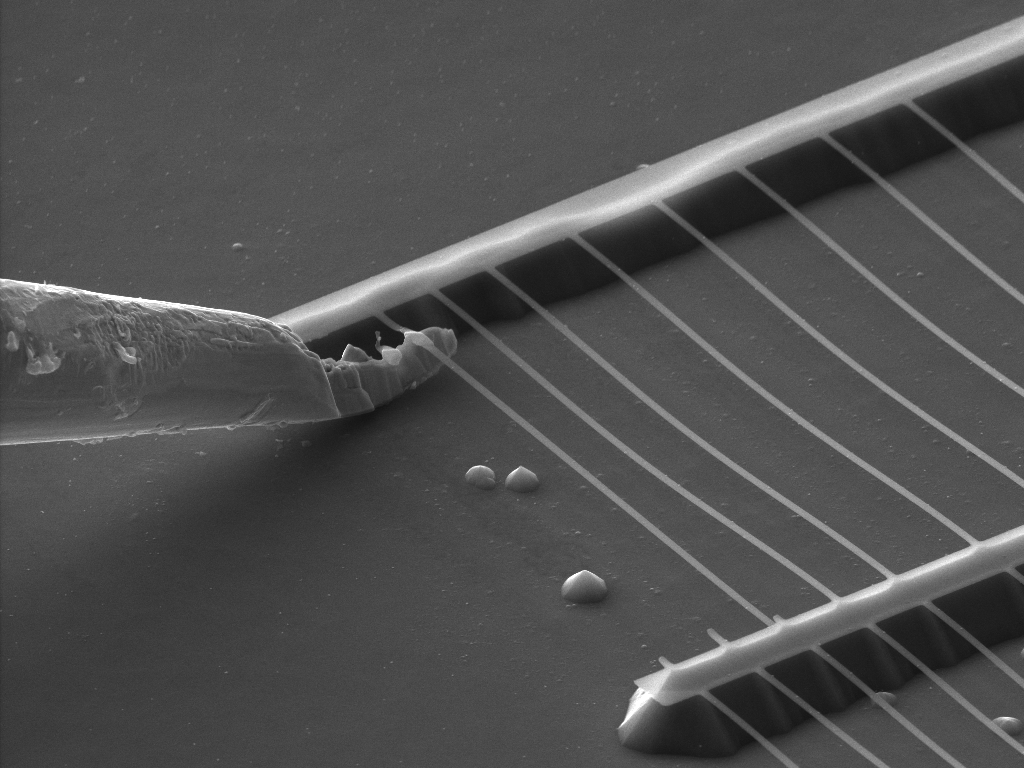
The automated workflow successfully produced structures like helices and spiral balls directly from STL designs. Shape fidelity was high, with clean vertical buildup and reproducible growth across multiple features.

By combining open-source slicing with programmable deposition, the need for manual patterning was eliminated. Users could print arbitrary geometries by simply switching the input file; no additional scripting or intervention was needed.

All fabrication steps took place inside a standard Tescan FIB-SEM, requiring no extra detectors or proprietary software. This method provides a scalable, accessible route to prototyping 3D nanostructures with full design control.

GET IN Touch

Contact us

Get the most out of Tescan

This is more than information; it's an advantage. We've compiled our technical whitepapers, detailed product flyers, and on-demand webinars to provide you with the knowledge that makes a real difference. Sign up now to access the insights you need to make an impact.

Tescan Instruments & Technology

Used in This Workflow

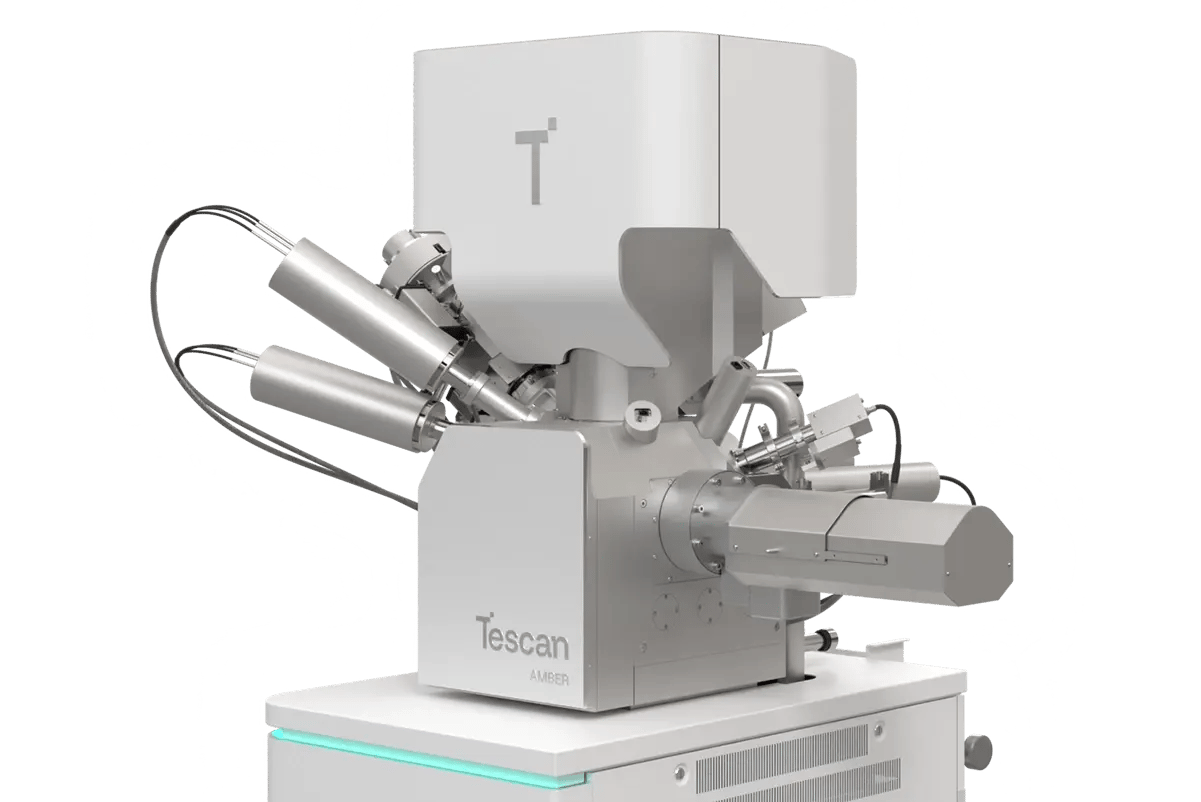
Tescan AMBER with FIB-SEM Expert PI™ API

Tescan AMBER combines high-precision gallium FIB milling with ultra-high-resolution SEM imaging in a versatile dual-beam platform.

As part of the nanoprototyping toolbox™, AMBER can be paired with the Tescan FIB-SEM Expert PI™ API (Application Programming Interface) to enable fully automated 3D nanofabrication workflows such as proximity-corrected Focused Electron Beam-Induced Deposition (FEBID).

You can control beam, stage, and gas on/off parameters directly from scripted recipes — ensuring reproducible, high-fidelity nanostructures without manual intervention.

  • Gallium FIB: Sub‑micrometer milling and site‑specific cross‑sectioning
  • Integrated SEM: Nanoscale imaging and process monitoring
  • FIB-SEM Expert PI™ API: Direct scripting for automated beam and gas control
  • Stream File protocol support: Execute complex, layer‑by‑layer deposition routines
  • Gas injection compatibility: Deposit functional or structural materials in situ
AMBER 2

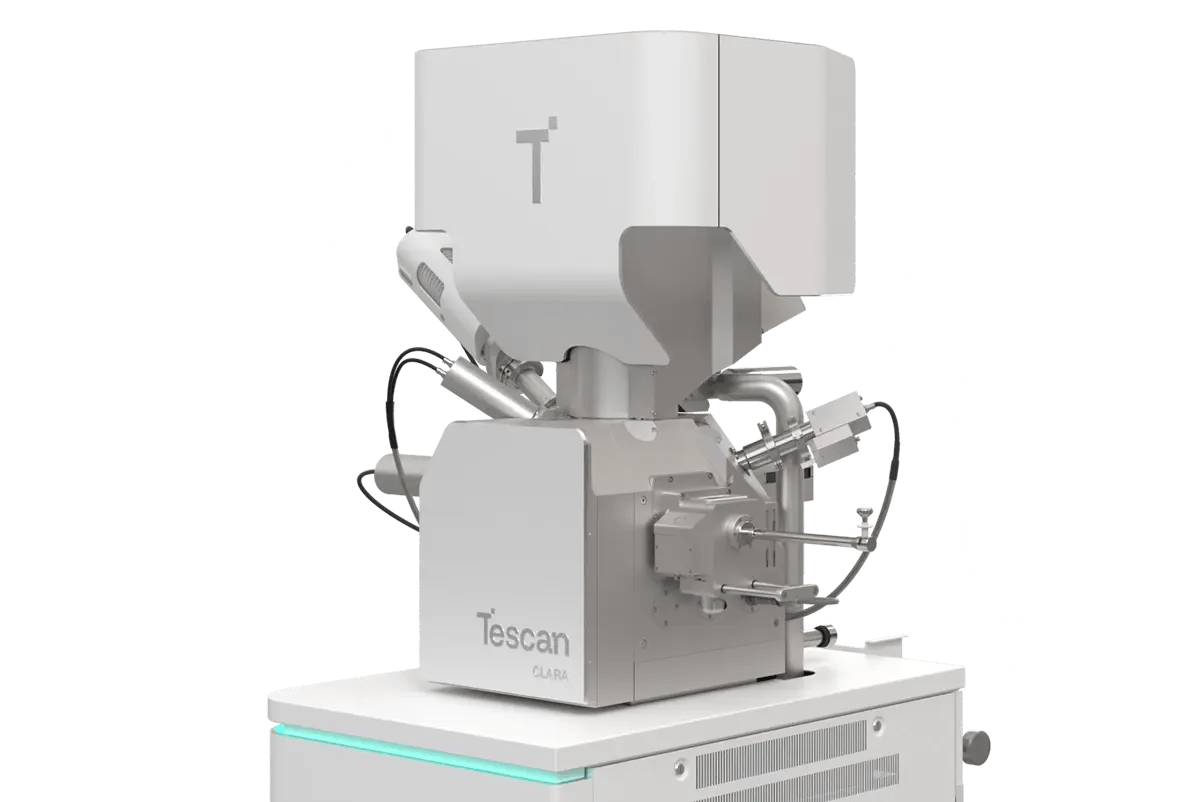
Tescan CLARA with FIB-SEM Expert PI™ API

Tescan CLARA delivers ultra-high-resolution SEM imaging with a field-free objective, making it ideal for magnetic or beam-sensitive materials.

As part of the nanoprototyping toolbox, Tescan CLARA can be equipped with a gas injection system and paired with the Tescan FIB-SEM Expert PI™ API to support automated nanostructure deposition directly within the microscope chamber.

This combination allows researchers to create freestanding 3D nanostructures from CAD designs, while maintaining the clarity and stability needed for precise layer alignment.

  • Field‑free objective lens: Image magnetic and sensitive samples without interference
  • Ultra‑high resolution: Achieve exceptional detail at low accelerating voltages

  • FIB‑SEM Expert PI™ API: Enables scripted, proximity‑corrected FEBID workflows

  • Gas injection compatibility: Deposit functional or structural materials in situ
  • Advanced detector configurations: Tailor contrast for material or topographic imaging

CLARA GM Mat. Science

GET IN Touch

Contact us

map

Where can you find us:

Tescan Brno
Libušina třída 21
623 00 Brno
Czech Republic

info@Tescan.com