

WEBINAR | Dynamic-to-Detail Micro-CT in One Workflow: UniTOM HR 2

Streamline TEM Lamella Preparation from 7nm Devices with Tescan SOLARIS X 2 

Perform TEM lamella preparation on 7nm node transistors using Tescan SOLARIS X 2 with in-situ delayering and thinning that maintain structural fidelity and eliminate air exposure.

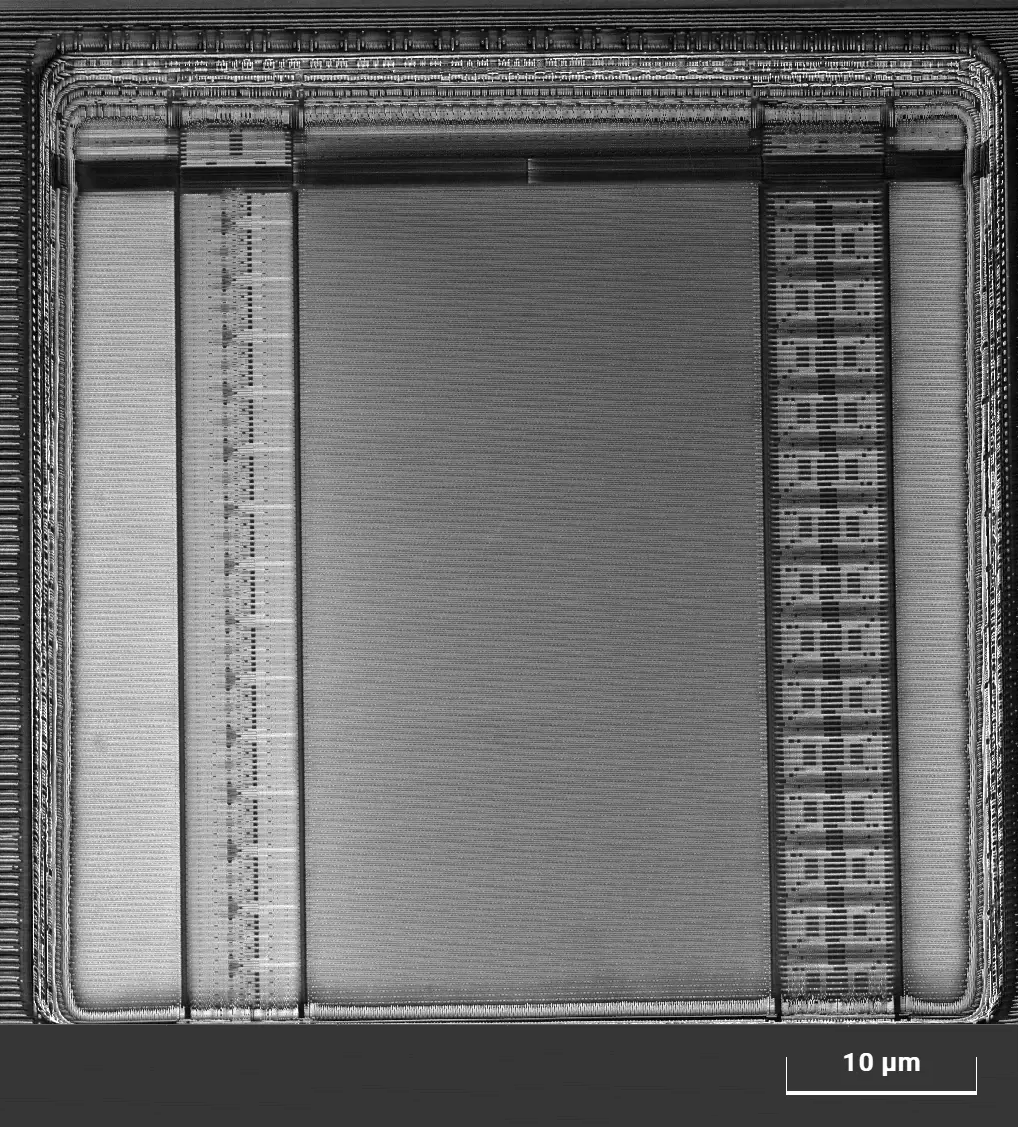
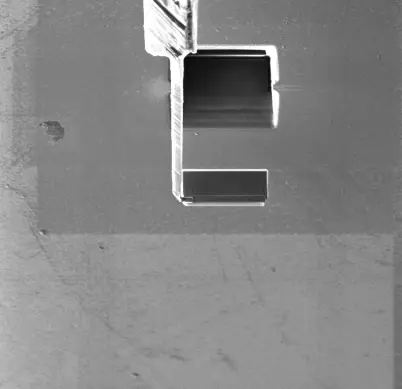
Gas-assisted delayering and TEM lamella preparation from a 7nm chip
Unlocked content

Perform Site-Specific TEM Lamella Prep from 7nm Chips with In-Situ Delayering and Ga-Free Precision 

7nm logic devices demand structural accuracy at nanoscale dimensions — particularly across densely packed contact and transistor layers. Sample preparation methods that require multiple systems or air exposure increase the risk of layer damage, oxidation, and misalignment.

Tescan SOLARIS X 2 integrates gas-assisted delayering and Xe⁺ plasma FIB milling in a single, air-free workflow. Isolate sub-20 nm TEM lamella directly from targeted regions, using passive voltage contrast (PVC) and low-keV SEM end-pointing to navigate multilayer stacks with confidence.

Why Prepare TEM Lamella from 7nm Node Devices

with Tescan SOLARIS X 2 FIB-SEM

01
Root of the Problem

Why Standard TEM Prep Workflows Fall Short on 7nm Node Devices

Preparing TEM lamella from 7nm logic structures requires nanometer-scale precision. But standard workflows — involving multiple systems and air breaks — often introduce contamination, misalignment, or structural damage. Reaching contact layers without overshooting is difficult, especially when endpointing lacks accuracy.

Transistor features at 7nm are deeply embedded and sensitive to ion damage. Even slight missteps during trenching or thinning can distort key regions or degrade imaging resolution.

Tescan SOLARIS X 2 addresses these issues with a tightly integrated, application-specific workflow:

  • In-situ delayering and thinning avoid air exposure
  • Inverted geometry improves lamella stability
  • SEM-based endpointing ensures targeting accuracy
  • Xe⁺ plasma FIB prevents Ga contamination
  • Final 1 keV polish maintains structural integrity

Achieve reliable, repeatable sub-20 nm lamella prep ready for high-resolution analysis using SOLARIS X 2.

02
Materials and Methods

How TEM Lamella Were Prepared from 7nm Devices Using Tescan SOLARIS X 2 FIB-SEM

A 7nm FinFET device was selected to demonstrate integrated delayering and lamella preparation. The region of interest was identified using passive voltage contrast (PVC) and low-keV SEM imaging to accurately locate the contact and transistor layers.

Delayering was carried out using Xe⁺ plasma FIB with Nanoflat chemistry, enabling controlled removal of metal layers from M10 to contact. A protective Pt cap was deposited prior to trenching and thinning.

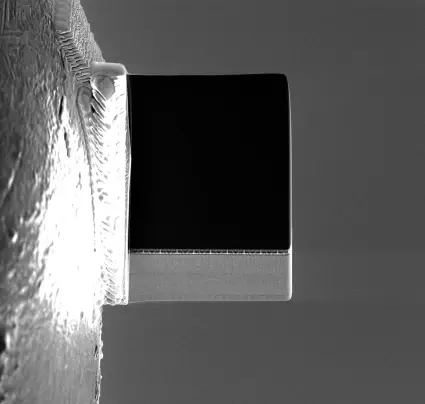
Lamella were lifted out in-situ using the OptiLift™ rotational nanomanipulator. Inverted geometry supported mechanical stability during thinning, with a final 1 keV FIB polish achieving ~16.5 nm thickness.

This process enables you to prepare high-quality, repeatable lamella for TEM analysis of transistor-level structures.

03
Results and Discussion

High-Resolution TEM Analysis of Contact and Transistor Features in 7nm Devices

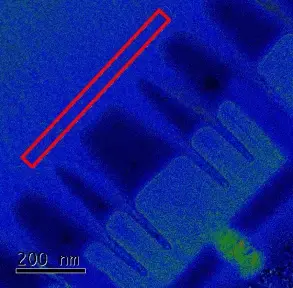
Tescan SOLARIS X 2 FIB-SEM enabled consistent preparation of sub-20 nm lamella from contact-layer and active transistor regions of a 7nm FinFET device. The use of inverted geometry, combined with low-kV final polishing, preserved the integrity of metal stacks, gate structures, and dielectric boundaries across the lamella.

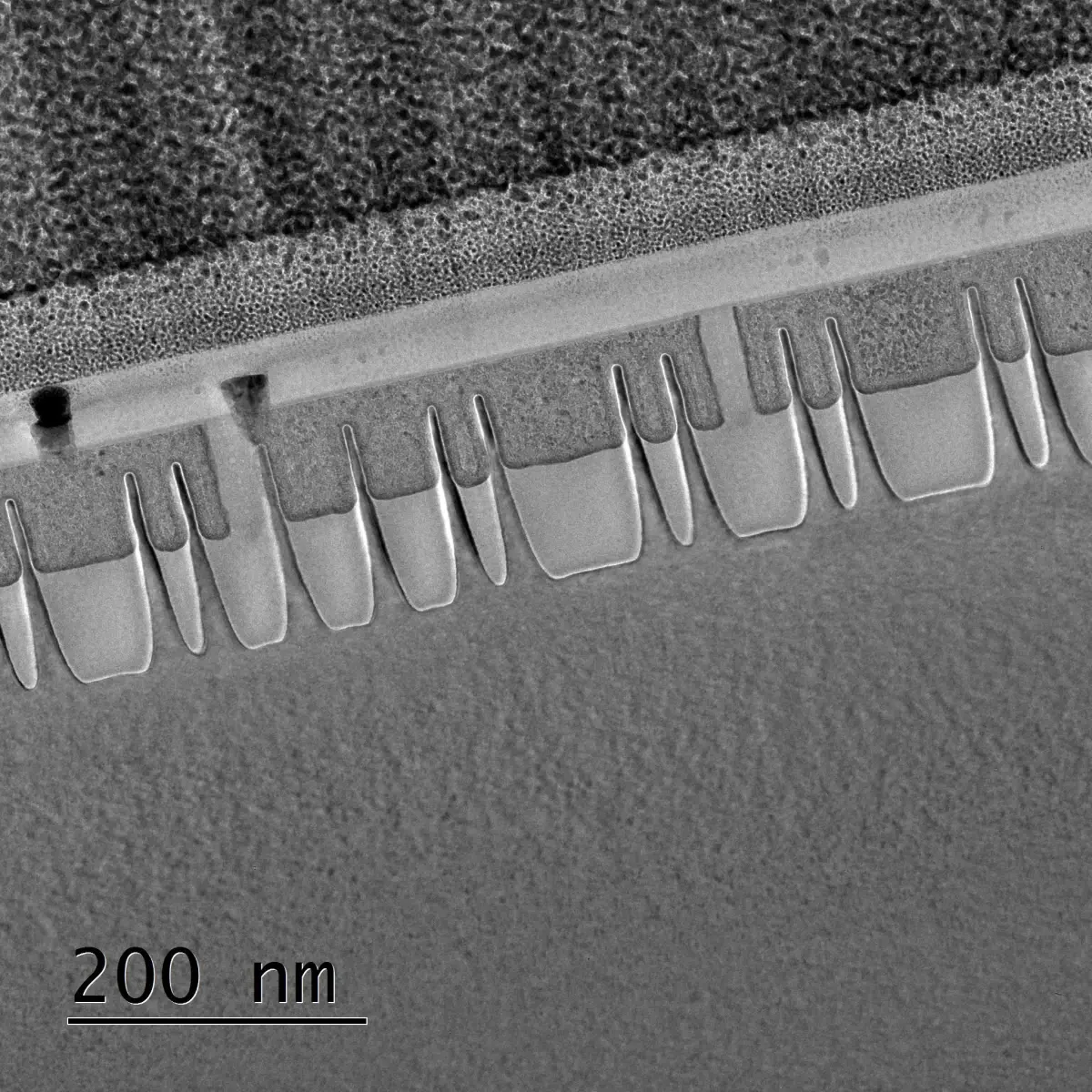
TEM imaging revealed clean interfaces and low amorphization, supporting clear visualization of critical transistor features such as contact alignment, channel geometry, and gate-to-contact connectivity. Thinning precision allowed for structural assessment at the nanometer scale, even in densely packed device regions.

Contact-layer lamella showed well-defined metal transitions and minimal curtaining, while transistor cross-sections retained contrast across poly-Si gates and surrounding dielectrics. Cross-lamella validation confirmed thickness uniformity down to ~16.5 nm.

With this workflow, structural inspection, process verification, and localized defect analysis at the 7nm node become highly effective. This delivered the reproducibility and accuracy required for modern semiconductor engineering.

GET IN Touch

Contact us

Get the most out of Tescan

This is more than information; it's an advantage. We've compiled our technical whitepapers, detailed product flyers, and on-demand webinars to provide you with the knowledge that makes a real difference. Sign up now to access the insights you need to make an impact.

Tescan Instruments & Technology

Used in This Workflow

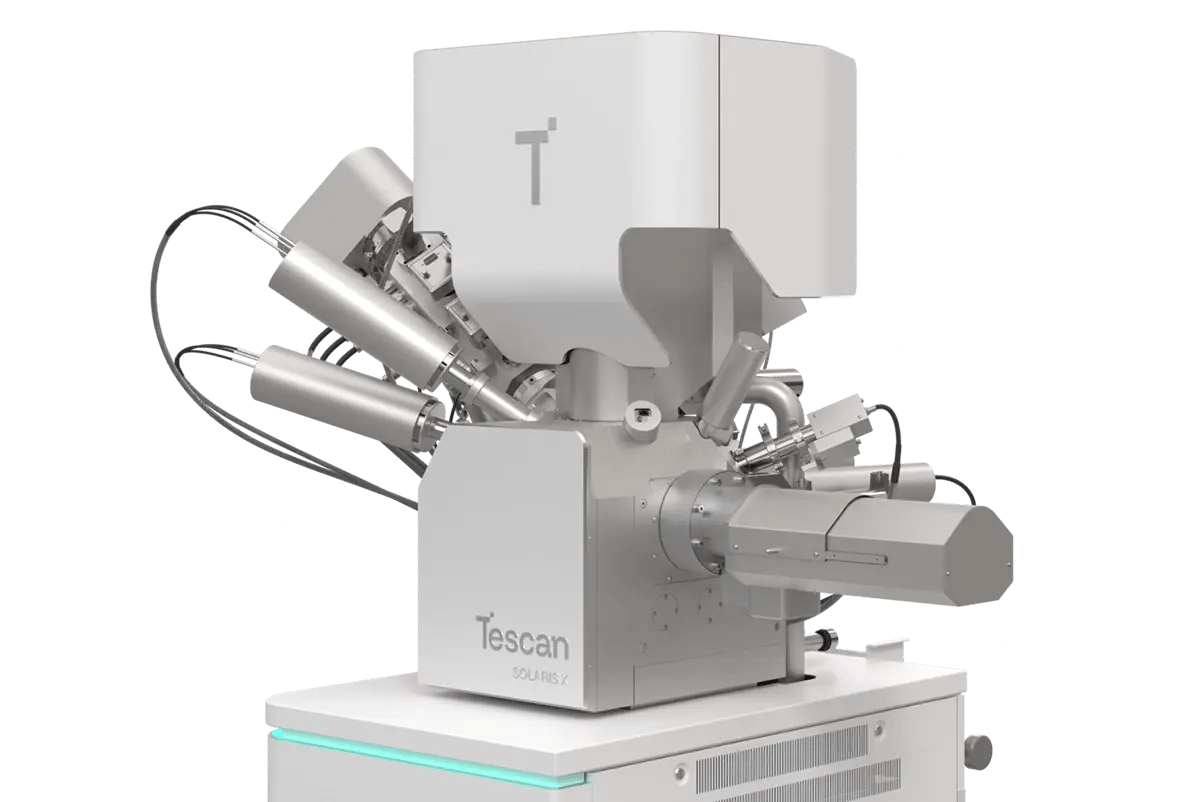
Tescan SOLARIS X 2 FIB-SEM 

TESCAN SOLARIS X 2 FIB-SEM delivers the precision, control, and integration required for preparing sub-20 nm TEM lamella from 7nm node devices.


The Xe⁺ plasma-based system combines gas-assisted delayering, trenching, and thinning within a single, in-situ workflow—eliminating air exposure and reducing variability.


OptiLift™ nanomanipulation supports stable lamella handling, while low-keV final polishing ensures structural integrity for high-resolution imaging.

  • Integrated Xe⁺ plasma FIB-SEM platform: Complete TEM preparation without transferring between systems
  • Gas-assisted delayering: Remove layers from M10 to contact with control and repeatability
  • In-situ lift-out with OptiLift™: Reduce mechanical stress and contamination during lamella transfer
  • Sub-20 nm lamella preparation: Achieve transistor-level resolution suitable for HR-TEM or STEM
  • Inverted geometry and 1 keV final thinning: Minimize curtaining and preserve structural accuracy across layers
SOLARIS-X2

GET IN Touch

Contact us

map

Where can you find us:

Tescan
Libušina třída 21
623 00 Brno 
Czech Republic

info@Tescan.com 

130405923 us US 37.09024 -95.712891 25.3575 29.349345 20.67957527 42.082797 39.91384763 -33.693421 13.93320106 3.039986586 31.997988 38.050985 47.579533 48.1485965 58.375799 54.663142 19.195447 56.975106 50.493053 45.868592 10.79556993 44.35660598 43.2371604 55.536415 14.557577179752773 32.100937 -6.116829 -6.212299277967318 23.7104 -33.471062 31.998740087 -23.69149395 43.462349 51.529848 49.1893523 49.197486 25.072375 31.075811 1.299027 40.676979 52.30150662 51.013813 35.684121 37.479653 52.246622 40.581349 39.911632 -26.1811371 41.818215 33.429928 -12.08688

No distributors found.