

WEBINAR | Dynamic-to-Detail Micro-CT in One Workflow: UniTOM HR 2

Enhancing Mineral Processing Efficiency with Automated Mineralogy

SEM-based Automated Mineralogy is the definitive technique for comprehensive analysis of ore texture, mineralogy, and chemistry at every stage of the beneficiation process—delivering deeper insights that drive smarter decisions, improved recovery, and reduced operational risk.

03-Mineral Processing
03-Mineral Processing-mobile

Contents

Challenging Bias in Lithium Ore Analysis

Manual methods and limited sampling can distort the true picture of lithium deposits. When data lacks consistency, grading suffers and recovery falls short. Accurate, repeatable mineral characterization brings clarity—helping the industry move from uncertainty to confident, data-driven extraction.

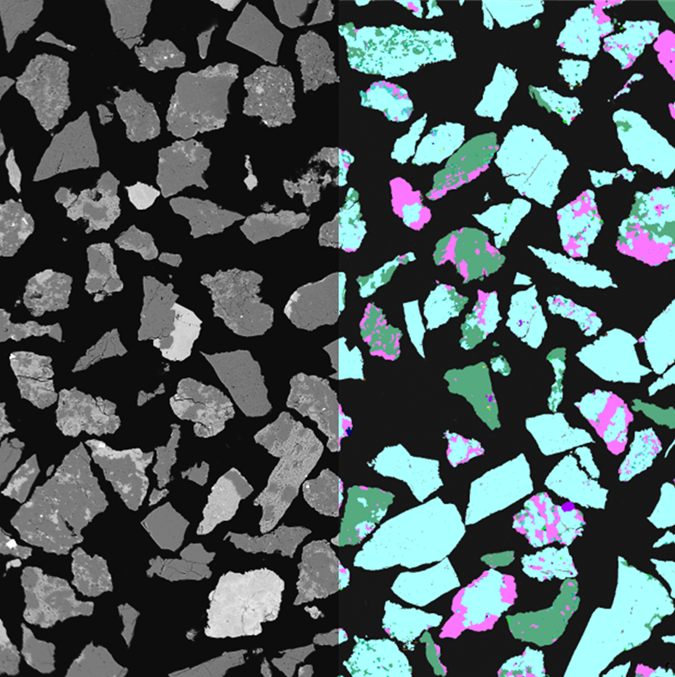
  • Quantify Thousands of Particles - Automatically detect and segment thousands of particles per sample to produce statistically robust, unbiased datasets.

  • Determine Mineral Liberation and Association - Assess mineral intergrowth and liberation of lithium-bearing phases to support geometallurgical characterization.

  • Classify Phases Automatically - Use integrated EDS spectra for consistent, objective phase identification and standardized mineral classification.

  • Optimize Comminution Efficiency - Analyze particle morphology and liberation to guide grind size decisions and improve energy efficiency in processing.
1_Characterization of lithium ores using correlative SEM imaging and EDS elemental mapping-4
Optimize Mineral Recovery and Improve Processing Efficiency with TIMA Textural Analysis

Drill core logging and petrographic studies reveal key mineral and gangue associations but capture only limited ore fragments. To understand metallurgical behavior at scale, representative ore samples are needed to evaluate flowsheets and recovery. Mineral textural analysis provides quantitative grain size data throughout project stages—supporting process design, ore zoning, and variability assessment.

  • From Exploration to Metallurgy - Drill core logging and petrographic studies provide early mineral insights, but they only represent small, localized samples and lack production-scale relevance.

  • Geometallurgical Evaluation - Representative ore-grade samples are essential for assessing metallurgical flowsheets and understanding ore variability across deposits.

  • Quantitative Textural Analysis - Mineral textural analysis quantifies natural grain size distribution and supports both early-stage flowsheet design and later-stage variability diagnosis.

  • Actionable Metallurgical Insights - Textural data reveal key differences in mineral liberation, grain size, and gangue associations—informing grind size, recovery optimization, and blending strategies.

image 2-3 (1)
Feed Your Geometallurgical Models with Tescan TIMA Data

Geometallurgical analysis reveals gold mineralogy, grain size, and associations with gangue minerals—providing insights into whether gold occurs as native metal, within other minerals, or as refractory forms.

  • Understanding Gold Recovery Variability - Natural differences in gold type, grain size, and mineral associations strongly influence recovery rates and overall project economics.

  • Integrated Geometallurgical Approach - Effective gold recovery prediction requires combining geological, mineralogical, and metallurgical data across geological domains.

  • Detailed Gold Characterization - High-resolution mineral mapping identifies gold grain size, distribution, and host minerals—revealing refractory and fine-grained occurrences.

  • Data-Driven Process Optimization - Quantitative analysis of gold liberation and associations supports flowsheet design, improves leaching strategies, and enhances metallurgical performance.

image 2-4 (2)

Tescan Solutions

for Mineral Processing

TESCAN TIMA

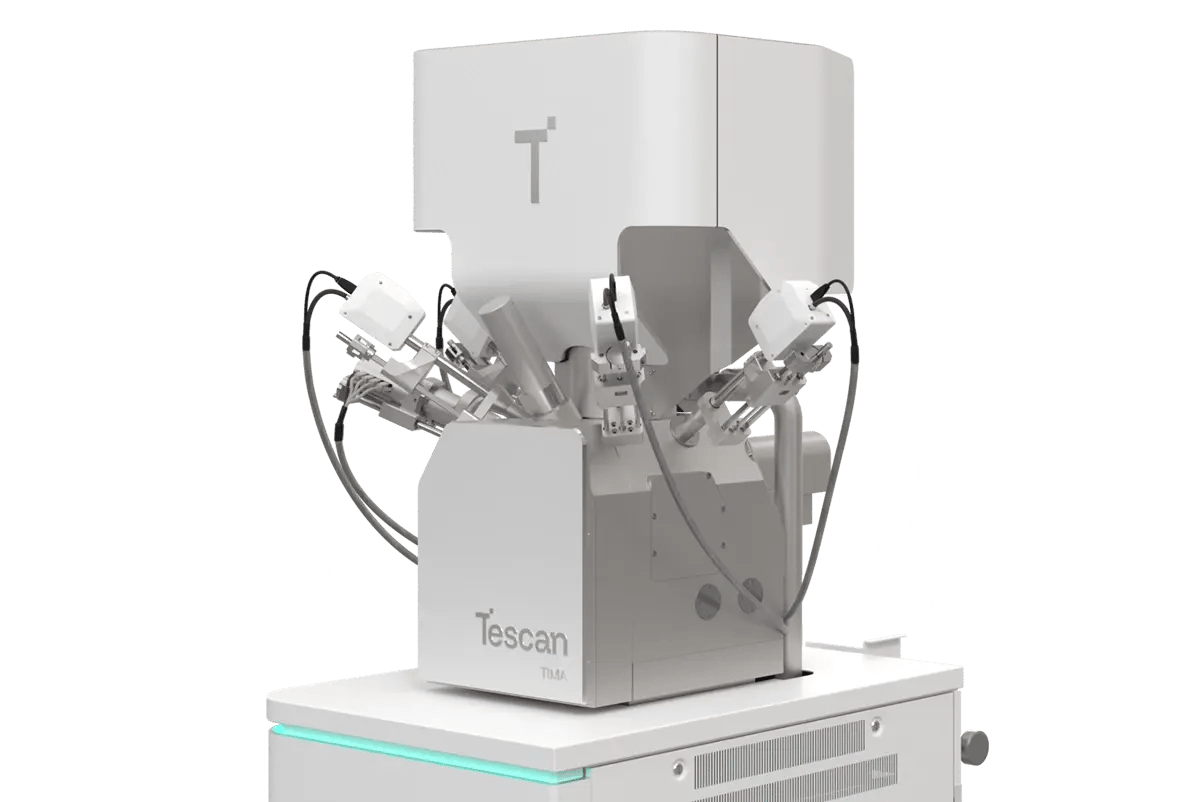
Tescan TIMA automates particle-based mineral analysis with integrated EDS and high-throughput imaging. Mineralogists and metallurgists can perform automated mineralogy for lithium analysis and generate consistent, reproducible datasets to support process-relevant mineral characterization. 

  • Quantitative particle analysis: statistically robust results across full sample sets 

  • Integrated EDS classification: consistent phase ID across users and sessions 

  • Automated workflows: reduce bias and standardize mineral quantification

  • Batch analysis mode: analyze over 40 samples per unattended run

TIMA GM

Fill the form to book a demo

Book a demo

Built around your needs

map

Where can you find us:

Tescan
Libušina třída 21
623 00 Brno
Czech Republic

130405923 us US 37.09024 -95.712891 25.3575 29.349345 20.67957527 42.082797 39.91384763 -33.693421 13.93320106 3.039986586 31.997988 38.050985 47.579533 48.1485965 58.375799 54.663142 19.195447 56.975106 50.493053 45.868592 10.79556993 44.35660598 43.2371604 55.536415 14.557577179752773 32.100937 -6.116829 -6.212299277967318 23.7104 -33.471062 31.998740087 -23.69149395 43.462349 51.529848 49.1893523 49.197486 25.072375 31.075811 1.299027 40.676979 52.30150662 51.013813 35.684121 37.479653 52.246622 40.581349 39.911632 -26.1811371 41.818215 33.429928 -12.08688

No distributors found.