WEBINAR | Up to 40% Faster Automated TEM Lamella Preparation with new Ga⁺ FIB Column

Back to the events

WEBINAR | From Infrastructure to Impact: The Full Potential of Electron Microscopy and Micro-CT Solutions in Core Facilities in Materials  

Explore how leading European core facilities are leveraging advanced characterization workflows; From Plasma FIB-SEM analysis to computed (x-ray) tomography, to solve various research challenges.

Jan 28, 2026

APAC & Europe: 15:00 China Standard Time / 09:00 CET

Europe & Americas: 17:00 CET / 11:00 ET (United States)

Why this webinar matters

Core facilities are constantly under pressure to accommodate more research projects, train more users with various backgrounds in a shorter time, while ensuring that the resulting data are complete, reliable, and reproducible. 

Therefore, advanced technologies like Plasma FIB-SEM (PFIB), multimodal Ultra High Resolution SEMs, and high resolution X ray tomography are becoming essential as they are addressing exactly aforementioned needs:

  • They can analyze wide range of sample types, 

  • They provide accurate data with multiple analytical characteristics

  • and became accessible to users of all experience levels.

This webinar brings together real-world experience from SpinLab Katowice and TU Graz, showcasing how Plasma FIB and micro-CT systems efficiently turn complex analytical requirements from different research groups into high-impact research outcomes.

What will you gain by watching

This session is designed for scientists, core facility staff, and materials researchers who want to understand how to get more impactful research outcomes from shared characterization infrastructure.

By attending, you will learn:

  • Introduction to the core facility environment and their requirements, such as need for maximum instrument utilization, short new user training time, or short time to data, and lessons learned from operating multi-user facilities serving diverse materials science applications.

  • How micro-CT systems, SEMs, and Plasma FIB-SEMs are utilized in core facilities to cater to high demand multidepartment research, while assuring high impact research data

  • Practical approaches of running advanced workflows using PFIB, SEM, and X-ray tomography for multiple research needs.

Who should attend

This webinar is relevant for:

  • Materials scientists working with complex or heterogeneous samples

  • Core facility managers and staff

  • Failure analysis and characterization specialists

  • Researchers using or planning to use PFIB, Raman, SEM, or X-ray tomography

  • Anyone relying on shared infrastructure for high level materials research

Why attend this webinar series

This event opens Tescan’s 2026 Core Facility Webinar Series, focused on real challenges faced by shared research infrastructures. 

Each session brings together experienced facilities to discuss what works, what does not, and how advanced instrumentation can truly support scientific progress.

Speakers and facilities

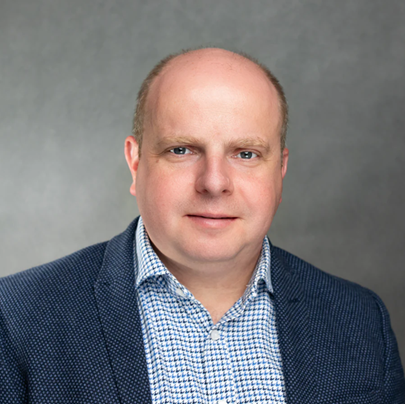
Marcin Libera, PhD Eng., is the Director of the SPIN-Lab Centre
Marcin Libera, PhD. Eng.

SPIN-Lab Centre for Microscopic Research on Matter, University of Silesia in Katowice

Marcin Libera, PhD Eng., is the Director of the SPIN-Lab Centre for Microscopic Research on Matter at the University of Silesia in Katowice and an electron microscopy expert. He supports interdisciplinary research and R&D by combining high-resolution imaging with complementary analytical methods to uncover structure–composition relationships in advanced (including soft) materials. He also develops measurement strategies and training that help academic and industrial users make the most of SPIN-Lab’s instrumentation. In this webinar he will share practical examples of correlative microscopy workflows, from choosing the right technique to interpreting results and turning them into clear, actionable conclusions.
Schennach-tecan-webinar
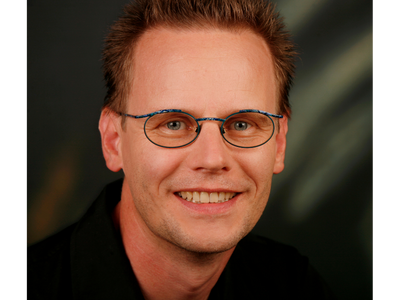
Robert Schennach

Institute of Solid State Physics, Graz University of Technology

Robert Schennach is an Associate Professor at the Institute of Solid State Physics at Graz University of Technology. He holds a PhD in Surface Science from the University of Innsbruck and has a background in chemistry and surface-related research. His work later expanded to cellulose-based materials and paper research.

He coordinates a multi-institutional micro-CT consortium in Graz, operating Tescan UniTOM HR and UniTOM XL systems to support a broad range of basic, applied, and industrial research projects. In this webinar, he will share practical insights into running shared tomography infrastructure and translating complex measurement needs into reliable research outcomes.


Register for the webinar

Unlocked content


Register for the Webinar

Secure a dedicated session with our experts

Get the most out of Tescan

This is more than information; it's an advantage. We've compiled our technical whitepapers, detailed product flyers, and on-demand webinars to provide you with the knowledge that makes a real difference. Sign up now to access the insights you need to make an impact.